 English
 Español
 Türk
TürkContent
- 1 What Is T-Shirt GSM and Why Does It Matter?
- 2 Standard GSM Ranges for T-Shirts
- 3 Method 1: GSM Cutter and Precision Scale (Most Accurate)
- 4 Method 2: DIY Ruler, Scissors, and Scale
- 5 Method 3: Online GSM Calculators and Mobile Apps
- 6 Method 4: Labels, Supplier Datasheets, and Secondary Checks
- 7 Tips for Accurate GSM Measurement
- 8 What T-Shirt GSM Means for Your Interlining Choice
- 9 Which GSM Should You Choose for Your T-Shirt Program?
- 10 Frequently Asked Questions
- 11 Final Thoughts
Two t-shirts can look identical on a hanger, yet one drapes cleanly and keeps its shape through twenty washes while the other turns sheer and baggy after three. The difference almost always comes down to a single number: GSM.
GSM stands for grams per square meter and measures the weight of t-shirt fabric. In garment manufacturing, fabric suppliers quote GSM before they quote price, and quality-control teams check it again on every incoming batch. If you need the short answer right now: the industry-standard way to check t-shirt GSM is to cut a 100 square centimeter sample with a GSM cutter, weigh that sample on a precision scale, and multiply the weight by 100. If you do not have a cutter, cut a 10 cm by 10 cm square with a ruler and scissors, weigh it, and multiply by 100. Four practical methods exist in total, and this guide covers all of them with exact steps and real tolerances.
Beyond the measurement itself, GSM drives two critical decisions: what fabric weight to buy for your t-shirt program, and which interlining to use on collars, cuffs, and plackets. Both are covered below.
What Is T-Shirt GSM and Why Does It Matter?
GSM, or grams per square meter, describes the mass of one square meter of fabric. If a knit jersey is labeled 160 GSM, one square meter of that fabric weighs 160 grams. It is a universal measurement standard for fabric weight because it is independent of roll width and total yardage. Buyers, mills, and garment factories all use the same numeric language.
GSM matters because it determines how a t-shirt will feel, drape, and wear over time:
- Weight and feel: a 120 GSM jersey is light, breathable, and slightly translucent, while a 220 GSM jersey feels dense and substantial in the hand.
- Structural behavior: heavier GSM resists stretching and drapes with more body, which changes how a boxy or oversized cut sits on the body.
- Durability: higher GSM fabric wears longer, provided that yarn quality and knit structure are equal.
- Sourcing cost: heavier fabric uses more fiber per square meter, so the price per garment rises with GSM.
One caution: GSM alone does not tell you whether a t-shirt is premium. A 180 GSM fabric spun from low-grade polyester will feel worse than a 150 GSM combed-cotton jersey. Always read GSM together with fiber composition, yarn count, and knit structure.
GSM calculation formula: GSM = sample weight in grams x 10,000 / sample area in square centimeters. For a standard 100 cm2 cutter, this simplifies to: GSM = sample weight (g) x 100.
Standard GSM Ranges for T-Shirts
Before measuring, know what number to expect. According to the fabric weight guide published by SANVT, summer t-shirts sit between 120 and 160 g/m2, regular t-shirts between 160 and 190 g/m2, and winter t-shirts between 200 and 300 g/m2. The t-shirt GSM guide published by Deira Group places 120 to 150 GSM in the lightweight category and 200 GSM and above in the heavyweight category.
| T-shirt category | GSM range | Typical use |
|---|---|---|
| Lightweight summer jersey | 120-150 GSM | Hot-weather basics, ladies' tees, layering |
| Regular single jersey | 150-180 GSM | Everyday t-shirts, uniform tees, most retail markets |
| Midweight premium jersey | 180-210 GSM | Oversized styles, premium blanks, puff-print bases |
| Heavyweight jersey | 210-240 GSM | Streetwear, winter layering, structured silhouettes |
| Fleece / brushed-back | 240-320 GSM | Hoodies and sweatshirts cut as t-shirts |
For buyers who are not sure what to choose, 160 to 180 GSM is the dependable middle ground for adult t-shirts in moderate climates: it provides enough opacity, a balanced drape, and good wash durability.
Method 1: GSM Cutter and Precision Scale (Most Accurate)
If you are sourcing fabric in volume or supervising production quality, use the industry-standard method: a 100 cm2 round sample cutter and a balance with 0.01 gram resolution.
What You Need
- GSM cutter with a 100 cm2 circular die (11.3 cm diameter)
- Digital scale with 0.01 g readability
- Hard cutting mat and a soft pencil
- Tweezers for handling the cut sample
Step-by-Step Procedure
- Condition the fabric first. Leave the sample for at least 24 hours in a standard textile atmosphere: 20 +/- 2 degrees Celsius and 65 +/- 4 percent relative humidity. Fabric picks up moisture from the air, and moisture adds weight.
- Lay the fabric flat on a hard, smooth cutting mat. Remove wrinkles, but never stretch the knit.
- Position the cutter on a single layer of fabric, at least 10 cm away from the selvedge edge and away from creases or defects.
- Press down firmly and rotate the cutter 180 degrees. A sharp die cuts cleanly through one layer without dragging the yarns.
- Lift the cutter and remove the circular sample with tweezers.
- Place the sample on the zeroed scale and record the weight in grams.
- Multiply the recorded weight by 100. A sample weighing 1.68 g means the fabric GSM is 168.
Where accuracy allows, cut five samples from different positions across the fabric width and average them. A single sample can deviate 5 to 10 GSM from the true mean of a roll.
Method 2: DIY Ruler, Scissors, and Scale
A GSM cutter costs more than a casual maker wants to spend, and the DIY version uses tools almost every workshop already has.
What You Need
- Transparent ruler or set square
- Very sharp scissors or a rotary cutter
- Digital scale readable to 0.1 g
- Soft pencil for marking
Step-by-Step Procedure
- Condition the fabric for at least 2 hours in a stable indoor environment, or overnight for better accuracy.
- Mark a 10 cm by 10 cm square with a soft pencil. Measure twice; a 3 mm mistake on one edge adds roughly 3 percent error to the result.
- Cut with sharp scissors; cut slightly outside the line, then trim carefully to the line to avoid ragged edges.
- Weigh the square on the scale. A reading of 1.72 g equals 172 GSM.
- For extra confidence, cut three squares from different areas of the fabric and average the results.
Knits stretch easily. Mark the square while the fabric is resting on the table. Do not pin the fabric tight, and do not press the ruler hard enough to deform the knit. For very stretchy jersey, prefer a rotary cutter over scissors.
Method 3: Online GSM Calculators and Mobile Apps
Online GSM calculators and mobile apps do not measure fabric by themselves; they are calculation aids. You enter the sample area and its weight, and the tool converts the values to GSM. Every one of these calculators applies the same formula: GSM = weight (g) x 10,000 / area (cm2).
To use one correctly, first weigh a sample of known area, then enter both values. The calculator only saves you from doing the arithmetic on paper.
Apps that claim to estimate GSM from a photograph or by touching the screen cannot replace physical weighing. Jersey yarn density, fiber type, and knit tension all change the relationship between visual appearance and weight, so optical estimates are rough guesses. For a purchasing decision, use a scale.
Method 4: Labels, Supplier Datasheets, and Secondary Checks
The fastest way to check t-shirt GSM is to read it off the label or the supplier's technical datasheet. For a buying decision, treat a declared value as a starting point, not proof: actual fabric weight usually deviates by +/- 5 to 10 GSM from the declared specification, especially on economy goods.
Declared GSM: What to Trust and What to Verify
- Hang tag or neck label: some brands print 160 GSM directly on the label. This is declared information; spot-check it against a physical sample.
- Supplier datasheet: a reliable mill can provide a weight test report from the batch. Ask for the date of the test and the testing method used, which should be cut-and-weigh.
- Incoming inspection: if you run a garment factory, measure the t-shirt fabric roll before it goes to cutting. Catching a weight deviation early prevents a whole batch of t-shirts from feeling wrong.
Non-Instrument Checks That Support the Number
- Light transmission: hold one layer up to a light source. A 120 GSM jersey is noticeably translucent; 200 GSM is nearly opaque.
- Fold and drape: a 180 GSM single jersey folds into a mass visibly thicker than a 130 GSM one and rests more heavily in the hand.
- Stretch resistance: with the same fiber and knit structure, a higher GSM fabric takes more force to stretch by the same amount.
- Thickness gauge: if you have a calliper, measure 10 points across the fabric. Thickness rises with GSM, although knit tightness shifts the exact mathematical relationship.
Tips for Accurate GSM Measurement
Collecting a correct GSM number is not difficult, but small mistakes repeat. These tips come from daily textile QC practice:
- Take samples at least 10 cm away from the selvedge; edge tension changes the local weight by several GSM.
- Do not cut through seams, creases, prints, or blemishes.
- Use at least five samples across the width of a roll and take the average.
- Calibrate the scale monthly with a known calibration weight, and zero it before every measurement.
- Replace dull cutter dies regularly; a blunt die chews the fabric and changes the shape and area of the sample.
- Measure after finishing treatments such as softening, not before. Finishing chemicals add or remove weight and shift the GSM by 1 to 3 percent.
- Record room temperature and humidity at the test time so that repeated tests remain comparable.
What T-Shirt GSM Means for Your Interlining Choice
The GSM of the t-shirt jersey is the number that should guide your interlining choice. The collar, cuff, placket, and neck tape on a t-shirt need a fusible reinforcing layer to keep their shape through washing and wearing. If the interlining is too heavy for the fabric, the collar will look and feel starched; if it is too light, the collar will curl and lose its fold after a few washes.
Lightweight Jersey: 120-150 GSM
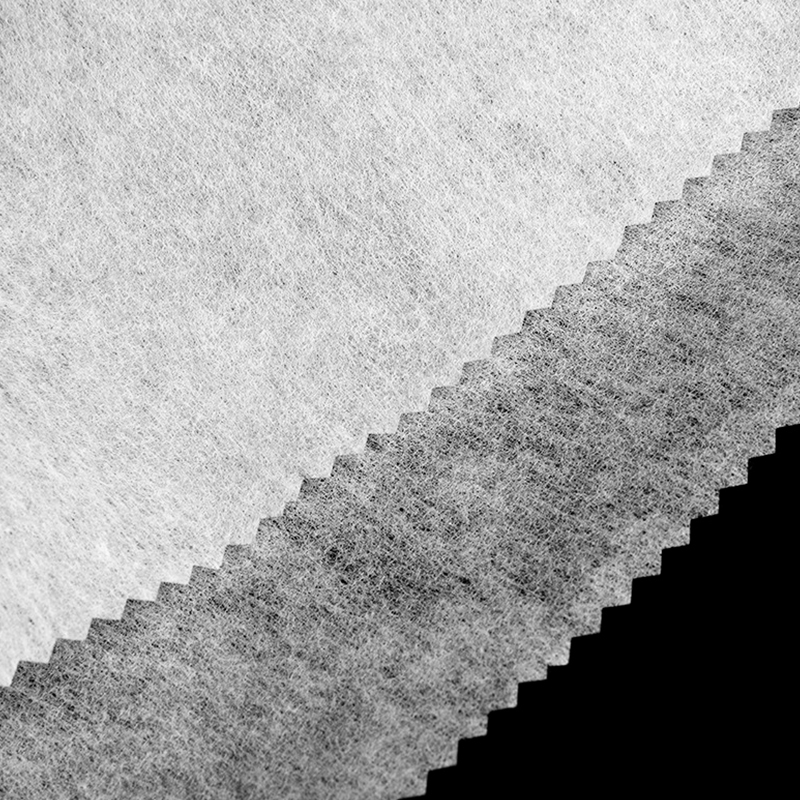
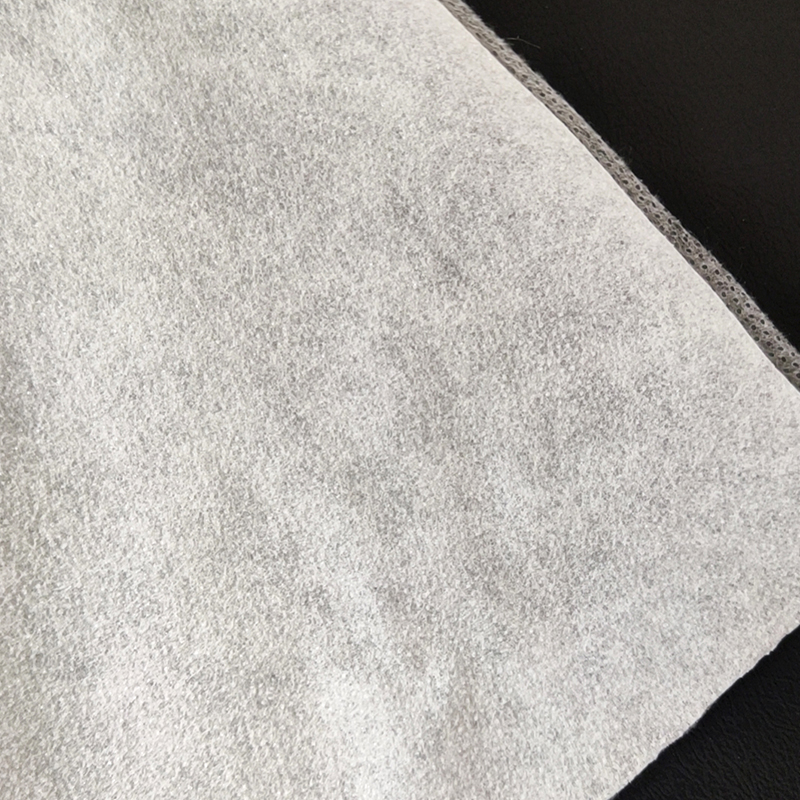
A light tee can only accept a very soft, lightweight interlining. A stiff or thick interlining will show through the collar, create a cardboard feel, and irritate the neck. Low-weight nonwoven interlinings in the 25 to 40 GSM range, or a light adhesive film, are the usual starting points. This is exactly the role that nonwoven interlining plays in clothing construction: it stabilizes the knit without adding visible bulk.
Midweight Jersey: 160-190 GSM
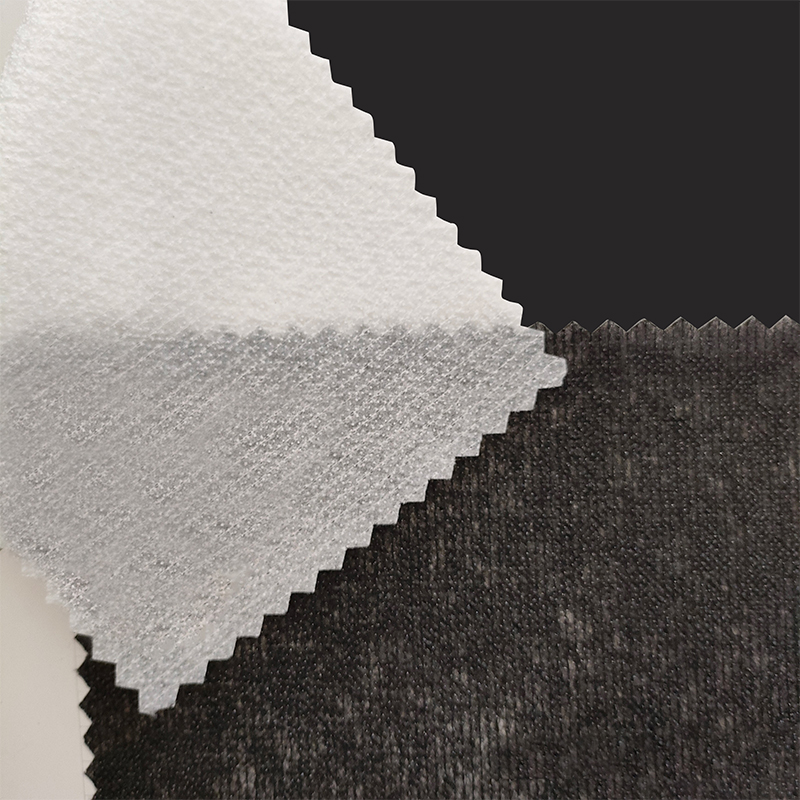
This is the classic t-shirt range and the most accommodating for interlining. A thermo-bond nonwoven interlining fused into the collar band gives shape without stiffness, and it follows the natural stretch of the knit. For medium-weight jersey collars and cuffs, a predictable first choice is a thermo-bond nonwoven interlining with a moderate melt-point resin that bonds at a temperature low enough to avoid crimping the knit.
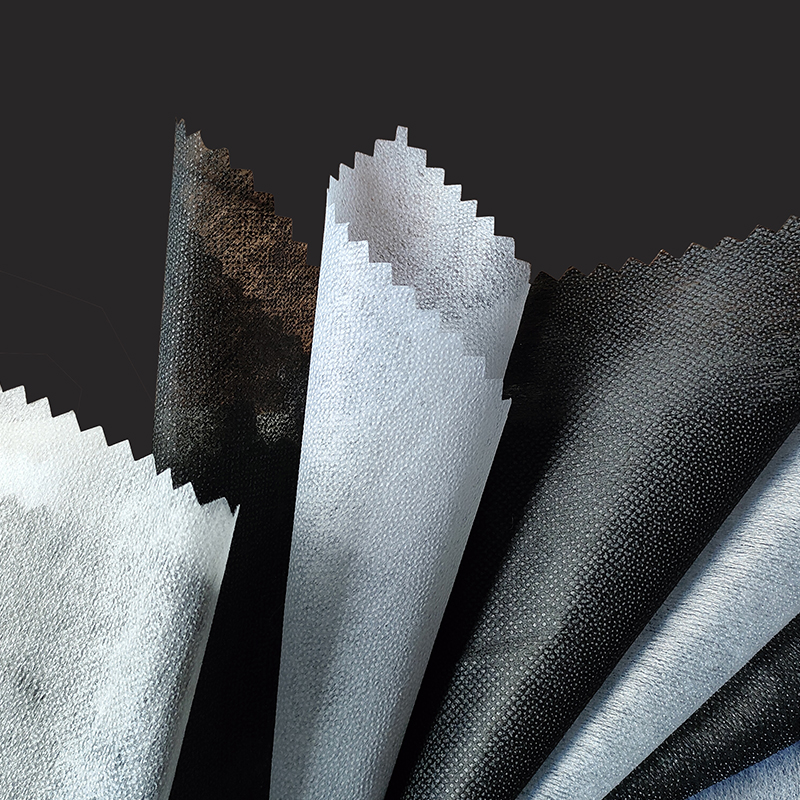 Non Woven Fusible Interlining Fabric Suppliers, FactoryRugao Jilin Garment Accessories Co., Ltd is China non woven fusible interlining fabric suppliers and thermobond nonwoven interlining fact...View Product →
Heavyweight Jersey: 200-240 GSM
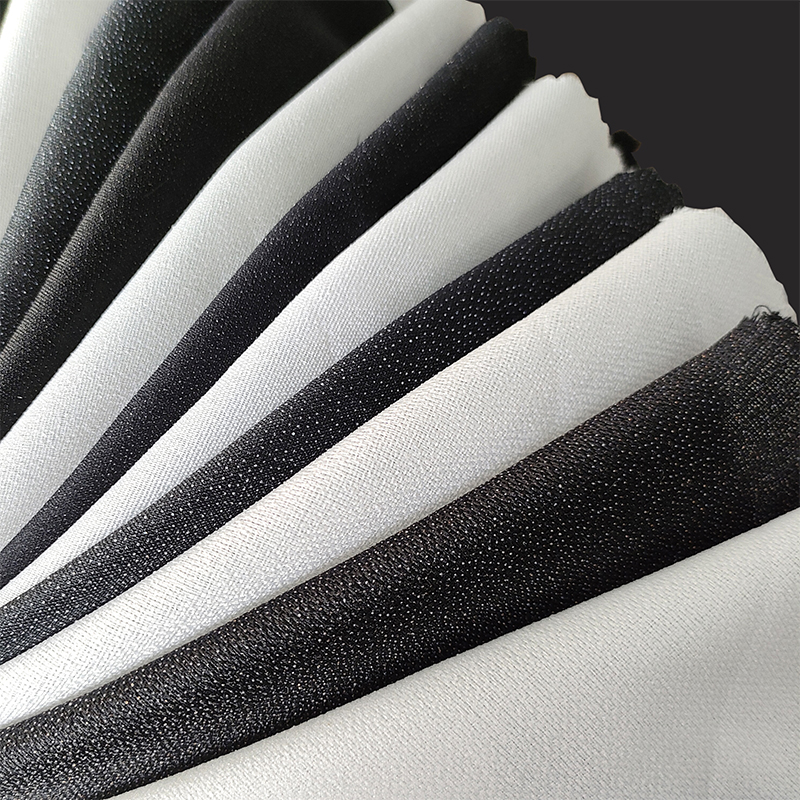
Heavy fabric masks more layers, so a firmer collar with a sharp fold works well on a heavyweight tee. If you are making a shirt-collar style tee from a 220 GSM jersey, the structural logic is the same as the key advantages of woven interlining in garment manufacturing: the interlining gives clean creases, resists stretching, and holds the fold line over hundreds of wears. For a crisp fold on a heavier tee's center placket, the same shirt interlining used for formal shirt collars transfers directly to heavyweight knit garments.
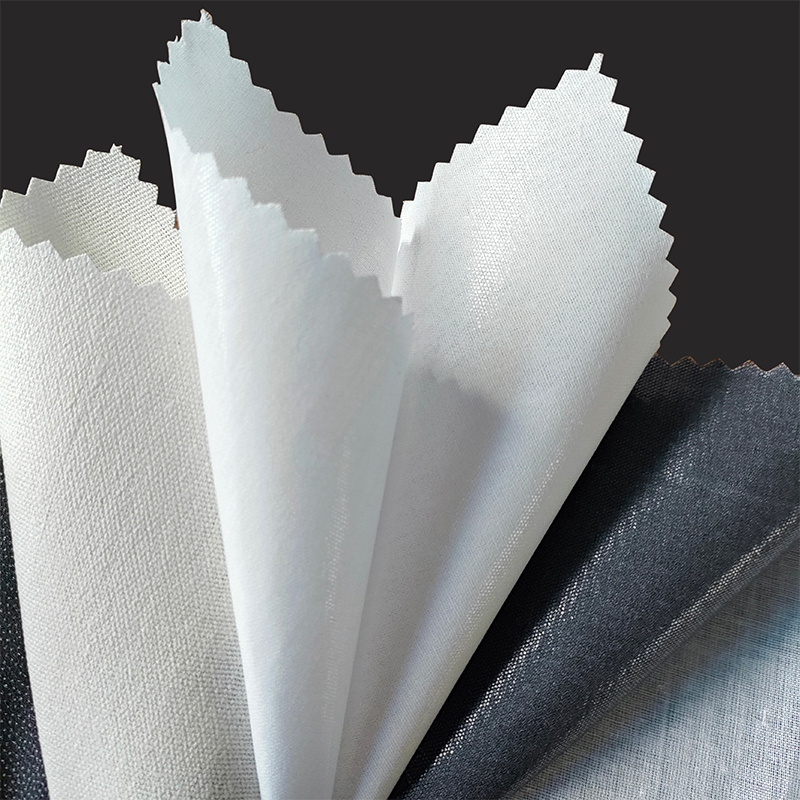 Wholesale Shirt Interlining Manufacturers, Suppliers - Rugao Jilin Garment AccesRugao Jilin Garment Accessories Co., Ltd is China Wholesale Shirt Interlining manufacturers and Shirt Interlining suppliers,Use pure cott...View Product →
Where a shoulder seam or neck tape must stay perfectly flat without stiffness, a high-tensile PP spunbond nonwoven interlining gives dimensional stability while staying thin enough to disappear inside the seam.
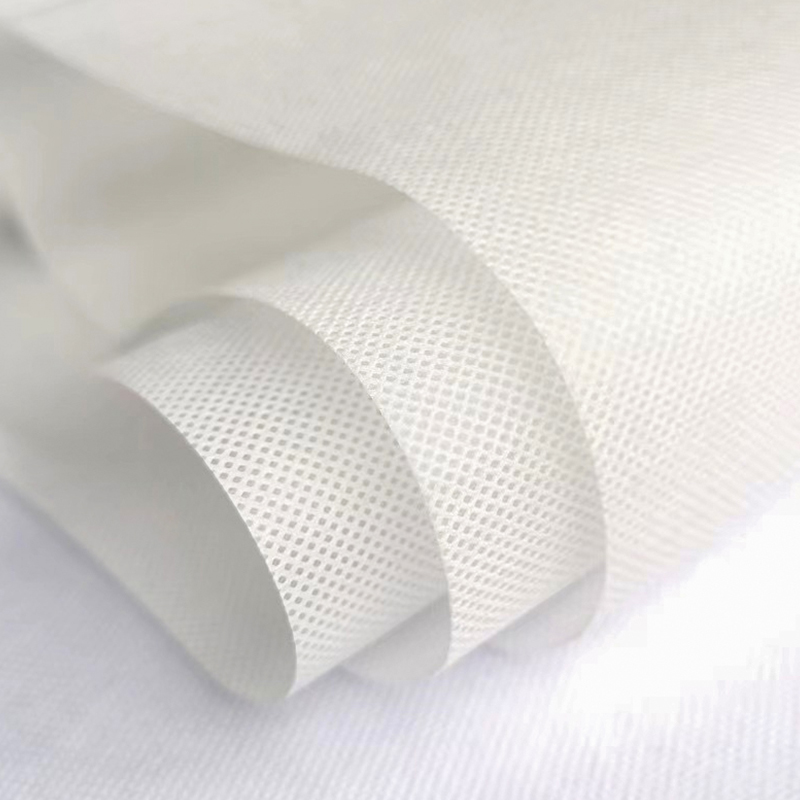 Wholesale PP Spunbond Nonwoven Interlining Manufacturers, Suppliers - Rugao JiliRugao Jilin Garment Accessories Co., Ltd is China Wholesale PP Spunbond Nonwoven Interlining manufacturers and PP Spunbond Nonwoven Inter...View Product →
Before committing to a fabric-interlining combination, check the interlining's behavior after washing, as described in our note on shirt interlining shape retention after long wash cycles. A 160 GSM jersey that shrinks into a stiff neckline is almost always a problem with the interlining, not with the fabric weight.
Which GSM Should You Choose for Your T-Shirt Program?
There is no single best GSM for every t-shirt; the right number depends on the market, the season, and the garment style.
| Program type | Recommended GSM | Reason |
|---|---|---|
| Hot-climate retail | 120-150 GSM | Breathability outweighs structure in high heat |
| Corporate uniforms | 160-180 GSM | Balanced opacity, comfort, and durability |
| Premium blanks / streetwear | 180-240 GSM | Substantial drape and a better print base |
| Winter layering | 240-320 GSM | Warmth and shape retention in cold weather |
| T-shirts for embroidery / puff print | 180-210 GSM | Heavy prints need a stable fabric ground |
Fabric Weight and Embellishment
If your t-shirt program includes chest printing or embroidery, fabric weight changes the result. Higher GSM fabric in the 180 to 210 GSM range gives puff prints and dense embroidery a stable ground, while a 130 GSM jersey tends to pucker around dense stitch patterns. Lightweight knits below 150 GSM usually need a removable backing stabilizer during embroidery, which adds cost per piece.
Matching Interlining with Fabric Weight
After you settle on the GSM, test the first pre-production sample. Wash it five times, note the collar shape, the fold line, and the seam appearance, and adjust the interlining if the collar softens too quickly. The combination of the right fabric GSM and the right interlining normally survives 20 to 30 laundry cycles without collapsing.
Frequently Asked Questions
What does GSM stand for?
GSM stands for grams per square meter. It is the weight in grams of one square meter of fabric, and it is the universal unit used to express t-shirt fabric weight.
How can I check t-shirt GSM without a GSM cutter?
Cut a 10 cm by 10 cm square, weigh it on a digital kitchen scale, and multiply the weight by 100. For higher accuracy, cut three squares and average them.
Is 180 GSM good for t-shirts?
Yes. 160 to 190 GSM suits most basic t-shirt programs: it is opaque enough to wear alone, breathable enough for warm weather, and heavy enough to keep its shape through regular wear.
What GSM is considered a heavyweight t-shirt?
200 GSM and above is generally considered heavyweight. Streetwear blanks often use 210 to 240 GSM, and fleece-lined or brushed-back tees run from 240 to 320 GSM.
Can I measure the GSM of a finished t-shirt without destroying it?
Yes. Cut a small sample from an inside seam allowance or the bottom hem, weigh it, calculate the GSM, and sew the cut closed. This is standard practice during quality audits.
Why does the actual GSM differ from the label GSM?
Moisture absorption, mill tolerance, and finishing chemicals all add or subtract weight. A deviation of +/- 10 GSM from the declared value is normal and acceptable on standard open-market goods.
Final Thoughts
The shortest practical answer to how to check t-shirt GSM is to weigh a 100 cm2 sample and multiply by 100. If you do not have a cutter, a 10 cm by 10 cm square gives the same result with a slightly higher error. For production-level decisions, condition the fabric, take five samples, and average the readings.
Build GSM checking into every sourcing decision. Verify the declared GSM of each batch, spot-check it again after finishing, and choose the interlining weight that matches the shell fabric. When the jersey, the interlining, and the wash-and-wear behavior all line up, the finished t-shirt looks good on the rack and still looks good after years of washing.