 English
 Español
 Türk
TürkContent
The Direct Answer: Yes, You Can Upcycle Old Shirts as Interlining
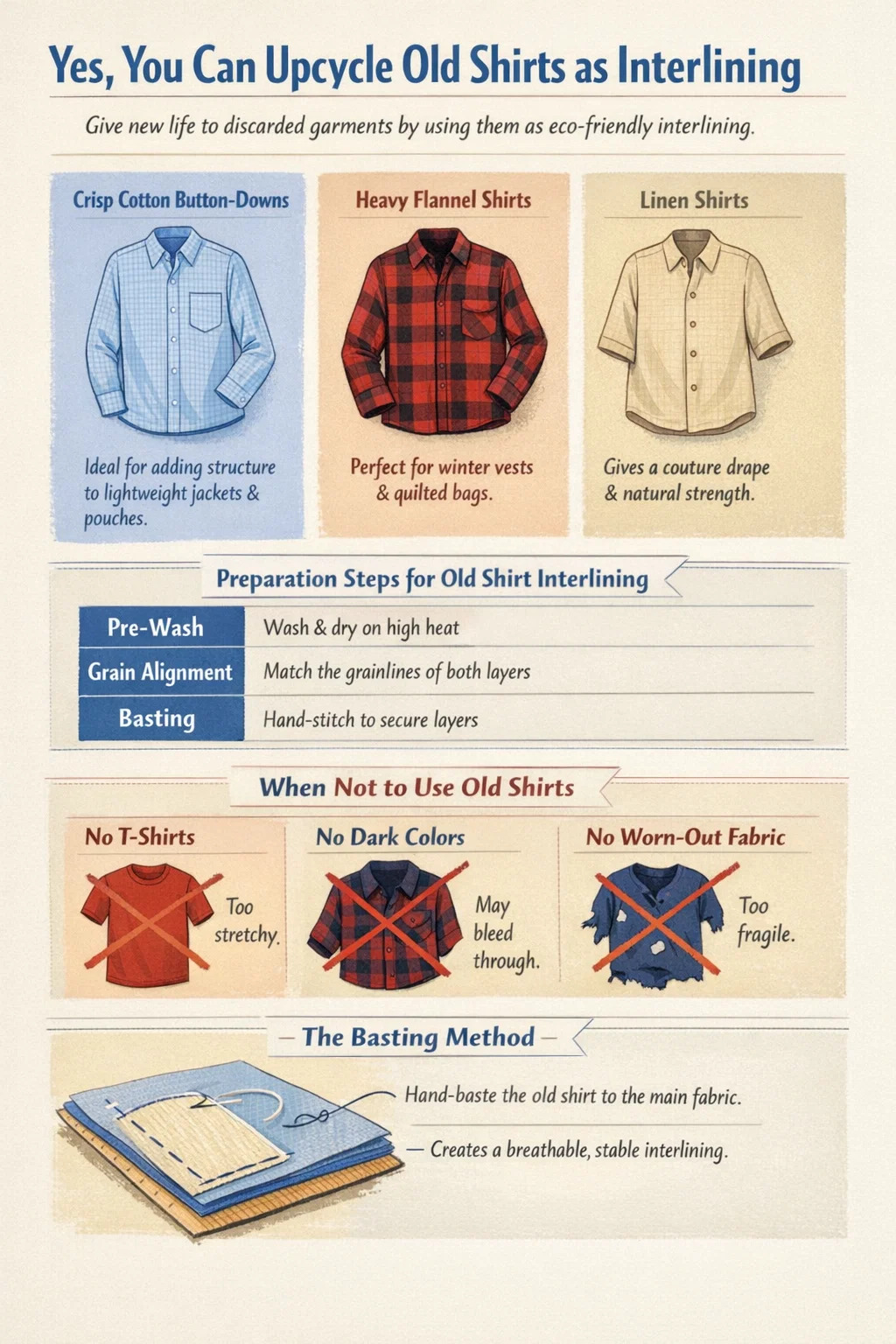
The short answer is a resounding yes. Unused or old shirts can serve as an excellent, eco-friendly, and cost-effective interlining for various sewing projects. Using discarded garments as an internal layer is a time-honored tradition in tailoring, known as "making do." However, success depends entirely on matching the material properties of the shirt—such as its fiber content, weave, and weight—to the needs of your new project. When done correctly, an old cotton or flannel shirt provides the necessary body, stability, and warmth without the need for synthetic, store-bought stabilizers.
Identifying the Best Shirt Types for Interlining
Not every shirt in your donation pile is suitable for every project. The goal of an interlining is to add specific characteristics like stiffness or insulation, so you must categorize your shirts by their physical traits.
Crisp Cotton Button-Downs
High-quality cotton dress shirts are perfect for adding a subtle crispness. Because they are tightly woven, they prevent the outer fabric from stretching. They work exceptionally well as an interlining for lightweight summer jackets, cloth face masks, or small pouches where you want a bit of structure but no extra bulk.
Heavy Flannel or Brushed Cotton
If you are making a winter vest or a quilted bag, an old flannel shirt is your best friend. The napped surface of the flannel provides thermal insulation and a soft, padded feel. It mimics expensive specialty "brushed" interlinings found in professional tailoring shops.
Linen Shirts
Old linen shirts are prized in the sewing community. Linen is naturally strong and heat-resistant. Using it as an interlining gives a garment a "couture" drape that synthetic alternatives simply cannot replicate.
Technical Considerations for Successful Application
To ensure your upcycled interlining doesn't ruin your garment after the first wash, you must follow specific preparation steps.
| Step | Action Required | Why It Matters |
|---|---|---|
| Pre-Washing | Wash and dry on high heat | Prevents the internal layer from shrinking later |
| Grain Alignment | Match grainlines of both layers | Prevents the bag or garment from twisting |
| Basting | Hand-stitch or pin heavily | Since there is no glue, layers must be secured |
Limitations: When Not to Use Old Shirts
While upcycling is great, there are certain scenarios where using a shirt as an interlining will fail.
- Avoid Jersey T-shirts: Knitted fabrics (T-shirts) stretch. Unless your outer fabric is also a stretchy knit, using a T-shirt as an interlining will cause the garment to sag and lose its shape.
- Color Bleeding: Never use a dark red or navy shirt as an interlining behind a light-colored outer fabric. The dark color can shadow through or, worse, bleed onto the expensive outer fabric during washing.
- Excessive Wear: If a shirt is so old that the fabric is "tender" (rips easily with your hands), it will not provide any structural support and will disintegrate inside your project.
The "Basting" Method vs. Fusibles
Because unused shirts do not have adhesive on the back, they function as sew-in interlining. In professional tailoring, this is often considered superior to "fusible" (iron-on) types.
When you use an old shirt, you must "baste" it to the wrong side of your main fabric. This involves long, temporary stitches that hold the interlining in place until the final seams are sewn. This method allows the layers to move slightly independently, which creates a more comfortable, breathable garment compared to the stiff, plastic feel of some modern adhesives. By choosing this traditional approach, you are not just saving money; you are often improving the quality and longevity of your handmade items.