 English
 Español
 Türk
TürkContent
Essential Support: Why Interlining is the Secret to Professional Bags
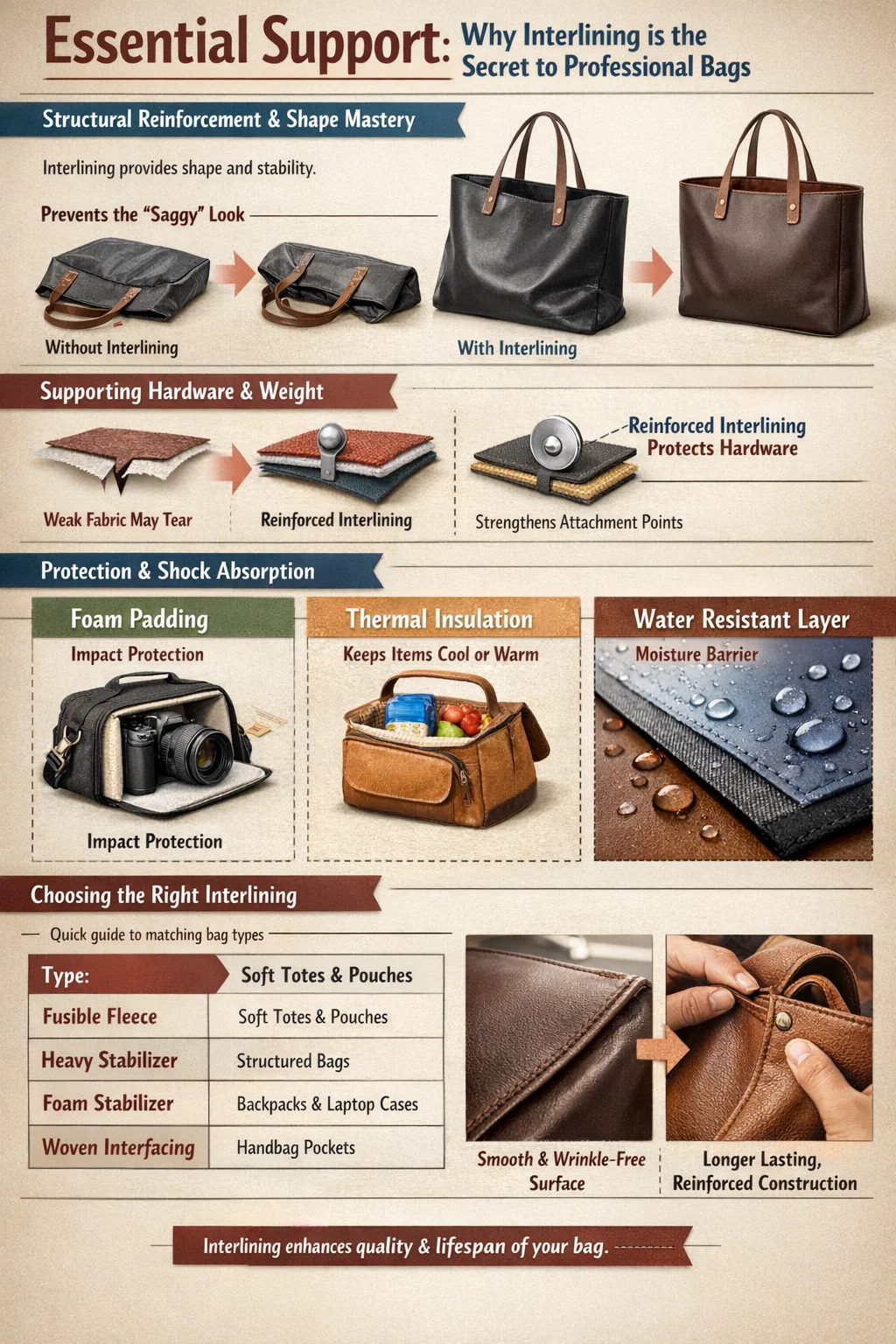
The primary reason to use interlining in bag construction is to provide structural integrity and long-term shape retention that fabric alone cannot achieve. Without this hidden layer, most bags would collapse under their own weight or the weight of the items inside, appearing limp, wrinkled, and unfinished. By adding the correct interlining, you transform a simple piece of cloth into a functional 3D object that stands upright, protects its contents, and withstands the rigors of daily use.
Structural Reinforcement and Shape Mastery
When you look at a high-end designer tote or a rugged backpack, the crisp lines and defined corners are not just a result of the outer leather or canvas. They are the work of a carefully chosen interlining.
Preventing the "Saggy" Look
Soft fabrics like cotton quilting prints or lightweight linens are popular for their aesthetics, but they have zero "body." If you sew a tote bag with just these fabrics, the bottom will sag significantly once you drop in a wallet or a water bottle. Using a stiff interlining or a stabilizer at the base prevents this distortion, maintaining the bag's intended silhouette even when fully loaded.
Supporting Hardware and Weight
Bags often feature heavy hardware such as magnetic snaps, metal buckles, and grommets. If you attach a magnetic snap directly to a single layer of fabric, the repeated pulling to open the bag will eventually tear the fibers. A localized piece of heavy interlining acts as an anchor, distributing the mechanical stress across a larger surface area and preventing the metal from ripping through the material.
Protection and Shock Absorption
In the modern world, bags are used to carry sensitive electronics. A specialized interlining serves as a protective barrier.
- Cushioning: Foam-based interlining is commonly used in laptop sleeves and camera bags to absorb impacts from accidental drops.
- Thermal Insulation: In lunch bags or bottle carriers, a foil-backed or dense polyester interlining helps regulate the internal temperature.
- Water Resistance: Some synthetic interlining layers have a coating that prevents moisture from seeping from the outer shell into the delicate lining where your valuables are stored.
Choosing the Right Interlining Material
The choice of interlining depends entirely on the desired stiffness of the final product. Different projects require vastly different support levels.
| Interlining Type | Ideal Bag Project | Effect on Fabric |
|---|---|---|
| Fusible Fleece | Pouches, Soft Totes | Soft, padded, and cozy feel |
| Heavyweight Stabilizer | Briefcases, Boxy Clutches | Firm, rigid, and stand-alone |
| Woven Interfacing | Handbag Pockets, Slings | Maintains fabric drape but prevents stretch |
| Foam Stabilizer | Backpacks, Laptop Bags | Springy, thick, and protective |
Professional Aesthetics and Longevity
Beyond just holding the bag up, interlining improves the visual quality of the exterior.
Smoothing Out Wrinkles
Lightweight fabrics tend to wrinkle easily during the sewing process or with everyday handling. A fusible interlining bonded to the back of the exterior fabric keeps the surface smooth and taut, giving the bag a high-end, polished look that lasts for years.
Extending Bag Life
Daily friction and environmental stress can wear down fibers quickly. By adding an interlining layer, you are effectively reinforcing the entire structure. This second layer absorbs much of the internal tension that would otherwise pull at the seams, doubling or tripling the lifespan of the bag compared to an unlined or unreinforced version.