 English
 Español
 Türk
TürkContent
The Verdict: When Interlining Becomes a Liability
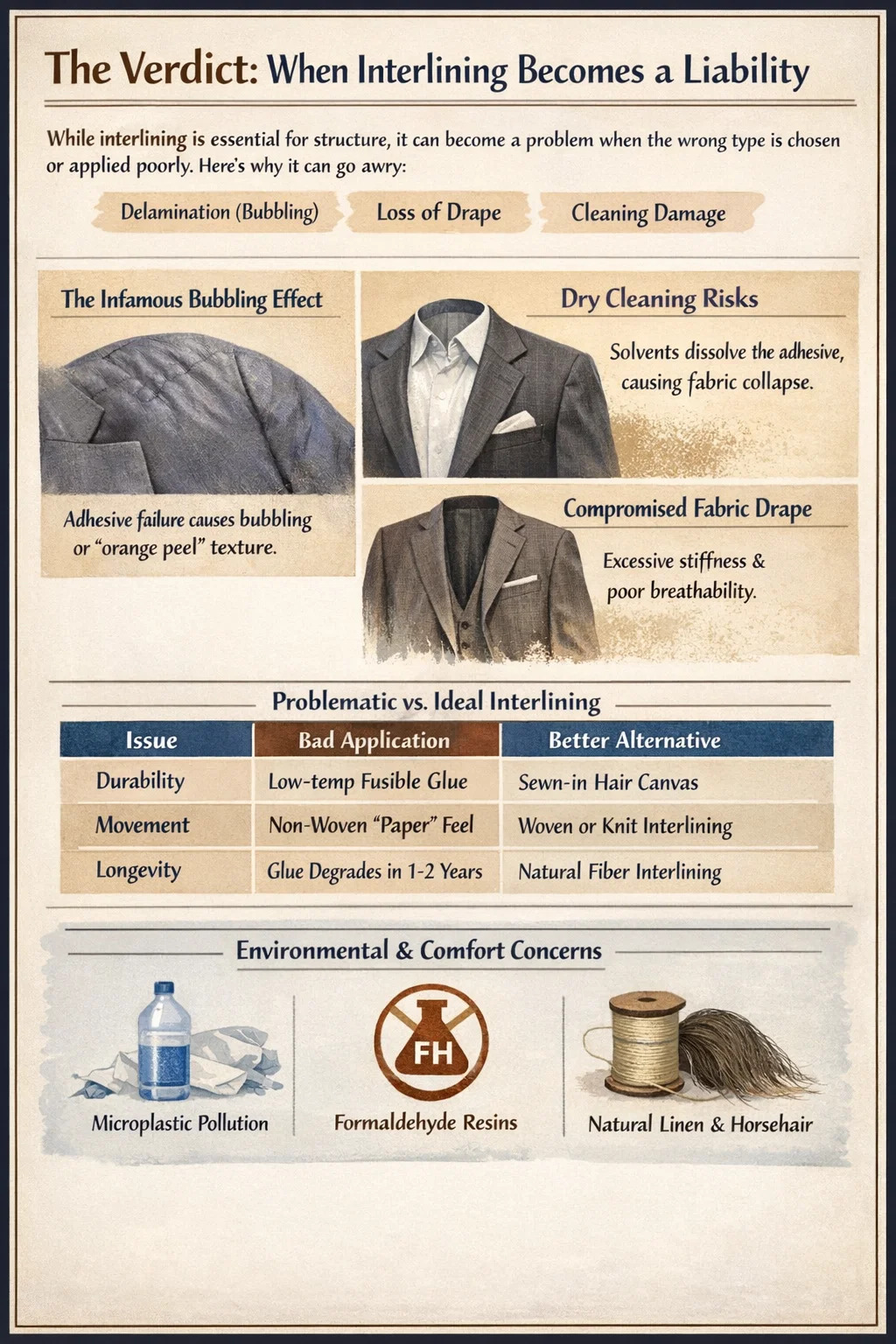
To be clear, interlining is not inherently bad; in fact, it is essential for structure. However, it becomes "bad" when the wrong type is chosen or when it is applied poorly. The primary reasons a specific interlining might be considered detrimental to a garment include delamination (bubbling), a loss of natural drape, and adverse reactions to cleaning. When the bond between the interlining and the face fabric fails, it creates permanent aesthetic damage that cannot be reversed.
The Infamous Bubbling Effect
One of the most common reasons people view interlining negatively is the phenomenon known as bubbling or "orange peel" texture. This occurs primarily with fusible interlining.
Adhesive Failure
If the glue on the interlining is low quality or applied with incorrect heat and pressure, it will eventually pull away from the main fabric. This creates air pockets that look like unsightly lumps on the surface of a suit or coat.
Dry Cleaning Risks
High-end garments are often dry cleaned using chemicals. Some fusible interlining adhesives are not resistant to solvents like perchloroethylene. Over time, these chemicals dissolve the bond, leading to the total structural collapse of the garment’s front panels.
Compromising Fabric Drape and Breathability
Choosing a "bad" match for your interlining can ruin the natural beauty of high-quality textiles like silk or fine wool.
- Excessive Stiffness: Using a heavy-duty interlining on a lightweight fabric makes the garment feel like cardboard, stripping away the fluid movement of the design.
- Heat Retention: Synthetic interlining layers can act as a plastic barrier, trapping body heat and making a jacket feel stifling and uncomfortable in warmer climates.
- Strike-Through: In thin fabrics, the glue or the texture of the interlining can "show through" to the right side, making the garment look cheap or stained.
Comparison of Problematic vs. Ideal Interlining Scenarios
The following table outlines why certain interlining applications fail compared to professional standards.
| Issue | Bad Application | Better Alternative |
|---|---|---|
| Durability | Low-temp fusible adhesive | Sewn-in hair canvas |
| Movement | Non-woven "paper" feel | Woven or knit interlining |
| Longevity | Glue degrades in 1-2 years | Natural fiber interlining |
Environmental and Comfort Concerns
Modern fast fashion relies heavily on synthetic interlining, which introduces a high microplastic footprint. Because these layers are bonded with resins and glues, they make the garment nearly impossible to recycle. Furthermore, cheap interlining often uses formaldehyde-based resins during the manufacturing process, which can cause skin irritation for those with chemical sensitivities. To avoid these "bad" outcomes, many high-end tailors have returned to natural linen or horsehair layers that provide structure without the chemical downsides.