 English
 Español
 Türk
TürkContent
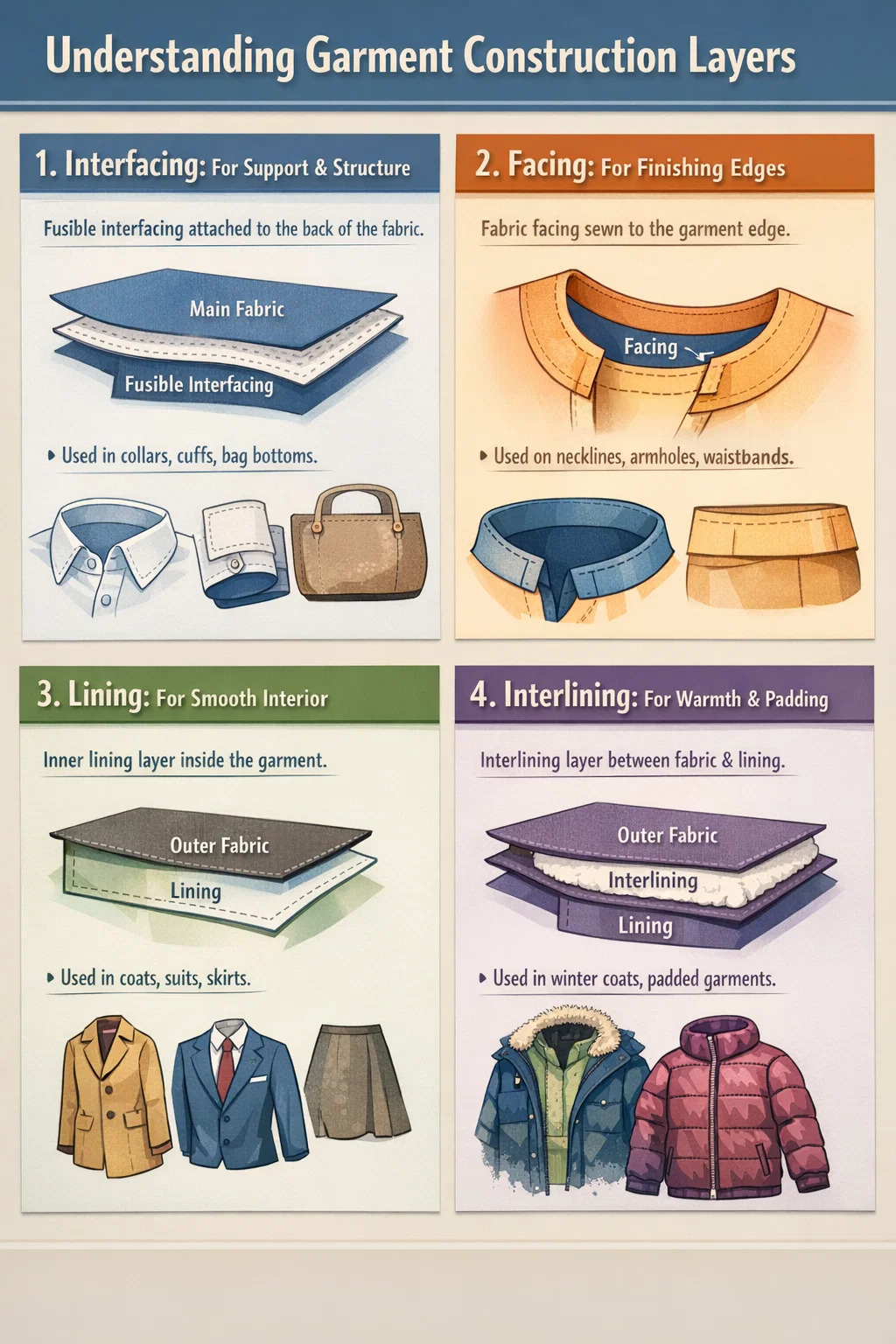
When making clothes or bags, these four concepts might sound a bit confusing, but they're actually like the different parts of the steel reinforcement and decoration used when building a house. To use them effectively, the key is to understand where each one "stands" in the overall structure.
Here's a guide to their uses:
1. Interfacing: Used where support is needed
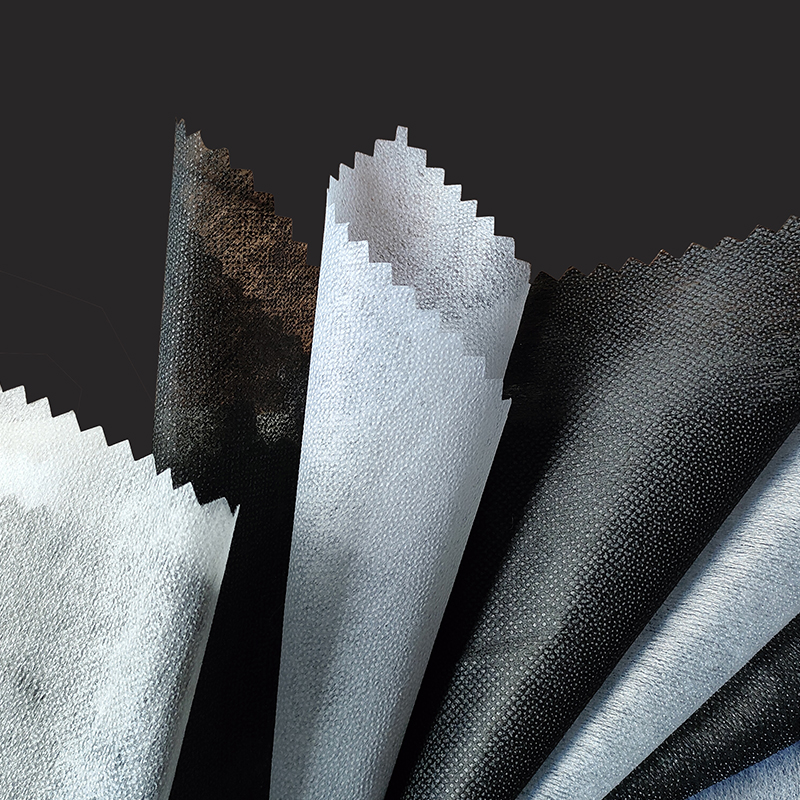
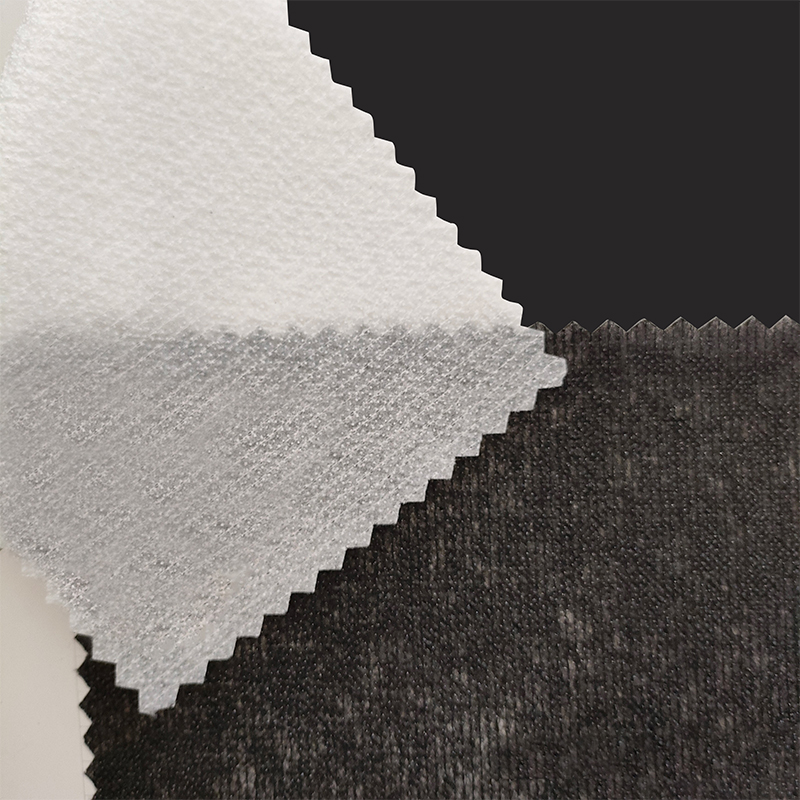
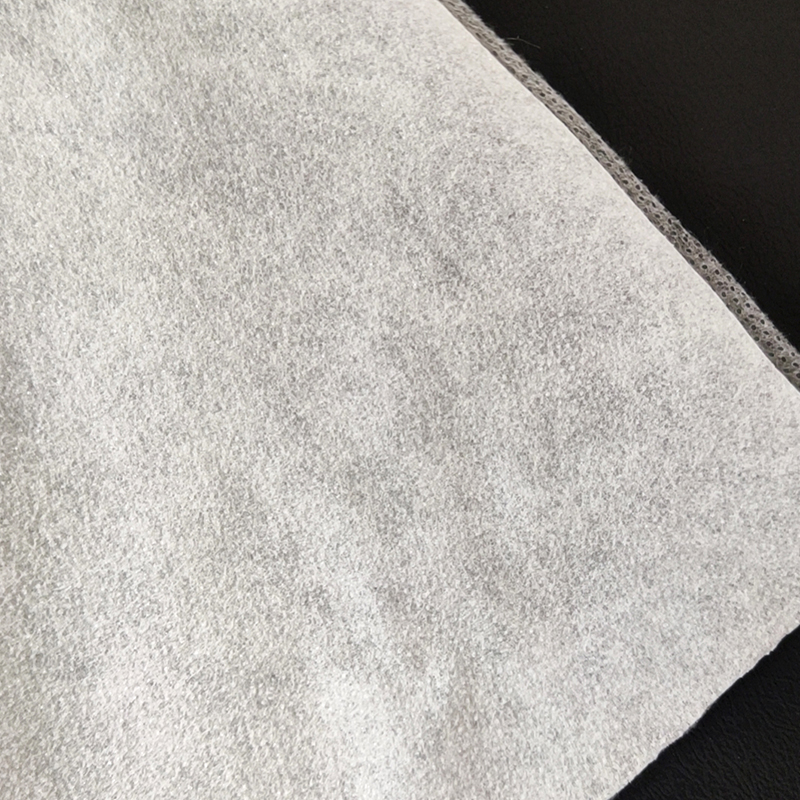
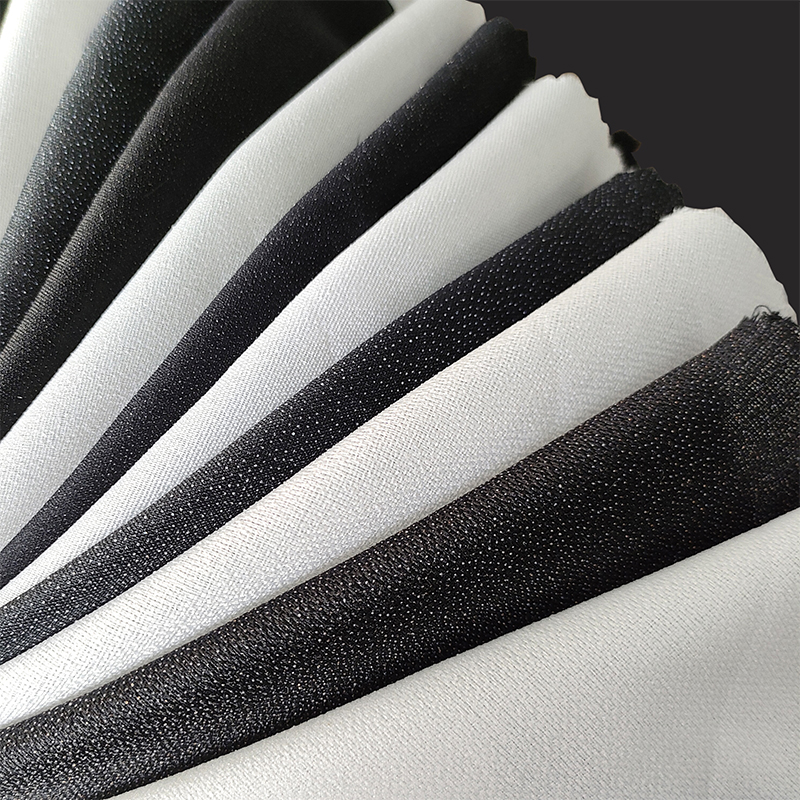
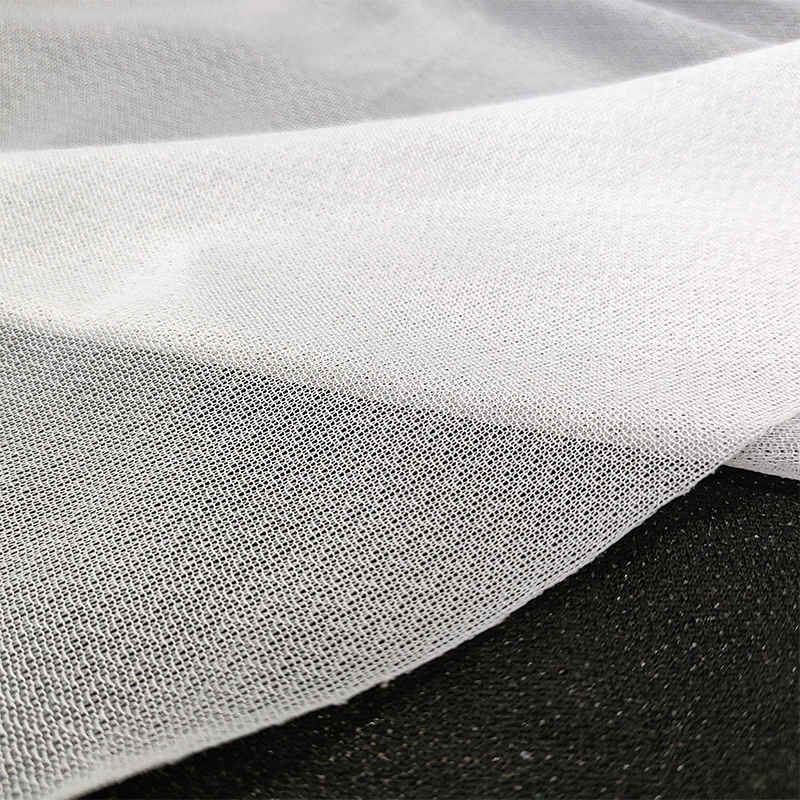
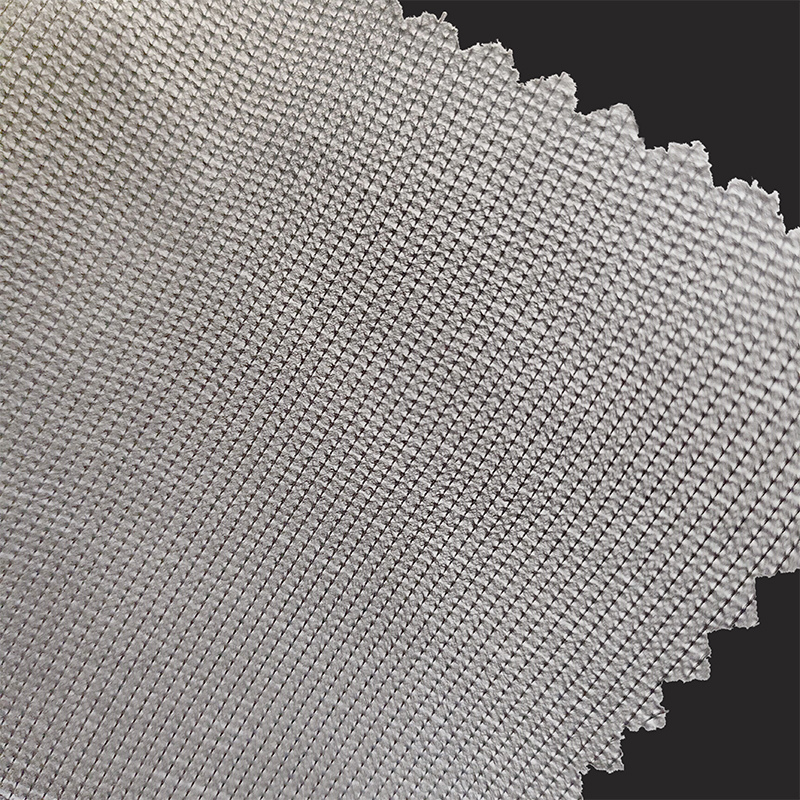
Interfacing is like the "skeleton" of the fabric, specifically used to deal with areas that tend to sag or lose their shape.
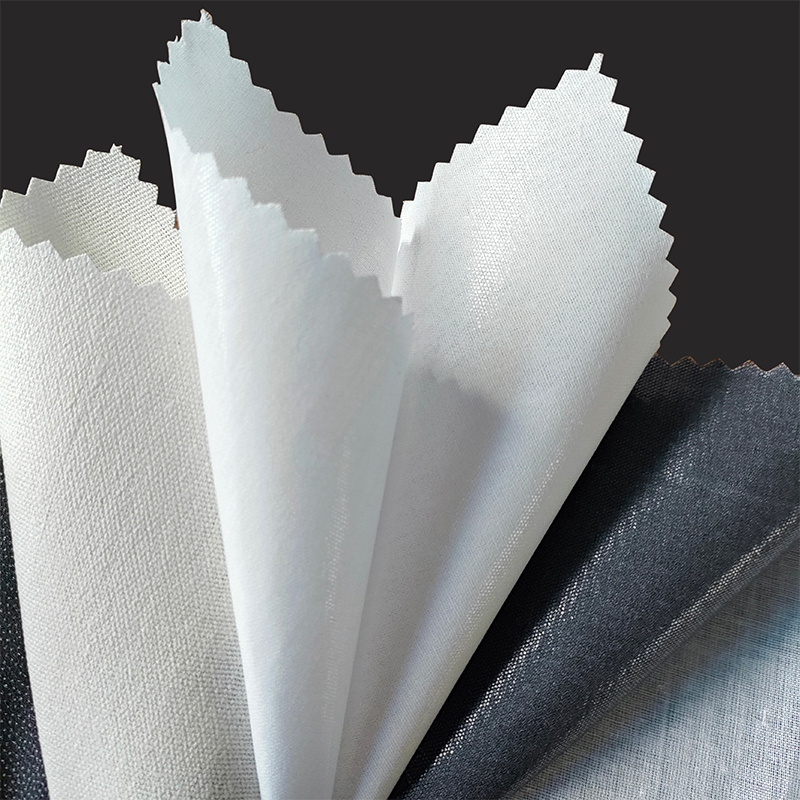
How to use: It's usually attached to the back of the main fabric. The most commonly used type now is "fusible interfacing," where you simply place the adhesive side against the fabric and press it with an iron, and it fuses with the fabric.
Where to use: Shirt collars, cuffs, buttonholes, or the bottom of bags. Use it whenever you want the fabric to be stiff, structured, and prevent it from easily stretching or deforming.
2. Facing: Used for finishing edges
Facing is a narrow strip cut from the main fabric (or a similar fabric) used to finish the edges of garment openings.
How to use: Sew it to the edge of the garment opening (such as the neckline) right sides together, then turn it to the inside. This makes the edge look clean and neat from the outside, without any raw edges showing.
Where to use: Most commonly found on the necklines of collarless shirts, armholes of sleeveless tops, or the inside of skirt waistbands. It makes the edges look high-quality and provides some support.
3. Lining: Used for covering imperfections and providing smoothness
Lining is the innermost layer of a garment, usually made of smooth satin or lightweight cotton fabric.
How to use: It's essentially a "lining" garment made to the general shape of the main garment, then sewn to the innermost layer. It covers all the sewing marks, raw edges, and the interfacing mentioned earlier.
Where to use: Inside suits, coats, or skirts. It allows you to easily slip into the garment and prevents the rough outer fabric from rubbing against your skin.
4. Interlining: Used in areas where "extra material" is needed.
Interlining is the "middle layer" hidden between the main fabric and the lining.
How to use it: It's sandwiched in between. You first layer the interlining and the main fabric together and sew them as one layer, then cover it with the lining. It's neither against the body nor visible from the outside.
Where to use it: If you want to make a winter coat warmer, you can add a layer of wool or cotton batting in between; if you think the outer fabric is too thin and lacks substance, you can also add a layer of interlining to increase thickness and drape.