 English
 Español
 Türk
TürkContent
- 1 What Defines a Collar? Anatomy and Key Terminology
- 2 The Three Functional Families of Female Collars
- 3 Band Collars: The Minimalist Stand-Up Family
- 4 Classic Shirt Collars: The Stand-and-Fall Family
- 5 Flat Collars: Peter Pan, Sailor, Bertha and Their Relatives
- 6 Shawl and Rolled Collars: Soft Sophistication
- 7 Ruffle and Decorative Collars: The Statement Makers
- 8 Tailored Collars: Blazer, Coat and Lapel Styles
- 9 Matching Collar Type to Face Shape
- 10 Collars by Occasion and Season
- 11 Current Trends in Women's Collar Styles
- 12 How Collar Construction Depends on Interlining
- 13 Common Collar Defects and How to Avoid Them
- 14 Frequently Asked Questions
The collar is the defining line of a garment. It is also the most structurally demanding component in women's clothing. A collar can make the neck look longer, the face look softer, the chest look broader, or the whole silhouette look more formal. In production terms, the collar is where shell fabric, fusible interlining, and sewing precision come together; get any of the three wrong, and the garment fails first at the neckline.
The direct answer to the question "what are the female types of collars?" is that women's collar styles divide into three working families: band collars (such as Mandarin and choker), flat collars (such as Peter Pan and sailor), and stand-and-fall shirt collars (such as Kent, spread, and button-down). Beyond these sit the rolled and lapel styles used in jackets, plus the decorative ruffle family. This guide explains each type with its construction logic, fit characteristics, and practical styling advice.
This guide is written for designers, pattern makers, garment manufacturers, and anyone who selects clothing professionally. It pairs fashion knowledge with the manufacturing reality of interlining and fusing, because the collar is the one part of the garment that cannot keep its promise without internal support.
What Defines a Collar? Anatomy and Key Terminology
Before naming types, it is worth decoding the parts of a collar. The same name can look different with a different stand height, roll line, or point length, so a shared vocabulary prevents costly misunderstandings between design, pattern, and factory.
- Stand: the vertical section that rises from the neckline and supports the visible fall.
- Fall: the folded part that drapes down over the garment, carrying the collar's visual identity.
- Roll line: the crease where the stand ends and the fall begins; it controls the collar's posture.
- Lapel: the extension that folds back over the front bodice in open necklines, typical of jackets and blazers.
- Placket: the reinforced front opening of a shirt where buttons and buttonholes sit.
These elements decide how a collar behaves. A tall stand creates an upright, structured posture; a low stand lets the collar fall flat; a deep roll line produces the soft feminine turn seen on shawl and cowl styles. In manufacturing, the interlining is chosen to lock in this geometry, stiff enough to hold but soft enough to roll.
| Part | Function | Typical interlining requirement |
|---|---|---|
| Stand | Lifts collar off the neckline | Firm to semi-firm fusible |
| Fall | Covers the neckline and carries the style | Medium-stiff fusible or nonwoven |
| Roll line | Controls how the collar folds | Flexible crease-retentive interlining |
| Lapel | Opens and broadens the neckline | Canvas or napped interlining |
The Three Functional Families of Female Collars
If you compress all named women's collar styles into a working system, three families explain nearly every silhouette in the market: band collars, flat collars, and stand-and-fall shirt collars. Jacket lapels, shawl rolls, and decorative ruffles are variations built on top of these three foundations.
- Band collars have no fall or only a tiny one; the collar stands upright around the neck. Examples: Mandarin, choker, convertible band, and wing collar on formal shirts.
- Flat collars have no stand; the collar lies flat against the shoulder and upper back. Examples: Peter Pan, sailor, Bertha, pilgrim, and cape collars.
- Stand-and-fall shirt collars combine a vertical band with a forward-falling section. Examples: Kent, spread, button-down, tab, and pin collars.
These categories are not cosmetic; they correspond to construction. A band collar can be made in one piece with a single fusible interlining. A shirt collar is cut in two pieces (top collar and under-collar) with a defined roll. A flat collar is cut with no stand, sometimes in one piece, and relies on the shell fabric plus a light interlining to keep its edge. Recognizing which family a collar belongs to tells you immediately how to fuse, press, and sew it correctly.
Band Collars: The Minimalist Stand-Up Family
Band collars are the cleanest female collar type: a strip of fabric that encircles the neckline and stands upright, with no fall or only a negligible one. The best-known examples are the Mandarin collar and the choker band.
Mandarin and Cadet Collar
A standing strip 2.5 to 5 cm high with a centre-front opening. The Mandarin collar is fused with a firm interlining in formal blouses; in knitwear and loungewear, a lighter nonwoven interlining keeps the band comfortable while preventing it from bulging outward.
Convertible Band Collar
A one-piece band that can be worn closed at the throat or open over the collarbones. It requires an interlining that is firm at the centre back but pliable at the front opening, so the band can fold flat when unbuttoned without cracking or bulging.
Choker Collar
A narrow band, usually 2 to 3 cm wide, that sits closely around the neck. It reads modern and pairs well with blazers, V-neck dresses, and summer tops. Because the band is cut on the straight grain or bias, a soft fusible with good recovery is essential for a comfortable fit.
Wing Collar on Women's Formal Shirts
A high-standing band with two small folds that point down. In women's formal shirts, the wing collar is supported with a 60 to 80 gsm fusible; in soft blouse fabrics, a lighter interlining prevents the points from collapsing while keeping the band upright.
The most common mistake with band collars is under-fusing. A relaxed band that has not been properly stiffened will curl outward within two wears, changing the silhouette entirely. Choosing the correct interlining weight for the shell fabric is not a refinement; it is the difference between a sharp collar and a floppy one.
Classic Shirt Collars: The Stand-and-Fall Family
Shirt collars with a stand and a fall are the most widely worn female collar types and the most demanding to produce. They are cut in two parts: the band that wraps the neck and the fall that folds forward. The roll line between them determines whether the collar looks crisp or relaxed.
Kent and Point Collar
The workhorse of business shirts. Point length typically ranges from 6 to 9 cm, and the points sit close together. Kent collars flatter oval and long faces and are the safest choice for office wardrobes. Their sharp tips depend on an interlining that reaches the point edges without bleed-through.
Spread Collar
The points angle outward, widening the neckline and creating a relaxed but still formal look. Spread collars are the best choice for women with round faces or short necks. The wider set of the points reduces stress on the roll line, so a medium-stiff fusible is usually enough to keep the collar crisp.
Button-Down Collar
The points are anchored to the shirt with buttons, delivering a signature inward roll and a preppy attitude. The interlining must be medium-stiff: too firm and the roll disappears, too soft and the points curl upward after washing.
Tab and Pin Collars
In tab collars, a small fabric tab joins the points under the tie; pin collars use a metal pin or bar. Both lift the collar and emphasize the neckline. Because the points are pulled together, point stability is critical: a resilient fusible interlining with strong tensile strength is required.
| Style | Point length | Opening angle | Best interlining |
|---|---|---|---|
| Kent or Point | 6 to 9 cm | 60 to 90 degrees | Fusible woven shirt interlining |
| Spread | 6 to 8 cm | 90 to 150 degrees | Medium-stiff fusible |
| Button-down | 5 to 7 cm | 70 to 100 degrees | Medium fusible with button reinforcement |
| Tab or Pin | 6 to 7 cm | 70 to 90 degrees | Firm fusible for point rigidity |
Durability is decided at the fusing press before the collar is ever sewn. The interlining must bond completely to the outer fabric without bubbling or bleeding, and it must survive repeated washing without curl. Many garment defects, such as curling tips, wavy edges, and collapsed bands, originate in interlining selection rather than in the sewing room. For a longer discussion of wash stability, this article on shirt interlining wash cycles explains what happens after many launderings.
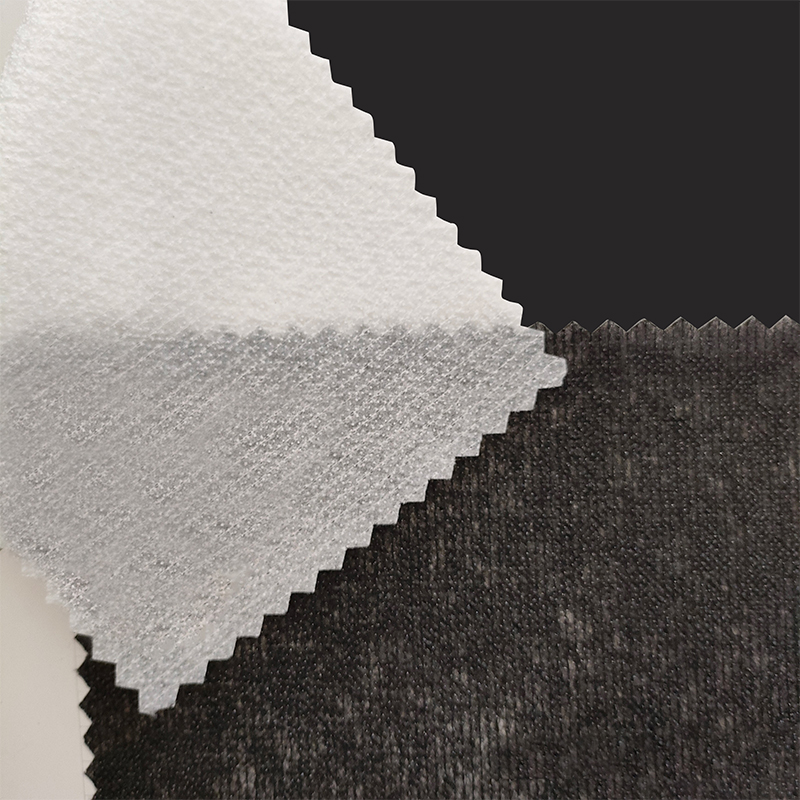
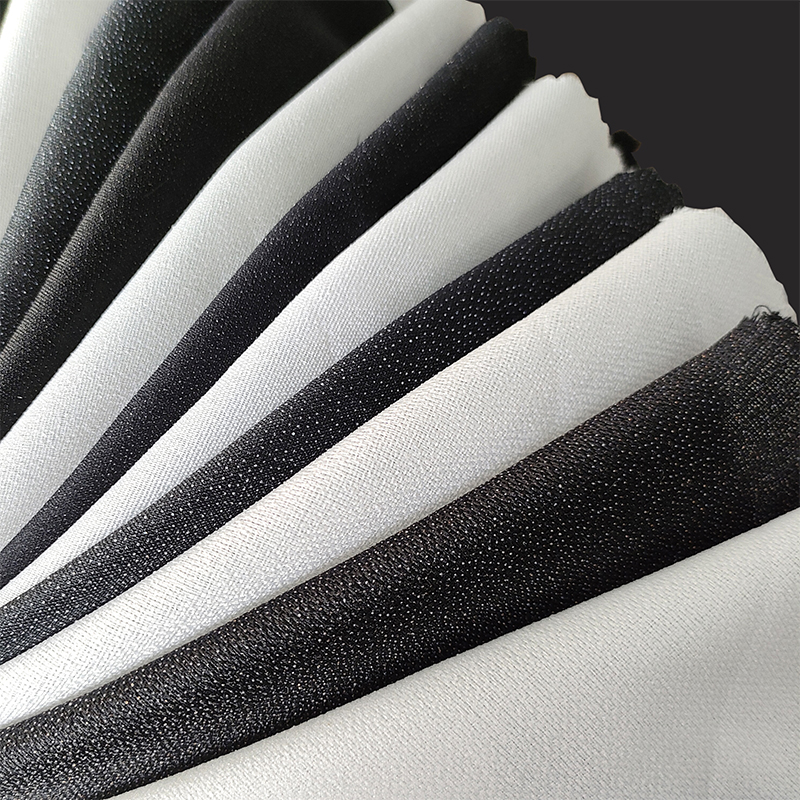
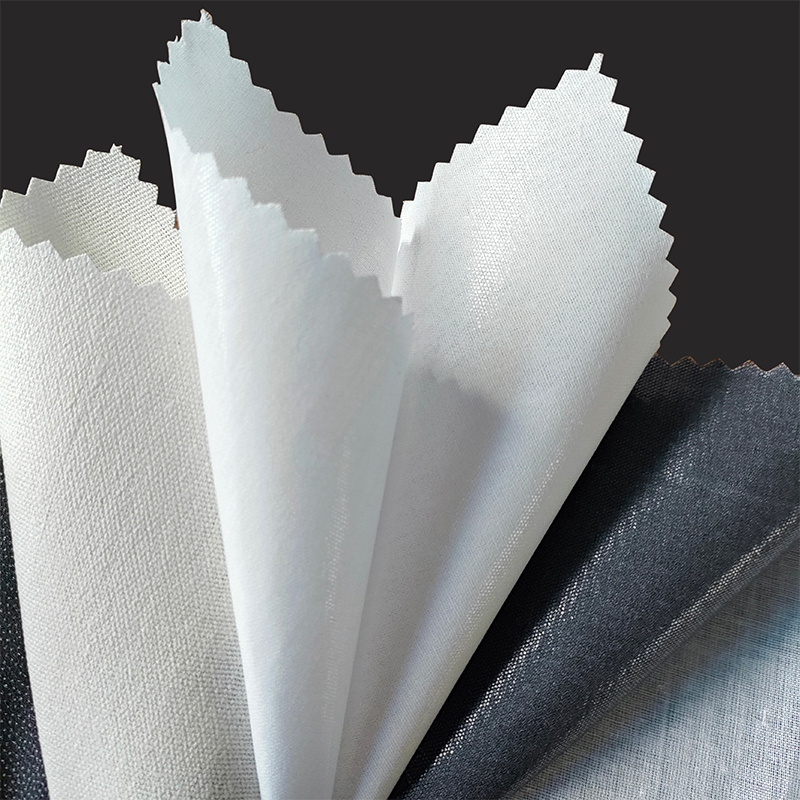 Shirt Interlining for Collar StabilityThis interlining range supports flat collar styles like Peter Pan and sailor collars by maintaining shape through washing, making it worth reviewing when collar defects arise from interlining choice.View Product →
Flat Collars: Peter Pan, Sailor, Bertha and Their Relatives
Flat collars have no stand at all. They are cut to lie flat against the shoulder and upper back, giving them a soft, youthful, feminine character. They are the easiest collar family to recognize: Peter Pan, sailor, Bertha, pilgrim, and cape collars all belong here.
Peter Pan Collar
A rounded flat collar with small, smooth corners, usually 2 to 4 cm wide at the shoulder. It looks charming on blouses and dresses, but because it frames the neck horizontally, it can make a short neck or round face look wider. Pair it with a neat hairstyle and open necklines.
Sailor Collar
A wide square collar that falls over the shoulders and turns into a V at the front, traditionally finished with a tie. Sailor collars are a staple of nautical-inspired spring and summer garments. The back panel requires a light fusible to control the broad shoulder area.
Bertha Collar
An oversized flat collar that extends from the front neckline over the shoulders, often used on dresses and cardigans. Its scale makes it a statement piece. A soft nonwoven interlining along the neckline seam prevents the heavy front corners from dragging the seamline forward.
Pilgrim and Cape Collars
The pilgrim collar is a broad, slightly rounded bib style; the cape collar extends over the shoulders like a small cape. Both require a stable but flexible interlining, because the collar edge is left unconstructed rather than rolled.
From a production standpoint, flat collars are less demanding at the stand and more demanding at the edge. The collar edge must lie perfectly flat, which means the seam is either graded and under-pressed or enclosed with bias binding. A light fusible, typically 30 to 40 gsm, is applied to the neckline area only.
Shawl and Rolled Collars: Soft Sophistication
Shawl collars are continuous, seamless collars that start at the back neck, roll around the front, and merge into the front placket. That unbroken line is the most elegant in women's fashion. They appear on cardigans, silk blouses, dresses, and blazers.
Shawl Collar
A soft rolled collar that becomes wider toward the shoulder. The roll depth depends on the pattern and the bias direction of the cut. In knitwear, a shawl collar is often knitted in one piece; in woven garments, the under-collar is cut on the bias and fused with a flexible nonwoven interlining.
Tuxedo Collar
A shawl collar with a contrasting facing, traditionally satin or grosgrain, used on formal blazers and evening jackets. The contrast facing draws the eye upward, making the collar the centerpiece. It requires very stable fusing to prevent the satin facing from puckering along the roll line.
Bermuda and Cowl Collars
The Bermuda collar is a relaxed roll style seen on summer jackets and polo tops, with a wide opening and a soft roll. The cowl collar is its dramatic cousin: extra fabric is drawn into a deep drape at the front, creating a sculptural collar that needs no stand at all. Cowls work best in soft, drapable fabrics with a light fusible at the back neck only.
When rolled collars lose their roll and begin to crumple, the under-collar interlining is usually the cause. Since the collar passes through a bias curve at the shoulder, the interlining must stretch and recover across the bias. Stiff woven fusibles perform poorly here; soft knitted or nonwoven interlinings are the practical choice.
Ruffle and Decorative Collars: The Statement Makers
Ruffle collars are the statement family. Instead of quietly framing the neck, they become the protagonist of the garment. This family includes the ruffle collar, jabot, Pierrot, butterfly, bishop, and ascot.
- Ruffle collar: gathers or pleats sewn into the neckline, with or without a supporting band.
- Jabot or cascade collar: a vertical frill falling from the throat down the centre front, associated with romantic and period-inspired styles.
- Pierrot collar: a full round collar that stands up behind the neck and wraps the whole neckline; often seen on blouses with large sleeves.
- Butterfly collar: a wide collar with wing-like tips or scalloped edges that either turns down or stands up.
- Bishop collar: a voluminous gathered band made from a wide strip pleated into the neckline.
- Ascot collar: a high wrapped neckline with a flowing scarf-like front cascade.
Decorative collars depend far more on shell fabric and sewing technique than on interlining. Many are single-layer with a narrow hem or rolled edge. When they fail, it is usually because the gathering thread broke, the edge stretched, or the fabric frayed. The only structural part that benefits from interlining is the neckline seam, where a 20 to 30 gsm nonwoven fusible prevents the collar from stretching while it is sewn.
Tailored Collars: Blazer, Coat and Lapel Styles
Tailored jacket and coat collars are different from shirt and blouse collars: they are built around a lapel and rely on canvas construction rather than simple fusing.
Notched Collar
The classic blazer collar with a step cut into the lapel. The notch depth and angle alter the formality of the jacket. From a fit perspective, a notched collar widens the chest and softens a round face.
Peaked Collar
A sharp lapel that points upward toward the shoulder. Peaked collars produce a strong vertical line and are used on more formal coats and suits. They are flattering for women with broad shoulders because they balance the body.
In a tailored jacket, the collar and lapel need a canvas interlining with a controlled spring, stiff enough to keep the lapel standing away from the chest and soft enough to roll around the collar gorge. Garment manufacturers often combine a woven canvas interlining with a fused front panel to achieve both structure and smoothness. The weight of the jacket fabric determines the canvas weight: heavier wool requires a firmer canvas; lightweight suitings need a reduced canvas to avoid telegraphing.
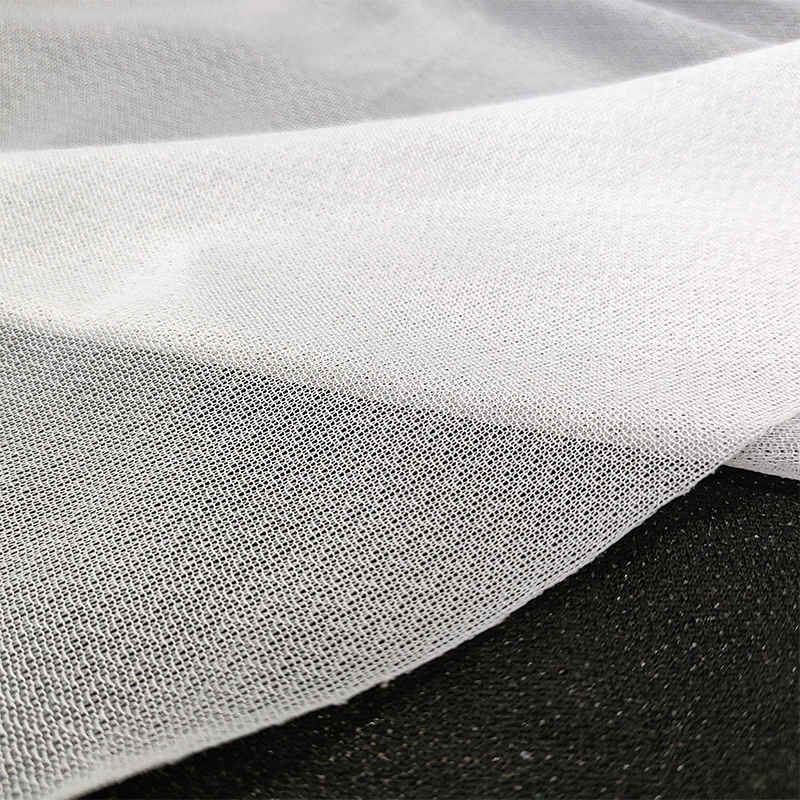
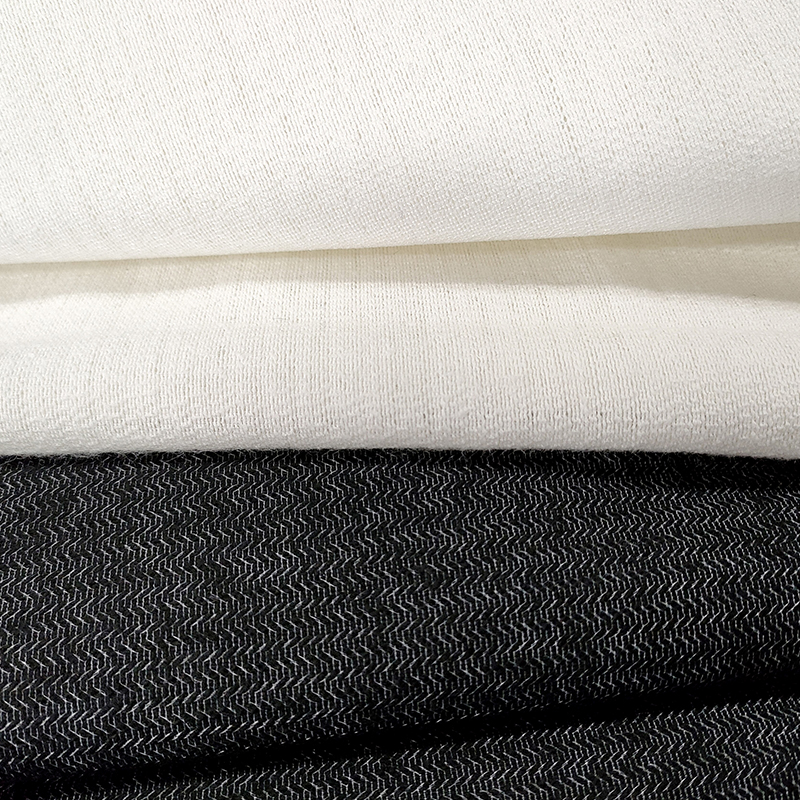 Canvas Interlining for Tailored JacketsDesigned for jacket collars and lapels, this canvas interlining provides the controlled spring needed to keep lapels standing while allowing a smooth roll around the gorge, ideal for structured garments.View Product →
Matching Collar Type to Face Shape
Collar choice is a proportions game. The neckline created by the collar changes how the world reads the face and neck. The practical rule is simple: horizontal lines widen, vertical lines lengthen.
| Face shape | Flattering collars | Collars to avoid |
|---|---|---|
| Round | Spread collar, long point collar, deep shawl, open convertible | Peter Pan, high band, round ruffle |
| Oval | Nearly all collar styles | Extremely wide flat collar |
| Square | Soft cowl, rounded shawl, small Peter Pan | Sharp peaked and notched lapels |
| Heart | Mandarin, spread, open shawl | Choker band, heavy throat ruffles |
| Long | Band collar, turtleneck, small flat collar | Deep V lapels, long sharp points |
These are starting points, not strict rules. Lightness of color, fabric weight, and personal styling all shift the final effect. But when a client says "this collar looks wrong on me," the face-shape table is the first place to look.
Collars by Occasion and Season
Formality follows predictable rules. The cleaner the collar line, the more formal the garment; the more draped or decorated, the more casual or festive.
| Occasion | Recommended collars | Why |
|---|---|---|
| Office or business | Kent, convertible, tab, notched blazer | Clean lines and crisp points communicate precision |
| Weekend or casual | Button-down, Bermuda, Peter Pan, camp | Relaxed roll, lower stiffness, easy movement |
| Evening or cocktail | Cowl, shawl, tuxedo, ruffle, jabot | Decorative edge and soft draping draw a flattering frame |
| Outdoor or sport | Polo, choker band, drawstring collar | Short stand, quick dry, less interlining |
For capsule wardrobes, prioritize four collars: a Kent shirt for work, a button-down for weekends, a shawl cardigan for layering, and a Peter Pan blouse for softness. That set covers most life scenarios without redundancy.
Current Trends in Women's Collar Styles
The trends of 2026 combine retro references with minimal construction. The common thread is a collar that is decisive: either visibly oversized, sharply pointed, or dramatically draped.
- Oversized collars: collars extended past the shoulder line on blouses and light jackets; best achieved with a medium fusible that keeps the wide edge flat.
- Sharp V-lines: long pointed collars worn open; they elongate the neck and create a modern, sober statement.
- Soft drape collars: deep cowl shapes in knitwear, using fabric volume instead of interlining.
- Detachable statement collars: removable fixed collars that work like jewelry; they rely on edge finishing rather than fusing.
- Reversible collars: two-sided collars with a different print or color on the underside, popular in casual shirting.
Trends do not change construction physics. Every oversized collar still needs shape retention; every sharp point still needs interlining at the tips. Selecting the right interlining is what turns a trendy sketch into a garment that survives retail and repeat wear.
How Collar Construction Depends on Interlining
Collar construction comes down to one selection: the interlining. The interlining controls stiffness, roll, wash durability, and the hand feel of the final collar. There is no universal "good" interlining, only the right combination of base (woven or nonwoven) and bonding type (fusible or sew-in) for the shell fabric.
| Collar type | Recommended interlining | Typical weight |
|---|---|---|
| Dress shirt | Fusible woven shirt interlining | 30 to 50 gsm |
| Knit shirt | Thermo-bond nonwoven interlining | 40 to 60 gsm |
| Blazer and coat lapel | Canvas interlining plus fusible | 80 to 120 gsm |
| Peter Pan flat collar | Soft nonwoven fusible | 30 to 40 gsm |
| Mandarin band collar | Firm woven fusible | 50 to 70 gsm |
Woven interlinings have controlled stretch along warp and weft, which makes them the default for shirting and tailoring where the collar must fold in a predictable direction. Nonwoven interlinings are isotropic, equally stiff in all directions, which suits flat collars, bands, and knit structures. Canvas interlinings carry the traditional spring of tailored jackets.
The practical rule: if the collar has a defined roll, choose a woven fusible; if the collar is flat or cut on the bias, choose a soft nonwoven; if the collar must hold heavy weight in coats and jackets, add a canvas layer.
This is also why manufacturers rarely change interlining suppliers casually. A proven interlining has been tested on specific shell fabrics with specific fusing parameters: temperature, pressure, and dwell time. Changing one component changes the collar's entire behavior. Woven interlining, in particular, has been the backbone of tailored garment construction because of its dimensional stability and predictable fold behavior.
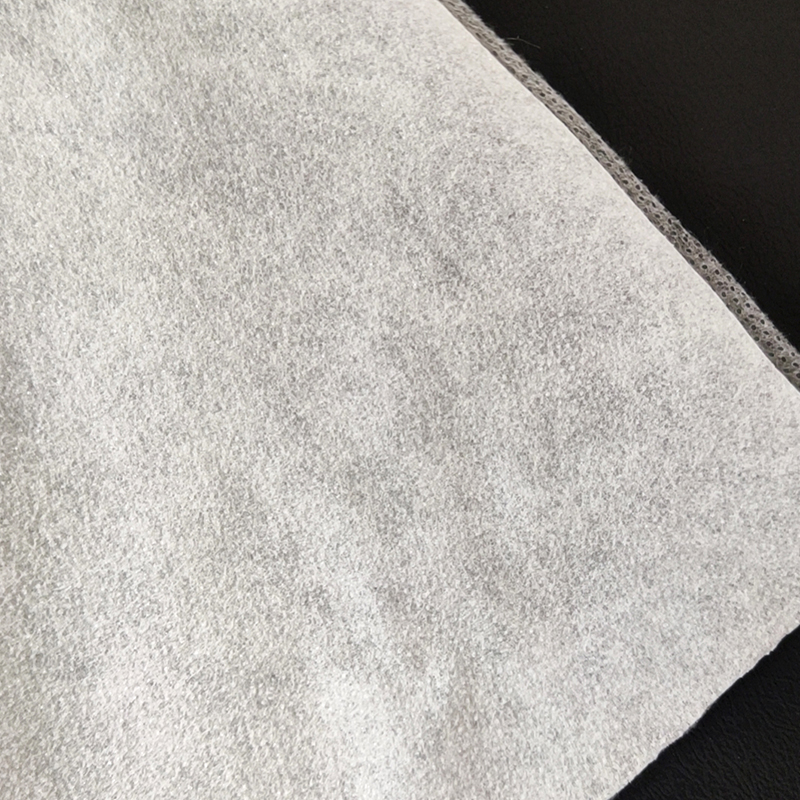
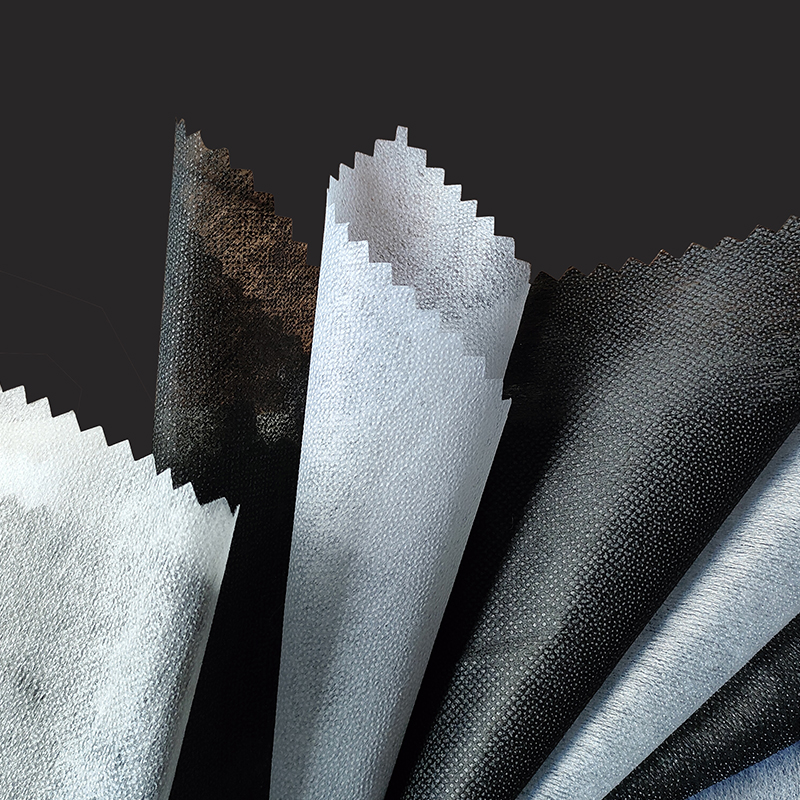 Thermobond Nonwoven InterliningA soft, economical interlining with low directional requirements and clean cut edges, suitable for collars where flexibility and ease of use matter, offering a practical alternative to woven types.View Product →
Common Collar Defects and How to Avoid Them
Even with correct interlining, collars fail in recognizable patterns. Most defects trace back to three causes: interlining weight mismatch, fusing parameters, or construction technique.
- Collar tip curling: the points bend upward or outward. Cause: interlining too heavy for the shell, or fusing temperature too high, shrinking the fusible more than the shell.
- Bubbling after washing: a wavy separation between shell and interlining. Cause: poor adhesive distribution, excessive water temperature, or shrinkage mismatch between the two layers.
- Collapsed band: the stand lies flat instead of standing. Cause: band interlining too soft. Fix: increase weight or add a second fusing at the back band.
- Placket twisting: the front placket twists after washing. Cause: bias grain in the outer fabric combined with a rigid fusible. Correct by cutting on the straight grain or using a softer fusible.
A practical quality test: fuse a test collar, wash it three times at 40 degrees Celsius with domestic detergent, and measure the point angle, roll position, and band height. If the collar moves more than 3 mm at the point or 2 mm at the band, the interlining and shell are not compatible.
Frequently Asked Questions
What is the most flattering collar for a short neck?
A V-neck or open neckline is best: spread collars, convertible collars, and deep shawl collars. Avoid high bands, chokers, and tight ruffles at the throat.
Are Peter Pan collars suitable for office wear?
Yes, in a small, well-made version with a sharp edge and a clean finish. On crisp poplin with a proper fusible, a Peter Pan collar reads effortlessly French and professional.
What is the difference between a Mandarin collar and a Mao collar?
They describe the same collar; the names vary by regional usage. Small differences in the front edge shape, square or angled, are design choices, not construction differences.
Can a collar be replaced on an existing blouse?
Yes, if the neckline seam is accessible. It requires unstitching the old collar, re-cutting and fusing the new one, and re-sewing, ideally pressing the neckline flat afterwards. Plan for 60 to 90 minutes of careful sewing.
How should a fused collar be washed?
Machine wash at 30 to 40 degrees Celsius on a gentle cycle, then hang dry. Heat from the dryer degrades the fusible adhesive and accelerates curling and bubbling.
Which collar type is the most durable for a daily work shirt?
A button-down collar with a proven wash-stable fusible. The buttons prevent the points from curling, and the short stand keeps the collar close to the neck, so the structure remains visible after many washes.
What is the strongest sign of poor interlining quality?
Delamination after three washes. If the collar fabric separates from the fusible or shows bubbles near the points, the interlining does not match the shell, the fusion temperature was wrong, or the adhesive coating was inadequate. Change all three variables in testing.