 English
 Español
 Türk
Content
- 1 What Is Non Woven Interlining?
- 2 Main Types of Non Woven Interlining
- 3 Fusible vs. Non-Fusible Non Woven Interlining: Which Do You Need?
- 4 How to Select the Right Non Woven Interlining
- 5 Key Applications in Garment Production
- 6 How Non Woven Interlining Is Manufactured
- 7 Common Defects and How to Prevent Them
- 8 Environmental and Sustainability Considerations
- 9 Frequently Asked Questions
- 9.1 What is the difference between woven and non woven interlining?
- 9.2 Can non woven interlining be used on stretch fabrics?
- 9.3 What temperature should I use to fuse non woven interlining?
- 9.4 Why does the interlining pattern show on the face of the fabric?
- 9.5 How do I calculate the correct interlining weight for a garment?
- 9.6 Does non woven interlining survive repeated washing and dry cleaning?
Non woven interlining is the most widely used fabric reinforcement in commercial garment manufacturing. It stabilizes shell fabrics, controls drape, and retains shape through wear and repeated laundering, all at a fraction of the cost of woven interlinings. Unlike woven materials that require yarn preparation, weaving, and finishing, non woven interlining is produced directly from fiber webs, making it lighter, faster to source, and consistent in every direction.
The choice of non woven interlining directly affects how a garment looks, feels, and performs in production. Selecting the wrong weight, bonding method, or adhesive system can lead to bubbling, show-through, stiffness, or delamination. This guide explains the main types of non woven interlining, how to match them to your outer fabric and end-use, and what to verify during fusing so you can write specifications with confidence.
What Is Non Woven Interlining?
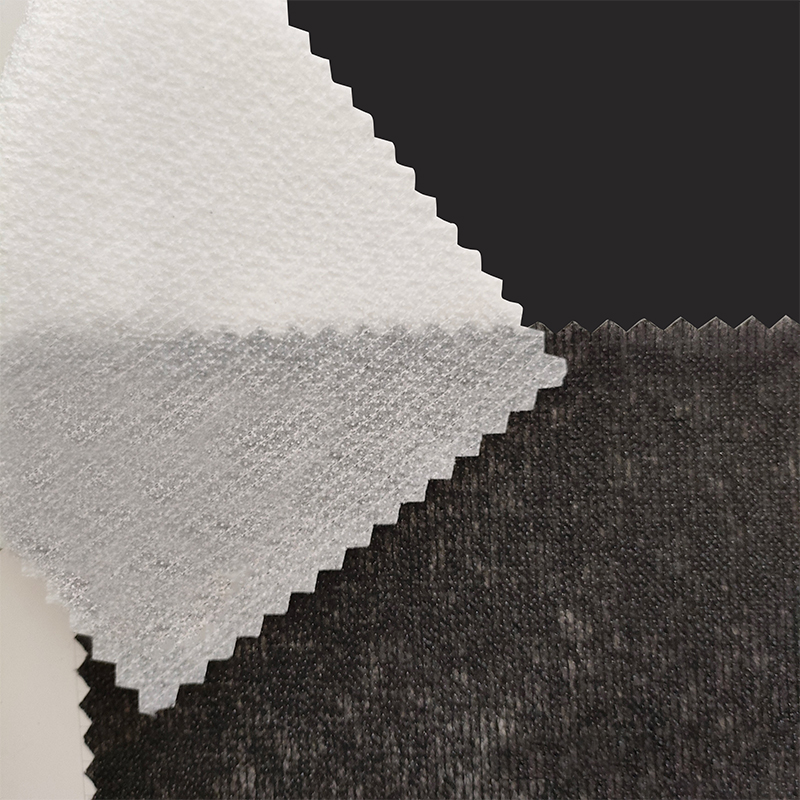
Non woven interlining is a flat, flexible sheet made from staple or filament fibers that are bonded together by mechanical, thermal, or chemical processes instead of being woven or knitted. The fibers are first laid into a loose web, then consolidated to achieve the required thickness and density. Polyester is the most common raw material because of its dimensional stability and resistance to washing; polyamide, viscose, and recycled cotton are also used for specific hand-feel and sustainability requirements.
The key difference from woven interlining comes down to structure:
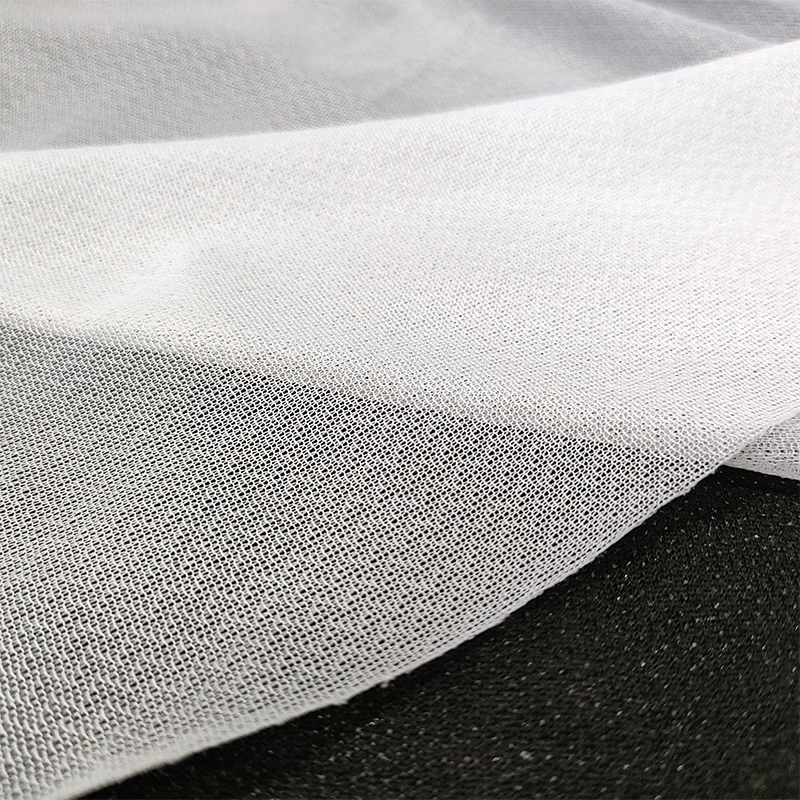
- Woven interlining has interlaced warp and weft yarns, which gives it high tensile strength but also creates a grain direction. It behaves differently on the bias than on the straight grain.
- Non woven interlining has no grain direction. Its properties are nearly isotropic, meaning the reinforcement behaves the same way regardless of cutting angle.
That isotropy is a practical advantage. Pattern pieces can be nested closer together, there is no risk of bias distortion during fusing, and cut edges do not ravel inside the garment. The trade-off is that non woven interlining generally has lower tenacity and elongation than a comparable woven construction, so it is not recommended for areas subjected to high continuous stress unless a reinforced nonwoven type such as stitch-bond or PP-TPU is specified.
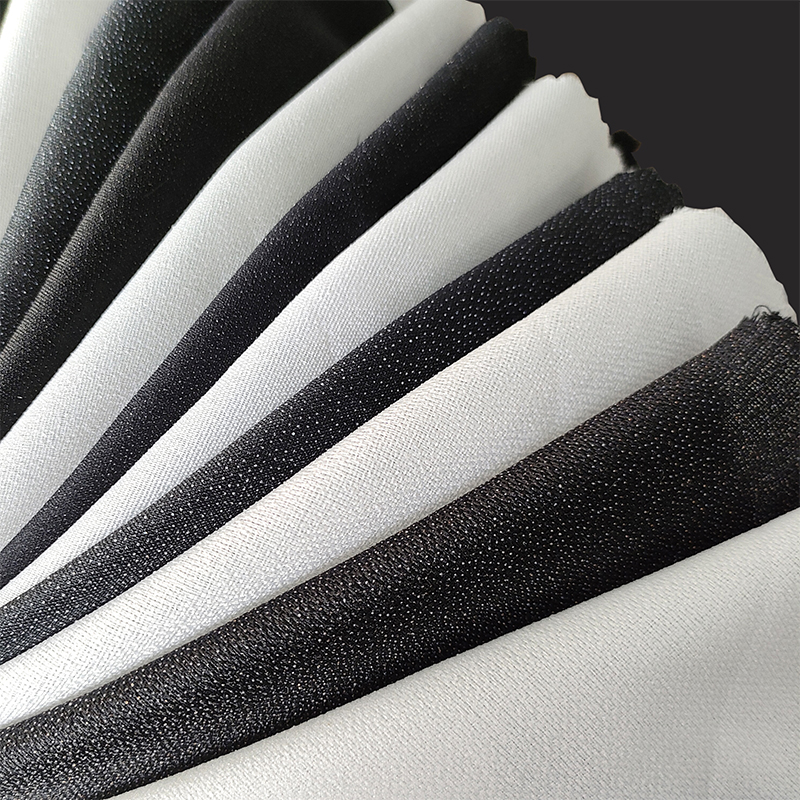
For fusible applications, non woven interlining is coated with a thermoplastic adhesive such as polyamide (PA), polyester (PES), or ethylene-vinyl acetate (EVA). The adhesive melts during fusing and locks onto the shell fabric. Because the base web is uniform, the adhesive dots distribute evenly across the surface, which reduces the chance of visible marks on the face fabric compared with irregular woven substrates.
Main Types of Non Woven Interlining
Different production routes create very different interlining behavior. Five types dominate the garment industry today:
1. Chemical-Bond Nonwoven Interlining
Fibers are sprayed or saturated with an acrylic or latex binder, then dried and cured in an oven. The binder locks the fibers together at their crossing points. This method produces a soft, supple interlining with excellent drape, which is why it is frequently used in shirt collars, cuffs, and lightweight dress bodices. It can be manufactured with a water-based binder system that keeps VOC emissions low, and it accepts dot coating well for fusible versions.
2. Thermo-Bond Nonwoven Interlining
Thermo-bond nonwoven interlining uses low-melt bicomponent fibers that soften and fuse when heated in a through-air oven or on a heated calender. No chemical binder is added, so the result is exceptionally clean, uniform, and dimensionally stable. This type has a slightly crisper hand than chemical-bond, making it a strong candidate for structured fronts, waistbands, and outerwear parts that need to hold a crease. It also resists dry cleaning better than some latex-bonded webs.
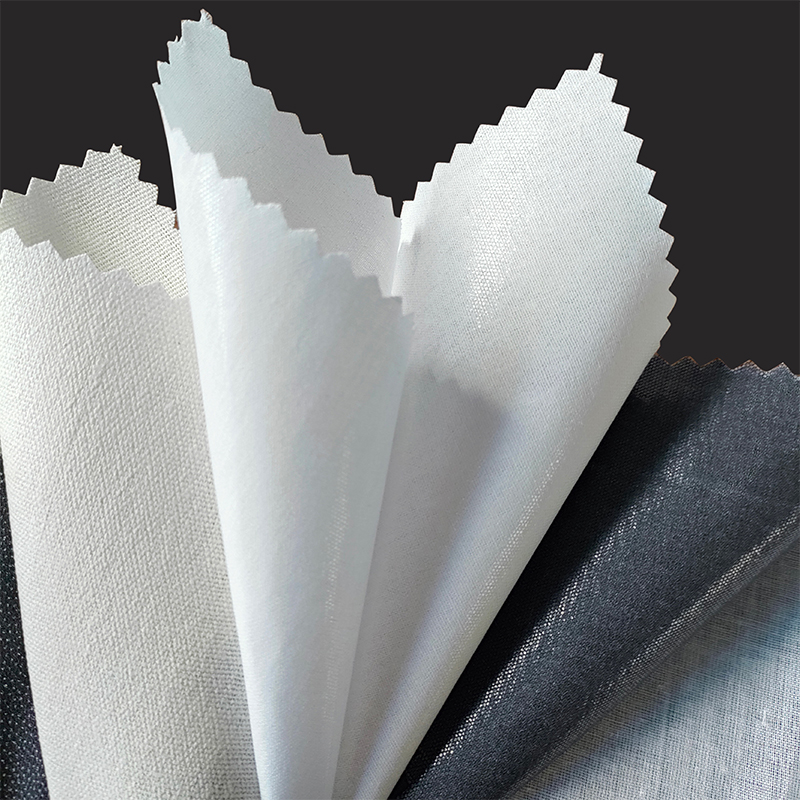
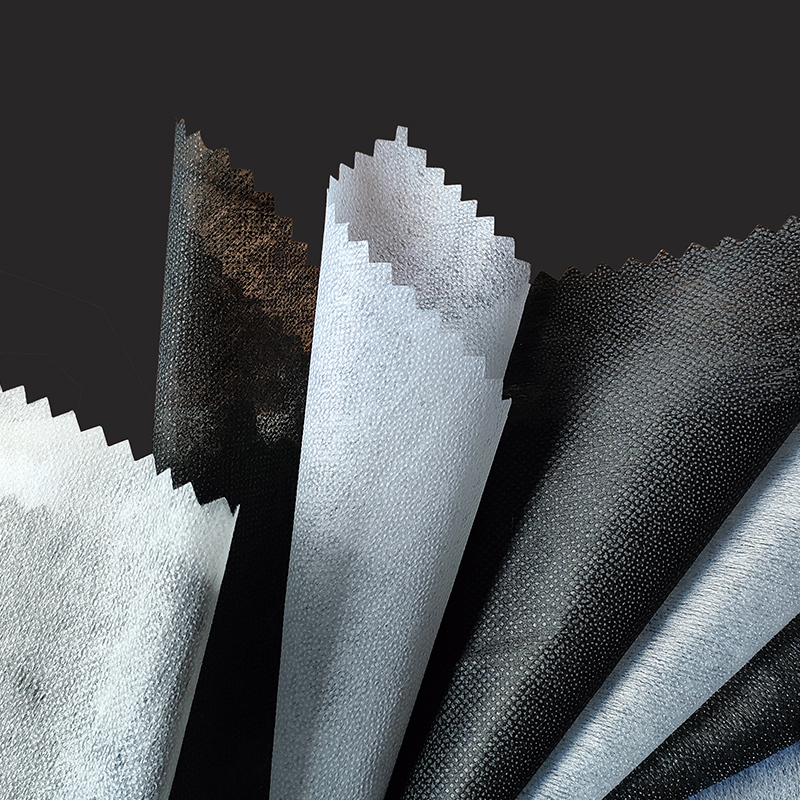 Thermobond Nonwoven Interlining for Structured Garment PartsThis heat-fused nonwoven interlining uses low-melt bicomponent fibers for a clean, uniform hand and dimensional stability. It suits structured fronts, waistbands, and outerwear and offers better dry-cleaning resistance than latex-bonded webs.View Product →
3. Stitch-Bond Nonwoven Interlining
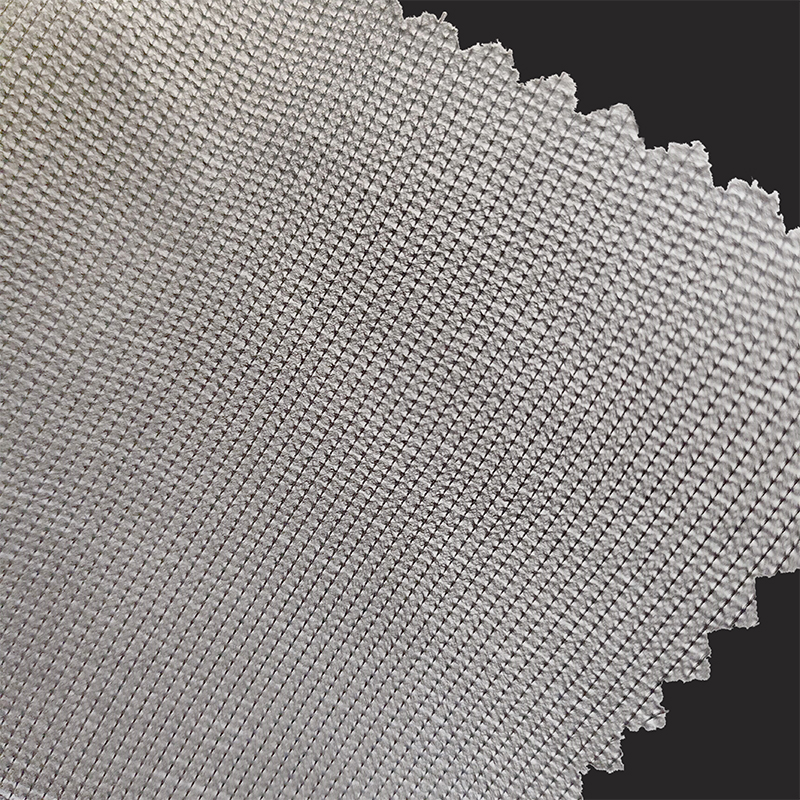
A fiber web is reinforced by a system of warp-knitted stitches running through the web. The stitches provide high tensile strength and elastic recovery that a purely bonded web cannot achieve. Stitch-bond interlining is a reliable choice for knitwear, jersey fabrics, and garments with stretch expectations, since it moves with the fabric and returns to shape without permanent distortion.
4. PP Spunbond Nonwoven Interlining
Continuous polypropylene filaments are extruded, laid into a random web, and bonded by heat and pressure. Spunbond polypropylene is strong for its weight, naturally water-resistant, and resistant to most chemicals. It is widely used in outerwear, caps, sportswear, and industrial workwear where a stiff, tough reinforcement is needed without the bulk of woven hair canvases.
5. PP-TPU Elastic Interlining
This is a composite of polypropylene nonwoven base combined with thermoplastic polyurethane (TPU) film or elastic filaments. It delivers controlled stretch in one or both directions, then recovers without sagging. PP-TPU elastic interlining is specified for waistbands, necklines, sleeve openings, and performance apparel where the seam must stretch with the body and snap back cleanly.
| Type | Bonding Method | Typical Weight | Best Applications |
|---|---|---|---|
| Chemical-bond | Acrylic or latex binder | 25–80 gsm | Shirts, dresses, blouses |
| Thermo-bond | Low-melt fiber fusion | 30–120 gsm | Structured fronts, waistbands |
| Stitch-bond | Warp-knit stitches | 60–180 gsm | Knitwear, stretch garments |
| PP spunbond | Thermal calender bonding | 40–150 gsm | Outerwear, caps, workwear |
| PP-TPU elastic | TPU film or elastic lamination | 70–200 gsm | Waistbands, performance wear |
Fusible vs. Non-Fusible Non Woven Interlining: Which Do You Need?
The short answer: if your production line has a fusing press and your outer fabric can tolerate heat and pressure, choose fusible. If you work with heat-sensitive fabrics like some synthetics or beaded silks, or if the garment requires maximum breathability, choose non-fusible (sew-in).
Fusible non woven interlining carries a coating of thermoplastic adhesive on one face. During fusing at 140–160°C, 2–4 bar pressure, and 12–18 seconds, the adhesive melts and bonds the interlining to the shell fabric. The bond is instant and uniform, which speeds up production dramatically and reduces labor cost compared with sewing the interlining in place.
Non-fusible interlining has no adhesive. It is stitched to the fabric as a separate layer, either by a seam or by loose quilting. Sew-in interlining is the safer choice when the outer fabric has a coating, a thermoplastic surface, or a delicate weave that would be crushed or melted by the fusing process. It is also used in haute couture where the artisan wants maximum control over the garment structure.
| Factor | Fusible | Non-Fusible |
|---|---|---|
| Adhesive | PA, PES, EVA, or TPU dot coating | None |
| Application | Fusing press at heat and pressure | Sewing or quilting |
| Speed | High, suitable for mass production | Low, labor-intensive |
| Best for | Cotton, wool blends, woven synthetics | Sheer silks, coated fabrics, couture |
| Limitation | Heat can stiffen or mark some fabrics | Adds sewing time; can pucker if not matched |
In commercial practice, fusible non woven interlining accounts for the majority of volume because fusing presses are already standard equipment in most garment factories. Keep a small stock of non-fusible interlining for sample making and for special fabrics that cannot tolerate heat.
How to Select the Right Non Woven Interlining
Selection starts with the shell fabric and ends with a fusing trial. Work through these five checks in order:
- Match the weight. Weigh your shell fabric in grams per square meter (gsm). A lightweight or midweight non woven interlining should typically be 30–60 percent of the shell fabric weight for soft reinforcement. For structured areas like collars and cuffs, go up to 70–100 percent. For a shell fabric of 120 gsm, a 40–70 gsm interlining is usually safe; for a 250 gsm outerwear fabric, consider 100–180 gsm.
- Define the drape target. A crisp, domed collar needs a thermo-bond or chemical-bond interlining with a firm finish. A soft, flowing blouse needs a low-weight chemical-bond interlining. Hold the interlining against the shell fabric and let it fall naturally; the combination should move as one layer, not fight each other.
- Confirm fusing parameters. Standard fusible nonwoven interlinings made by established manufacturers fuse well at 140–160°C, 2–4 bar, 12–18 seconds. If your fusing press operates at a lower temperature or shorter cycle, ask your supplier for a low-temperature adhesive variant.
- Test for strike-through and show-through. Place a fused sample in front of a light box. No adhesive dots should be visible on the face. Then peel the interlining by hand after it cools; the shell fabric should tear or stretch before the adhesive bond releases.
- Verify washing behavior. Fuse samples and run them through one regular wash cycle at the temperature your customer will use. Measure delamination, bubbling, and shrinkage. If the interlining shrinks more than 2 percent while the shell shrinks only 0.5 percent, the garment will pucker at the seams.
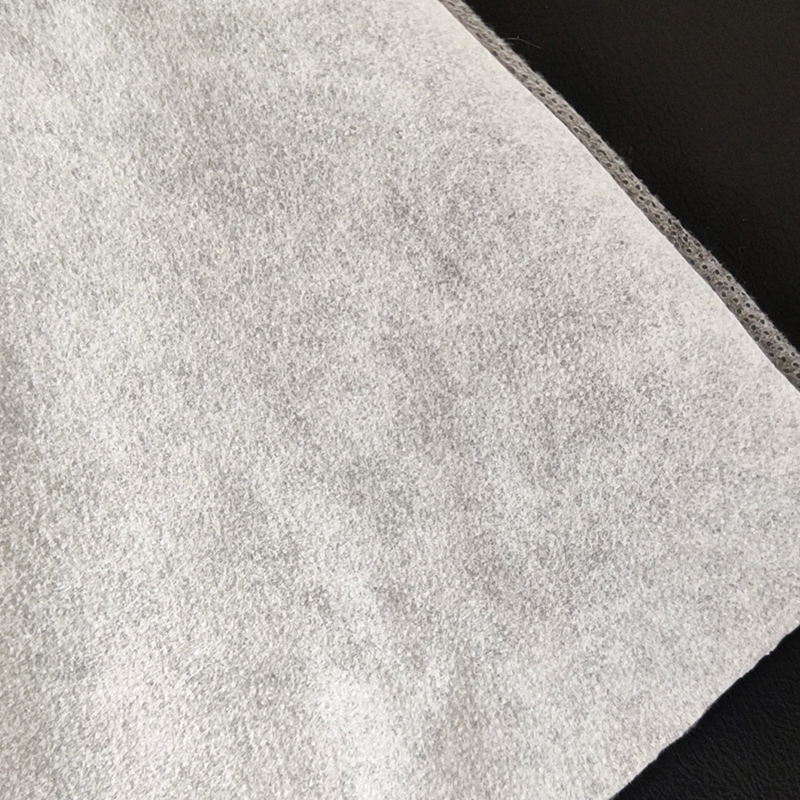 PP+TPU Elastic Interlining for Stretch FabricsThis lightweight knit interlining pairs with mid-weight stretch fabrics such as leggings and sports bras, offering high elasticity, good recovery, and strong hold—useful when selecting interlining for performance wear that must move with the shell fabric.View Product →
Do not skip the fusing trial. Manufacturers provide recommended settings, but every shell fabric has its own surface chemistry, porosity, and moisture regain. A trial run of 30 centimeters is enough to reveal whether the interlining and fabric are compatible before you commit an entire production lot.
Key Applications in Garment Production
Non woven interlining appears in almost every garment category, but the performance requirements change with the end-use.
Shirts and Blouses
Collars, cuffs, plackets, and button stands demand a crisp, stable interlining that holds its shape through laundering. Thermo-bond and chemical-bond nonwoven interlinings in the 40–80 gsm range are the standard choice. The interlining must resist shrinkage, because a collar that shrinks faster than the shirt body will curl at the tips.
Suits, Jackets, and Tailored Coats
Front panels and lapels traditionally use woven hair interlining, but nonwoven versions are increasingly specified for half-canvas and full-fusion constructions. A thermo-bond nonwoven with 90–140 gsm weight gives the neccessary substance for a lapel roll without the higher cost of woven wool blends. For the chest area, stitch-bond nonwoven is used to maintain recovery during wear.
Knitwear and Sweaters
Necklines, armholes, and shoulder seams in knitwear need an interlining that stretches with the fabric and recovers without sagging. Stitch-bond and PP-TPU elastic interlinings are preferred here because they tolerate multi-directional stress and do not pucker when the knit is seamed with an overlock machine.
Outerwear and Performance Apparel
Waterproof jackets, windbreakers, and technical shell garments use PP spunbond nonwoven interlining because it does not absorb moisture and does not delaminate when exposed to rain or condensation. The interlining must also tolerate low-temperature fusing so the waterproof membrane on the shell fabric is not damaged.
Embroidery and Decorative Stitching
Nonwoven interlining doubles as an embroidery stabilizer. Tear-away, cut-away, and water-soluble nonwoven backings support the fabric during high-speed stitching and then are removed or trimmed. This family of products is technically a nonwoven fabric and shares the same production lines as interlining, which is why many garment accessory suppliers source both from the same partner.
How Non Woven Interlining Is Manufactured
Understanding the production steps helps you troubleshoot quality issues at the factory. The complete nonwoven interlining manufacturing process begins with fiber opening and cleaning, then follows this sequence:
- Web formation. Cleaned staple fibers are carded or air-laid into a uniform web. Filament products such as PP spunbond are laid directly from the extruder.
- Bonding. The web is consolidated by one of the methods described above: chemical binder saturation, thermal activation of low-melt fibers, or mechanical needling/stitching.
- Coating (for fusible types). A thermoplastic adhesive is applied in a dot pattern on one side using a paste dot or scatter coating head. The dot size and pitch are selected according to the shell fabric and fusing conditions.
- Finishing. The coated web passes through a drying chamber, then a calender that fixes the final thickness and smoothness.
- Inspection. Rolls are checked for coating uniformity, web weight, and tensile strength before slitting and packing.
A reputable manufacturer will provide a technical data sheet for each roll, listing gsm, coating type, dot density, fusing window, shrinkage percentage, and peel strength. These parameters should appear on the spec sheet you share with your production team.
Common Defects and How to Prevent Them
Most interlining complaints trace back to fusing parameters or an incorrect interlining specification. The table below lists the defects seen most often on factory floors and the practical correction steps.
| Defect | Typical Cause | Correction |
|---|---|---|
| Bubbling or air pockets | Insufficient pressure or fusing time; moisture on the shell fabric | Increase pressure by 0.5 bar; extend fusing time by 3 seconds; pre-dry the fabric |
| Adhesive dots visible on face | Coating weight too high; fusing temperature exceeds adhesive range | Specify a lower coating weight; reduce temperature by 10°C |
| Delamination after washing | Wrong adhesive class for the care label | Use PA adhesive for water wash; PES adhesive for dry clean |
| Puckering at seam lines | Interlining shrinkage higher than shell fabric | Request pre-shrunk interlining; verify shrinkage values on the data sheet |
| Stiff and boardy hand-feel | Interlining weight too high for the shell fabric | Drop to the next lower gsm range and re-test drape |
Environmental and Sustainability Considerations
Buyers and compliance teams now evaluate interlining suppliers on environmental performance, not just price and lead time. Three areas deserve attention when sourcing non woven interlining:
- Recycled fiber content. Recycled polyester and recycled cotton can replace virgin fibers in many non woven interlining constructions without a noticeable change in performance. A product made with 50–80 percent recycled fiber reduces the embedded carbon footprint of the garment.
- Water-soluble options. Cold-water-soluble and hot-water-soluble nonwoven products eliminate the disposal of tear-away backing waste in embroidery operations. The backing dissolves completely in the washing process, reducing solid waste in the factory and at the consumer level.
- Binder and adhesive chemistry. Some chemical-bond nonwoven interlinings still rely on solvent-based binders. Ask your supplier for water-based acrylic or solvent-free formulations. These products meet stricter chemical management requirements and improve indoor air quality in cutting rooms.
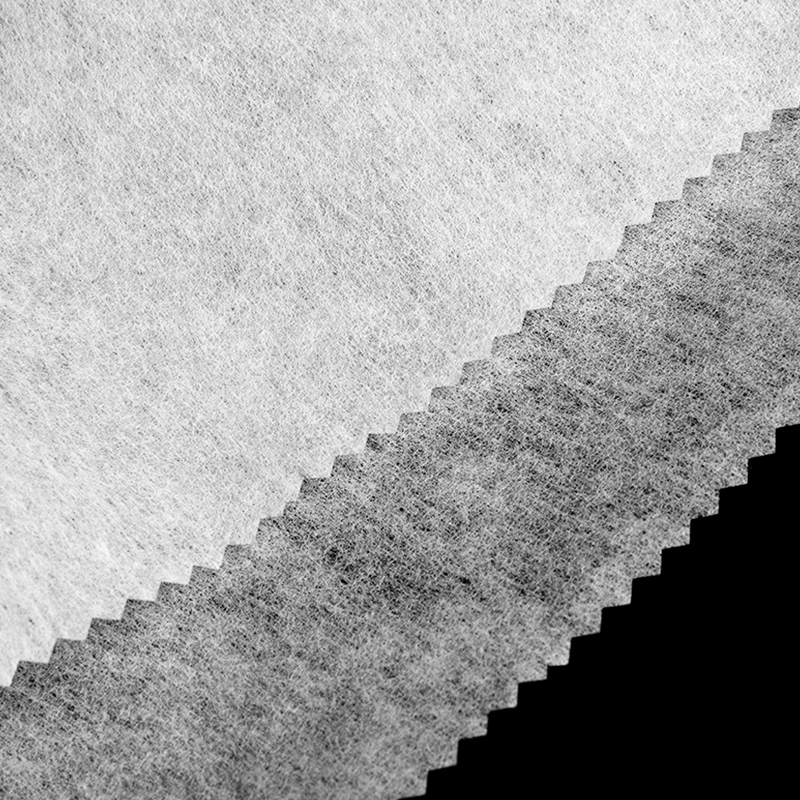 Chemical Bond Nonwoven Interlining for High-Temperature ResistanceMade primarily from polyester with options in viscose, this interlining withstands high-temperature carding up to 260°C. It comes in different feels and absorbency levels, suiting clothing linings and filter materials, and offers a lower fusing temperature for energy savings.View Product →
Fusing energy is also part of the equation. Lower-fusing-temperature interlinings save electricity and reduce the risk of thermal damage to sensitive fabrics. A supplier that can demonstrate consistent coating quality at 140°C rather than 160°C gives you a measurable sustainability advantage across a year of production.
Frequently Asked Questions
What is the difference between woven and non woven interlining?
Woven interlining is produced by interlacing warp and weft yarns, which gives it a defined grain direction, high tensile strength, and the ability to support heavy fabrics like wool suiting. Non woven interlining is made by bonding fibers directly; it has no grain, is lighter and lower in cost, resists raveling, and behaves the same in every direction. For lightweight and midweight garments, non woven interlining is usually the better commercial fit.
Can non woven interlining be used on stretch fabrics?
Yes, but only with the right construction. A standard chemical-bond or thermo-bond nonwoven has limited stretch and will restrict fabric movement. For stretch fabrics, specify stitch-bond nonwoven interlining or PP-TPU elastic interlining. These are engineered to elongate with the fabric and return to their original dimensions, which prevents bubbling and distortion at stress points like shoulders and waistbands.
What temperature should I use to fuse non woven interlining?
Standard polyester and polyamide fusible nonwoven interlinings fuse well at 140–160°C with a dwell time of 12–18 seconds and a pressure of 2–4 bar. Always confirm the recommended settings on the supplier datasheet and run a trial with your actual shell fabric, because surface dyes, finishes, and moisture content influence the bond formation.
Why does the interlining pattern show on the face of the fabric?
Show-through happens when the interlining weight is too high for the shell fabric, when the adhesive coating is too heavy, or when the fusing temperature is above the recommended range and the adhesive melts through the pores. Switch to a lower gsm interlining or a finer dot coating, and reduce fusing temperature in 5°C steps until the mark disappears under a light box.
How do I calculate the correct interlining weight for a garment?
Start with the shell fabric weight in gsm. For a soft, fluid drape, select an interlining in the range of 30–60 percent of the shell fabric gsm. For areas that need definite structure, such as collars, cuffs, and waistbands, select 70–100 percent. Then confirm by fusing a sample and evaluating hand-feel and appearance against your approved standard.
Does non woven interlining survive repeated washing and dry cleaning?
When the adhesive class is matched to the care process, yes. Polyamide (PA) adhesive is the standard for water washing; polyester (PES) adhesive resists dry-cleaning solvents. The interlining base must also be pre-shrunk to a level compatible with the shell fabric. Ask your supplier for shrinkage values and run one wash test on a fused sample before bulk production.