 English
 Español
 Türk
TürkContent
- 1 How Denim Is Made: The Direct Answer
- 2 The Seven Production Stages, In Order
- 3 From Cotton Field to Spinning Mill
- 4 Indigo Dyeing: Where Denim Gets Its Identity
- 5 Weaving and Denim Weight Categories
- 6 Finishing Treatments That Shape the Final Fabric
- 7 Cutting, Sewing, and the Role of Interlining
- 8 Woven vs Non Woven Interlining for Denim Garments
- 9 Water Use and Sustainability in Modern Denim Production
- 10 Where Denim Is Produced Today
- 11 Frequently Asked Questions About How Denim Is Made
- 11.1 What is denim actually made from?
- 11.2 Why is only the warp yarn dyed indigo?
- 11.3 What makes raw denim different from washed denim?
- 11.4 Is non woven interlining strong enough for a denim waistband?
- 11.5 How long does it take to produce denim fabric from raw cotton?
- 11.6 Does heavier denim always mean better quality?
How Denim Is Made: The Direct Answer
Denim is made by growing and ginning raw cotton, spinning that cotton into strong yarn, dyeing the yarn with indigo, weaving the dyed yarn into a diagonal twill structure, finishing the fabric to control shrinkage and hand feel, then cutting and sewing it into garments. The entire journey, from a cotton boll to a finished pair of jeans, typically passes through seven distinct production stages inside a denim mill and garment factory. Each stage changes the weight, texture, color depth, and durability of the final fabric, which is why two rolls of denim that look similar on a shelf can behave very differently once they are washed, worn, and faded over time.
This guide walks through every stage in the order it actually happens on a mill floor, explains why each step matters for quality, and covers a detail that many buyers overlook: how non woven interlining and other support materials are used once denim leaves the mill and enters garment construction.
The Seven Production Stages, In Order
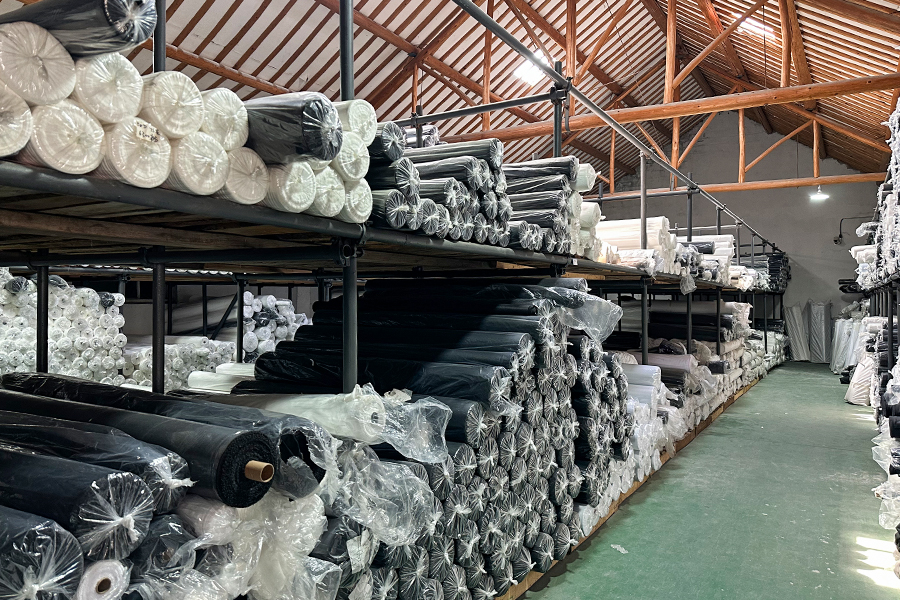
Denim manufacturing is a linear process. Skipping or rushing any stage below shows up later as uneven shade, fabric that shrinks more than expected, or seams that fail after a few washes.
Fiber Selection and Ginning
Raw cotton is harvested and passed through a gin that separates the lint from seeds and plant debris. Longer, stronger cotton staple produces smoother yarn later, so mills grade cotton by staple length and strength before it is accepted for denim production.
Spinning and Warping
Cleaned cotton fiber is drawn out and twisted into yarn, either ring spun for a softer, finer hand feel or open end spun for a rougher, heavier texture with lower production cost. The yarn destined to become warp threads is then wound from many cones onto a single large beam, a step called warping.
Indigo Dyeing
Warp yarn is repeatedly dipped into indigo dye baths and exposed to air between dips, a method called rope dyeing or slasher dyeing. Six to twelve dip cycles are common, and the number of cycles is the main factor that decides how deep and how fade resistant the final indigo shade will be.
Weaving
Dyed warp yarn is interlaced with undyed weft yarn on a loom using a twill weave, where the weft passes over one warp thread and under two or three. This offset pattern creates the diagonal ridge on the fabric face and leaves the fabric back a lighter, almost white color.
Finishing
Woven fabric is sanforized to pre shrink it, singed to burn off loose surface fiber, and sometimes treated with enzyme or chemical washes to soften the hand feel. Finishing is the step that stabilizes the fabric so a garment made from it will not shrink unpredictably after the first home wash.
Cutting
Finished denim rolls move to a garment factory, where patterns are laid out on multiple layers of fabric and cut with a band knife or automated cutter. Grain direction matters here, since denim cut off grain will twist at the seams after washing.
Sewing and Construction
Cut panels are sewn together with reinforced felled seams, and structural components such as waistbands, collars, and pocket facings are reinforced with interlining before final assembly. Rivets, buttons, and zippers are attached at this stage, and the garment receives a final wash or distressing treatment if the design calls for it.
From Cotton Field to Spinning Mill
Why Cotton Quality Sets the Ceiling
Traditional denim is spun from one hundred percent cotton, though blends with elastane, rayon, or linen are now common for stretch and casual styles. Cotton fiber length, called staple length, ranges from short staple around twenty two millimeters to extra long staple over thirty four millimeters. Longer staple cotton produces smoother, stronger yarn with fewer broken fibers, which reduces slub and thin spots in the finished weave.
Cotton grown in water scarce regions carries a heavier resource cost before it ever reaches a mill. Producing one pound of raw cotton can require close to a thousand gallons of water under conventional irrigation, and a single pair of jeans uses roughly one and a half pounds of cotton fiber. That is one reason organic and rain fed cotton sourcing has grown in the last several seasons.
Ring Spun vs Open End Yarn
Ring spinning twists fiber through a traveling ring and traveler, producing a tighter, more even yarn with a soft surface feel. This method costs more and runs slower, so ring spun denim usually sits at a higher price point.
Open end spinning feeds fiber directly into a rotor, which is faster and cheaper but produces a coarser, slightly hairier yarn. Open end yarn is common in mid weight, budget friendly denim where a rugged texture is actually desirable rather than a flaw.
Indigo Dyeing: Where Denim Gets Its Identity
Indigo is unusual among dyes because it does not fully penetrate the cotton fiber core. It coats the outer layer of each yarn, which is exactly why denim fades unevenly at stress points such as the knees, thighs, and back pockets as the outer indigo layer wears away and the white core underneath is revealed.
Most mills still use synthetic indigo because it dyes consistently at scale, though a small but growing number of mills have reintroduced natural, plant extracted indigo for premium and heritage lines. The number of dip and oxidation cycles, not the dye concentration alone, is what determines whether a denim will fade to a soft blue or hold a deep near black indigo shade for years.
Sulfur dyes are sometimes layered on top of or beneath indigo to create black, gray, or cast colored denim, and this combination changes how the fabric responds to bleach washes and laser finishing later in production.
Weaving and Denim Weight Categories
Denim is defined by its twill weave, most commonly a three by one or two by one structure where the weft thread floats over multiple warp threads before going under one. This structure, rather than the fiber itself, is what makes a fabric denim instead of plain cotton drill or canvas.
Fabric weight is measured in ounces per square yard and directly affects drape, warmth, and expected garment use. The table below outlines how mills and buyers typically categorize denim weight.
| Weight Range (oz per sq yd) | Category | Typical Use |
|---|---|---|
| 4 to 8 oz | Lightweight | Shirts, dresses, warm climate jeans |
| 9 to 13 oz | Mid weight | Everyday jeans, casual jackets |
| 14 to 16 oz | Heavyweight | Workwear, raw and selvedge denim |
| 17 oz and above | Extra heavyweight | Industrial workwear, aprons, heritage pieces |
Finishing Treatments That Shape the Final Fabric
Raw denim straight off the loom is stiff, heavily sized with starch, and prone to shrinking. Finishing treatments correct this before the fabric is cut into garments.
- Sanforization mechanically pre shrinks the fabric so it loses less than one percent of its dimensions after washing, compared to unsanforized raw denim which can shrink several sizes.
- Singeing passes the fabric briefly over a flame or heated plate to burn off loose surface fuzz, giving a cleaner, more defined twill line.
- Enzyme washing uses cellulase enzymes to soften the hand feel and create a light worn look without the abrasive damage caused by stone washing.
- Laser finishing has become a common alternative to manual sandblasting for creating whisker and fade patterns, since it uses no chemicals and produces a consistent, repeatable design across large production runs.
Cutting, Sewing, and the Role of Interlining
Once fabric leaves the mill, a garment factory cuts it according to a graded pattern set, then assembles the panels with felled or flat seams designed to withstand repeated stress at the crotch, pockets, and waistband. This is the stage where support materials, rather than the denim fabric itself, start to matter for how the finished garment holds its shape.
Why Waistbands and Collars Need Reinforcement
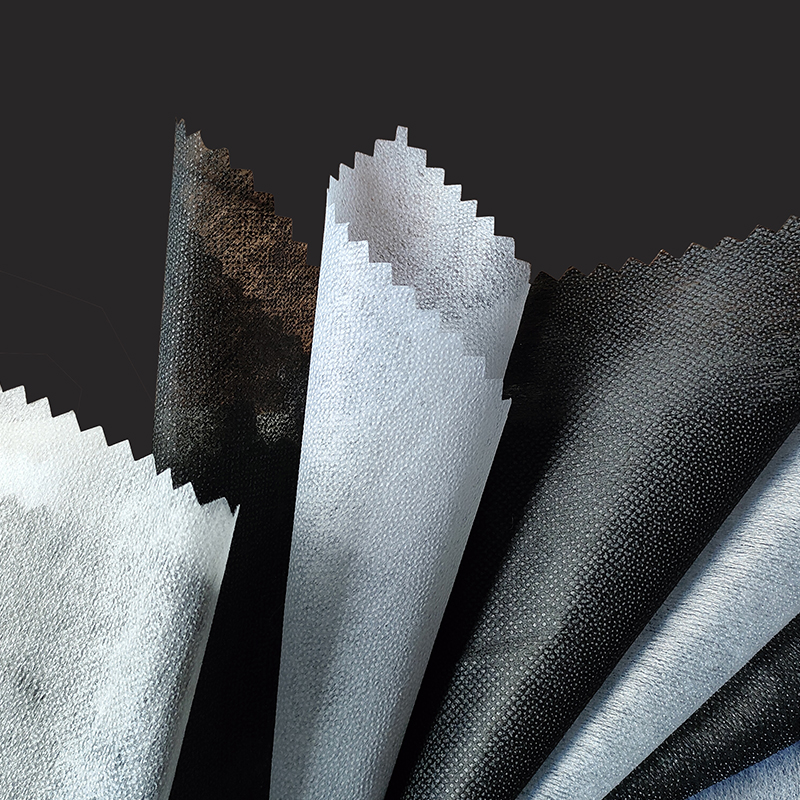
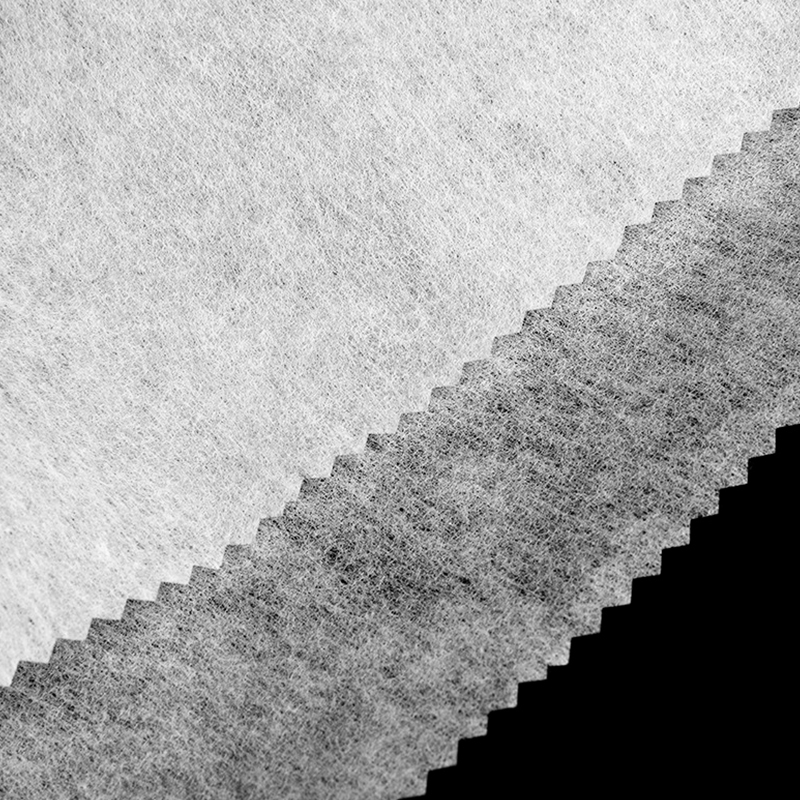
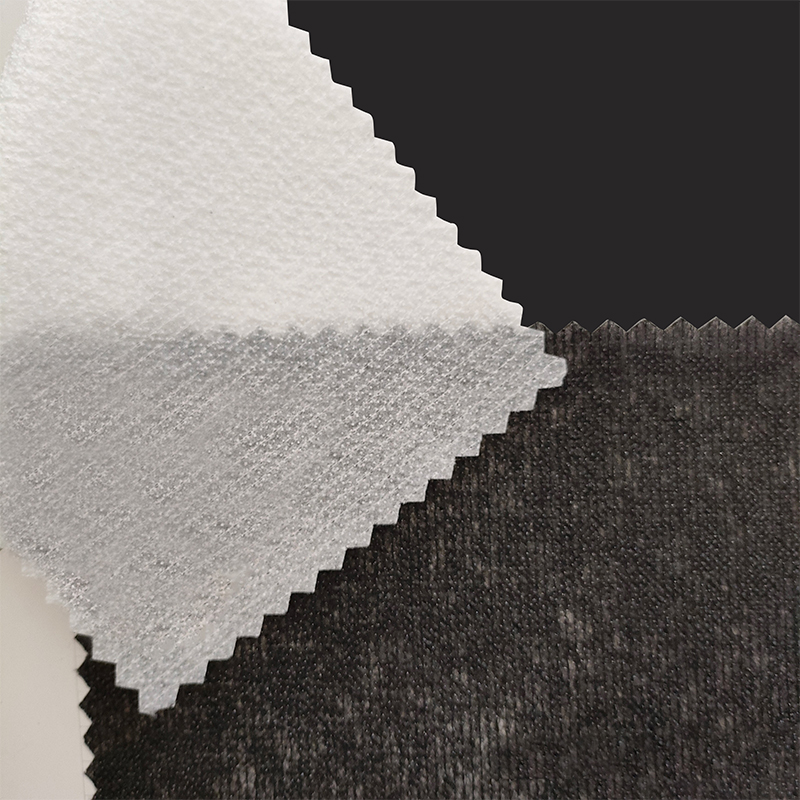
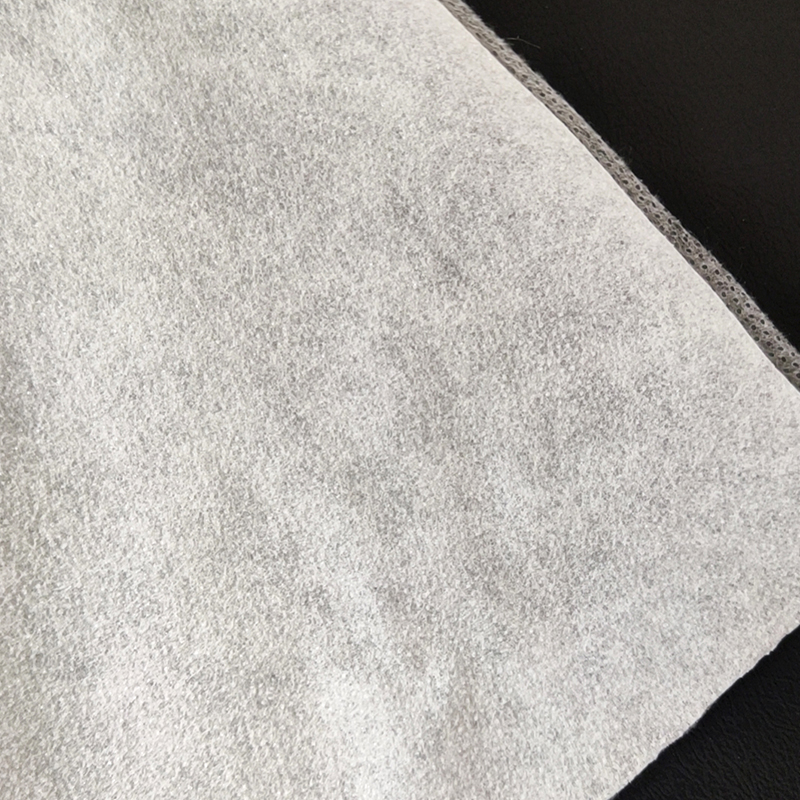
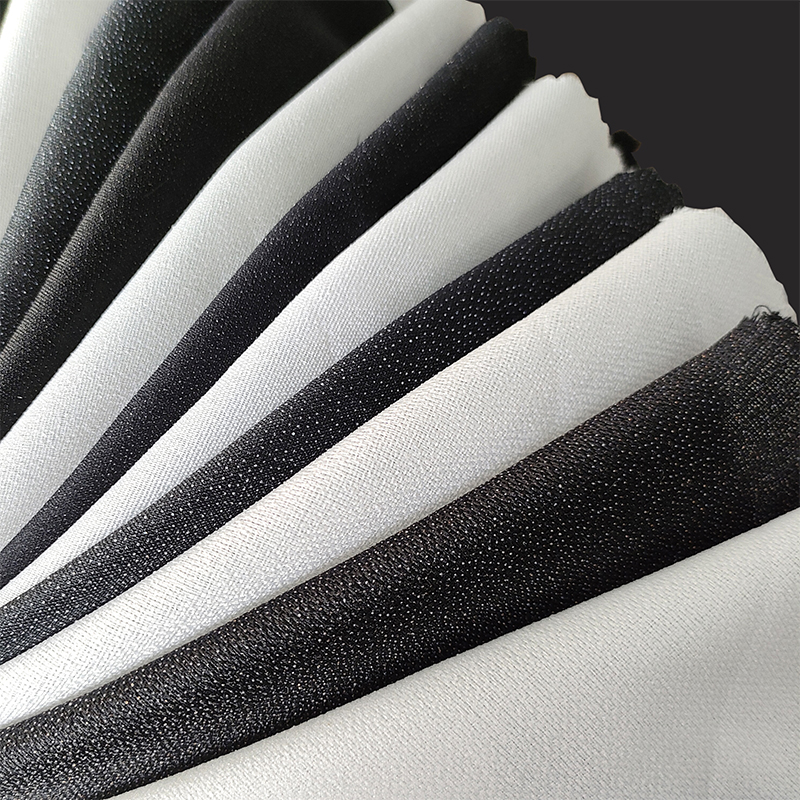
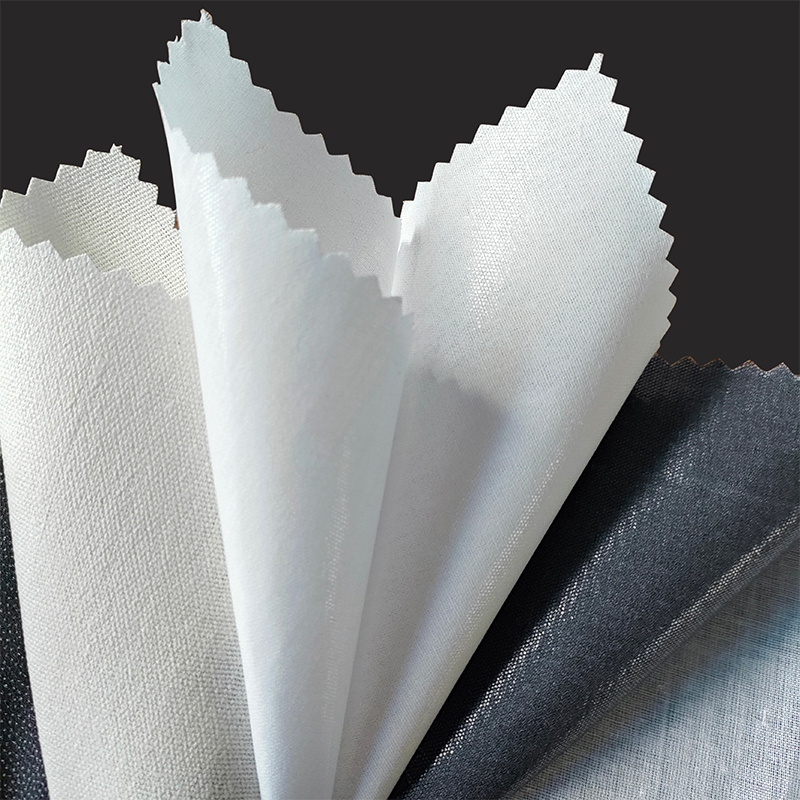
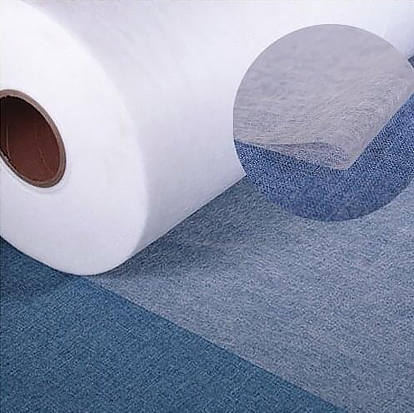
A denim waistband or collar built from fabric alone will roll, stretch out, or lose its crisp edge after a handful of washes. To prevent this, garment factories fuse a layer of interlining to the inside of the waistband, collar, or pocket facing before the final seam is closed. Non woven interlining, made from carded fiber that is thermally bonded rather than woven or knitted, is one of the most widely used reinforcement materials because it does not fray at cut edges and fuses evenly under standard heat press conditions.
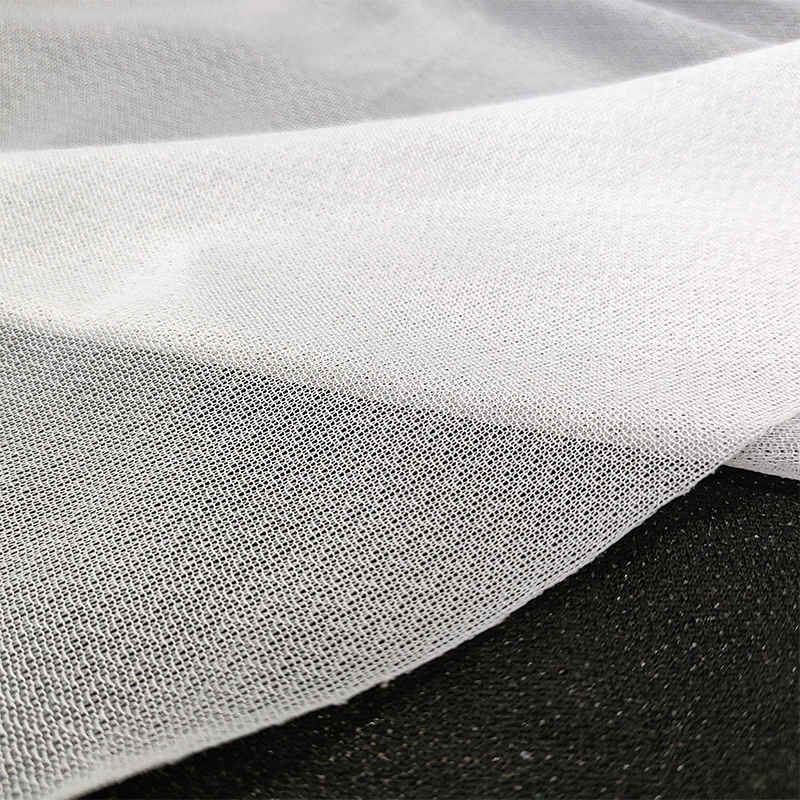
Woven interlining is generally chosen for heavier, structured denim waistbands where a firm, tailored edge is the goal, while non woven interlining suits lighter denim shirts, casual jackets, and pocket facings where a softer hand feel and lower cost per meter matter more. Knit interlining is used less often in denim but appears in stretch waistbands where a small amount of give improves comfort.
Woven vs Non Woven Interlining for Denim Garments
Choosing the right interlining type affects both the cost and the durability of the finished denim garment. The comparison below covers the three interlining types most commonly specified by denim factories.
| Interlining Type | Construction Method | Best Suited For |
|---|---|---|
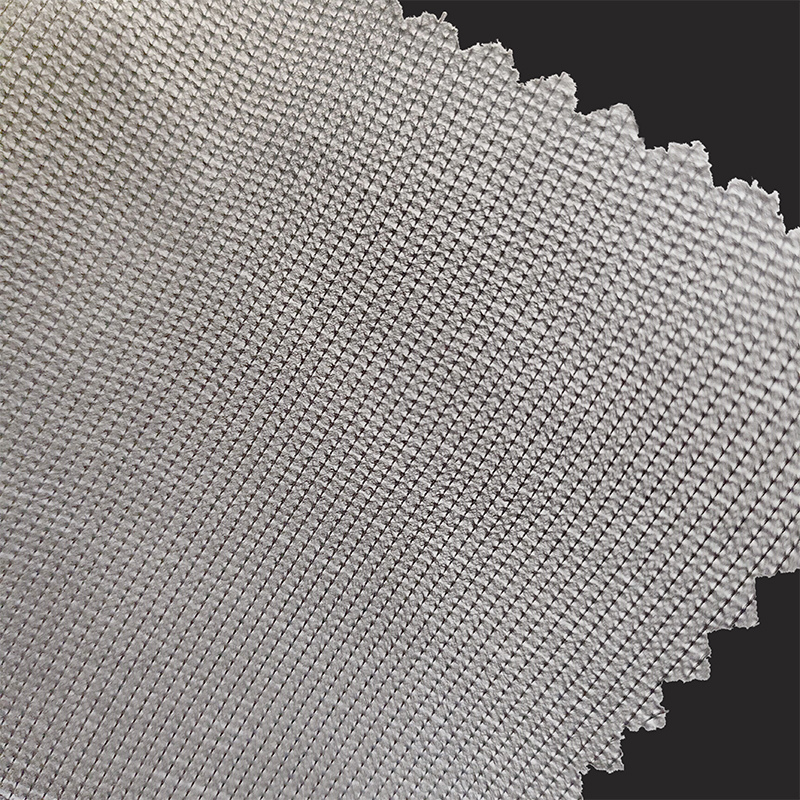
| Non woven interlining | Carded fiber, thermally bonded, no weave or knit structure | Collars, cuffs, pocket facings, lightweight denim shirts |
| Woven interlining | Warp and weft yarns woven then coated with adhesive | Structured waistbands, tailored denim jackets |
| Knit interlining | Weft inserted knit structure, stretches along the width | Stretch denim waistbands, comfort fit jeans |
Fusing temperature, pressure, and dwell time all need to be matched to the denim fabric weight. A heavy fourteen ounce denim waistband generally needs a higher fusing temperature and longer press time than a lightweight denim shirt collar, otherwise the adhesive resin will not bond fully and the interlining can peel away after the first few washes.
Water Use and Sustainability in Modern Denim Production
Denim has a reputation as a resource intensive fabric, and the reputation is largely accurate at the dyeing and washing stages rather than at weaving or sewing.
Most of the water used inside a denim mill, as opposed to the cotton field, is consumed during dyeing and rinsing. Newer mill processes such as foam dyeing, ozone washing, and closed loop water recycling systems have cut water use per meter of fabric significantly at facilities that have adopted them, though adoption still varies widely by region and by mill size.
Where Denim Is Produced Today
Denim production is spread across a small number of countries with established spinning, dyeing, and weaving infrastructure. Buyers sourcing denim usually weigh lead time, minimum order quantity, and finishing capability alongside price when choosing a production region.
| Region | Typical Strength |
|---|---|
| China | Large scale production, wide range of weights, integrated garment and trim supply chains |
| India and Pakistan | Cotton growing base, competitive pricing, high volume weaving capacity |
| Turkey | Fast fashion turnaround, strong stretch denim and finishing technology |
| United States | Premium and heritage mills, selvedge denim, organic and traceable cotton programs |
Frequently Asked Questions About How Denim Is Made
What is denim actually made from?
Denim is made primarily from cotton yarn woven in a twill structure, with the warp yarn dyed indigo and the weft yarn left undyed or lightly dyed. Modern stretch denim blends in a small percentage of elastane, and some casual denim blends in rayon or linen for a softer drape.
Why is only the warp yarn dyed indigo?
Dyeing only the warp yarn keeps cost and processing time lower while still producing the fully blue face side that the market expects. It also creates the light colored back side of denim fabric, which is a visible way to confirm genuine twill denim construction.
What makes raw denim different from washed denim?
Raw denim has not been through a wet wash or enzyme treatment after dyeing and weaving, so it retains stiffness, surface indigo coating, and starch sizing. Washed denim has already gone through at least one wash cycle, which softens the hand feel and starts the fading process before the garment ever reaches a customer.
Is non woven interlining strong enough for a denim waistband?
Non woven interlining works well for lighter denim applications such as collars, cuffs, and pocket facings, but heavier structured waistbands on thick denim usually perform better with woven interlining because it resists stretching along the bias more consistently over repeated wear and washing.
How long does it take to produce denim fabric from raw cotton?
A typical mill cycle from ginned cotton to finished, inspected denim fabric runs from about two to four weeks, depending on order size, dye depth required, and whether the fabric needs additional finishing steps such as coating or special washes.
Does heavier denim always mean better quality?
Not necessarily. Weight affects durability and warmth but not inherent quality, since yarn type, dye depth, and weave tightness matter just as much. A well constructed ten ounce denim can outlast a poorly finished sixteen ounce denim if the yarn and dyeing process were rushed.