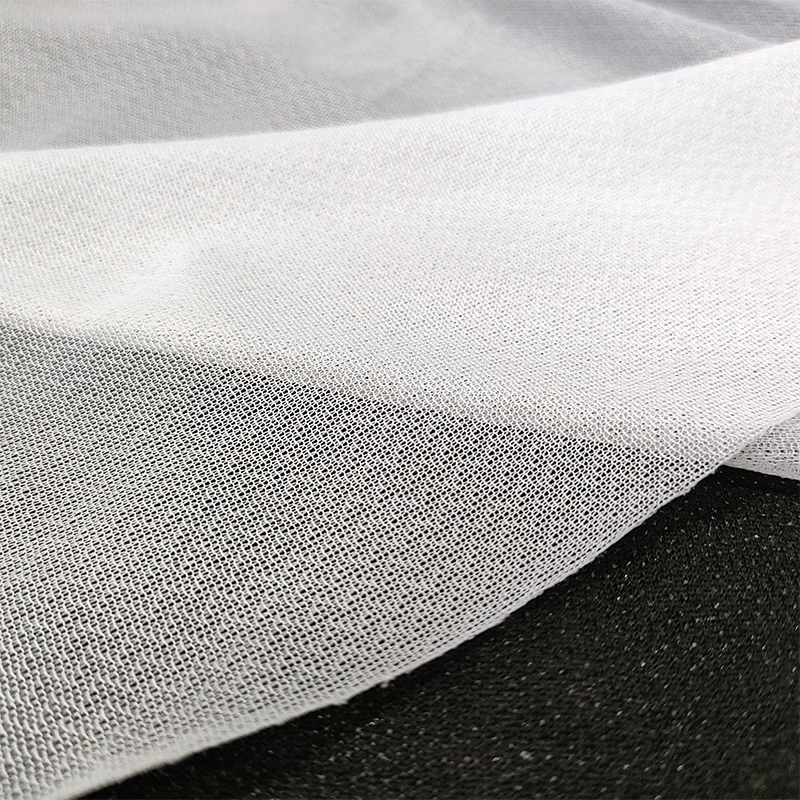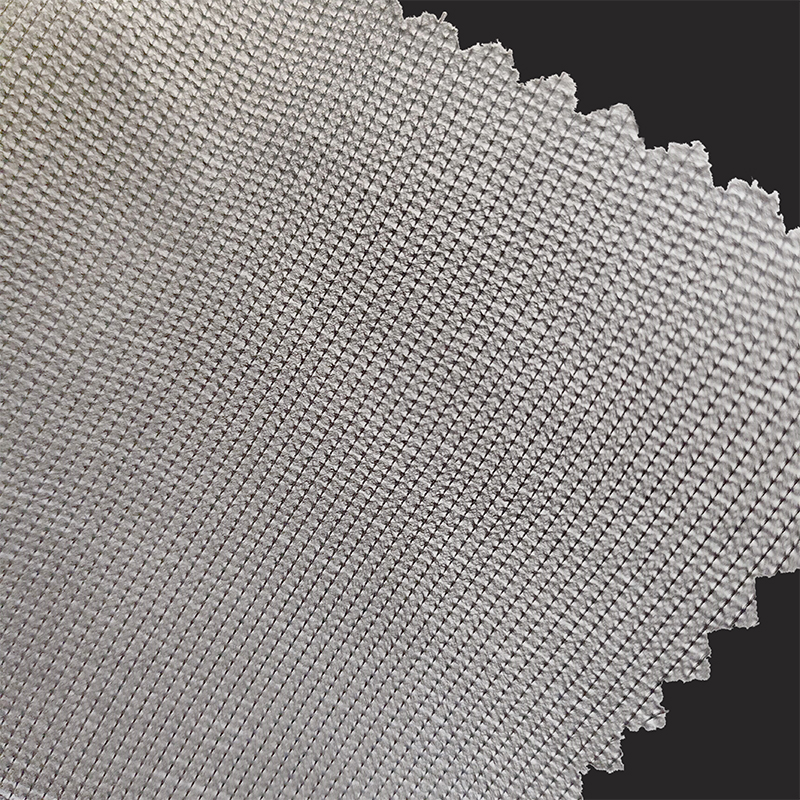
 English
 Español
 Türk
Content
- 1 Cotton Interlining, Lining and Underlining: Three Different Things
- 2 Why Cotton Interlining Behaves the Way It Does
- 3 Cotton, Polyester or a Blend: Choosing the Fibre for the Job
- 4 The Main Types of Cotton Interlining on the Market
- 5 Fusible or Sew-In: Which Cotton Interlining Belongs in Your Garment
- 6 Writing the Specification: Numbers That Prevent Rework
- 7 Where Cotton Interlining Goes in a Garment
- 8 Six Failures That Show Up in Bulk, and Their Causes
- 9 Testing Cotton Interlining Before You Place a Bulk Order
- 10 Roll Widths, Lead Times and Ordering Practicalities
- 11 Frequently Asked Questions About Cotton Interlining
- 11.1 Is cotton interlining the same as cotton lining?
- 11.2 Which weight of cotton interlining should I use for a shirt collar?
- 11.3 Does cotton interlining shrink in the wash?
- 11.4 Can cotton interlining be fused to a polyester shell?
- 11.5 Is fusible or sew-in cotton interlining better for shirts?
- 11.6 Why does my cotton interlining bubble after fusing?
- 11.7 Can cotton interlining be used as embroidery backing?
- 11.8 What width and roll length should I order?
- 11.9 Is cotton interlining more expensive than polyester interlining?
- 11.10 How many washes should I test before approving a cotton interlining?
A cotton interlining that passes a sample-room fusing test can still fail three weeks later on the bulk line, and the cause is almost always the same: nobody measured what happened to the interlining after washing, and nobody compared how the cotton shell fabric and the cotton interlining moved together under heat and moisture.
Here is the short answer first. Cotton interlining is a support fabric whose fibre content is predominantly cotton, attached to the inside of a garment or sewn between layers to hold shape at specific points such as collar, cuff, placket, waistband and front edge. It is the right choice when you need a soft, matte handle, good moisture behaviour and a heat tolerance close to that of a cotton shell. It is the wrong choice when you need the lowest possible cost, near-zero shrinkage and a crisp springy handle that survives repeated industrial laundering, where a polyester or polyester-cotton interlining usually wins.
The rest of this guide works through the practical detail: how the cotton fibre itself behaves, which constructions and weights exist, what to write on a purchase order, which failures appear in bulk, how to test a roll before you commit, and how roll widths and lead times affect your cutting room.
The single number that matters most on a cotton interlining specification is residual shrinkage after a defined wash, not the price per metre.
Cotton Interlining, Lining and Underlining: Three Different Things
Buyers new to garment components often use these words interchangeably, and that causes real specification errors. The three terms describe three different layers with three different jobs.
A lining is a full inner layer, usually a smooth polyester or acetate fabric, that covers the inside of a jacket, coat or skirt so the garment slides on easily. An underlining is cut to the same pattern as the shell piece and joined to it before construction, adding body and opacity without showing. An interlining is different again: it appears only in small, targeted pieces, fused or sewn where the garment needs stiffness, reinforcement or shape memory.
Terminology also varies by market, and this trips up purchase orders. North American tech packs usually say "interfacing", while European and Asian suppliers quote "interlining". Some UK pattern makers use "vilene" as a generic word for fusible nonwoven. When you send an enquiry for cotton interlining to a mill in Jiangsu or Zhejiang, add a small note or a photo of the application, because "cotton interfacing" and "cotton interlining" arrive in the same inbox and are treated as the same product family.
Where the cotton content actually sits
Cotton appears in interlining in four main positions. First, as a woven base fabric in a plain weave shirt interlining. Second, as a blend component with polyester or wool, for example in canvas and hair canvas used for tailored jackets. Third, as a cotton-rich nonwoven or stitch-bonded base, where cotton fibres are carded and bonded rather than woven. Fourth, as a cotton or recycled cotton embroidery backing, where the cotton content is chosen for softness against the skin rather than for stiffness.
If a supplier quotes "cotton interlining" without stating fibre percentage, construction and weight, you do not yet have a quotation. You have a category name.
Why Cotton Interlining Behaves the Way It Does
Most bulk problems with cotton interlining trace back to three fibre-level properties: moisture regain, heat transfer, and the way the fibre packs when it is compressed under a fusing press. Once you understand these three, the specification decisions become much easier to defend.
Moisture regain and dimensional change
Cotton has a moisture regain of around 8.5 percent under standard textile conditions, while polyester sits near 0.4 percent. That difference is roughly twenty-fold. When cotton takes up moisture, the individual fibres swell in diameter, and because a woven fabric is a network of interlaced yarns, the swelling converts into contraction along the length and width of the piece.
The practical consequence is straightforward. If your shell fabric relaxes by 2 percent in a wash and your cotton interlining relaxes by 6 percent, the difference has to go somewhere. It usually shows up as rippling along a fused placket edge, a wavy collar point, or a front edge that no longer hangs straight. This is why pre-shrunk or sanforized cotton interlining, with a controlled residual shrinkage typically held to around 1 to 2 percent after a defined wash cycle, is supplied for shirt programmes where the finished garment must hold a clean line.
Heat transfer during fusing
Cotton is a poorer conductor of heat than polyester, and it also carries more moisture into the press. Both facts push the fusing window upward. On a flatbed press, a cotton shell fused with a cotton interlining commonly runs in the region of 140 to 160 degrees Celsius with 2 to 3.5 bar of pressure and a dwell time of 12 to 18 seconds. The same interlining used under a polyester or poly-blend shell must run cooler, often 120 to 140 degrees Celsius, because polyester will show shine, melt marks or a permanent glaze above its softening range.
Two details matter here. First, moisture trapped in the interlining flashes into steam during fusing, and steam is what actually activates most fusible adhesives and carries heat through the layer stack. Letting the roll condition in the cutting room for 24 hours before fusing is a cheap way to avoid under-bonding. Second, if the interlining is too dry, the adhesive does not flow properly and the bond is weak even when the temperature reading looks correct.
Hand feel and drape
Cotton interlining gives a matte, dry handle that reads as natural against a cotton or linen shell. It also has more density at the same weight, which means a 100 g/m2 cotton woven interlining and a 100 g/m2 polyester woven interlining of similar weave will not feel the same in the hand or behave the same on a collar roll. On light-coloured summer shirting, an over-fused polyester interlining can telegraph a faint sheen through the shell where the cotton version will not.
Because cotton interlining carries its own moisture and needs a warmer press, share the fusing parameters with the interlining roll in every bulk shipment, not only with the first sample.
Cotton, Polyester or a Blend: Choosing the Fibre for the Job
Fibre choice is the first decision, and it decides everything downstream: what temperature you can fuse at, how much the finished garment will move in the wash, and what the customer feels when they pick the shirt off the shelf. The table below summarises the trade-offs that come up most often in production meetings.
| Property | 100 percent cotton | Cotton blend, 50 to 65 percent cotton | 100 percent polyester |
|---|---|---|---|
| Hand feel | Soft, matte, dry | Slightly crisper, still matte | Springy, can look shiny |
| Residual shrinkage, pre-shrunk quality | About 1 to 2 percent | About 1 to 2 percent | Below 1 percent |
| Moisture regain | Around 8.5 percent | Around 4 to 5 percent | Around 0.4 percent |
| Typical fusing temperature | 140 to 160 C | 130 to 150 C | 120 to 140 C |
| Relative cost index | High | Medium | Low |
| Best suited to | Premium shirting, cotton shells | Volume shirting, workwear | Casual garments, cheap volume |
| Main risk in bulk | Shrinkage mismatch with shell | Inconsistent blend ratio between lots | Shine and strike-through on dark shells |
A useful rule from the cutting room: match the interlining to the shell, not to the price target. A 100 percent cotton interlining under a cotton poplin shirt reads correctly. The same interlining under a polyester microfibre shell creates a fusing window conflict that no operator can fully control, and a blend in the middle is usually the compromise that keeps both the collar crisp and the temperature safe.
The Main Types of Cotton Interlining on the Market
Cotton interlining is not one product. The construction decides how the fabric behaves, and different constructions suit different garment positions. The four families below cover the majority of enquiries that reach a garment interlining mill in a normal season.
Woven cotton and cotton-blend shirt interlining
This is the classic cotton interlining: a plain weave cotton or cotton-rich base, usually between 80 and 120 g/m2, supplied either as a sew-in or with a resin dot coating on one side. Because it is woven, it has a clear warp and weft direction, so it must be cut on the correct grain. Used on collar, cuff, placket and front facing of formal and business shirts, it delivers the firm but flexible roll that a shirt point needs to hold its shape after a hundred washes.
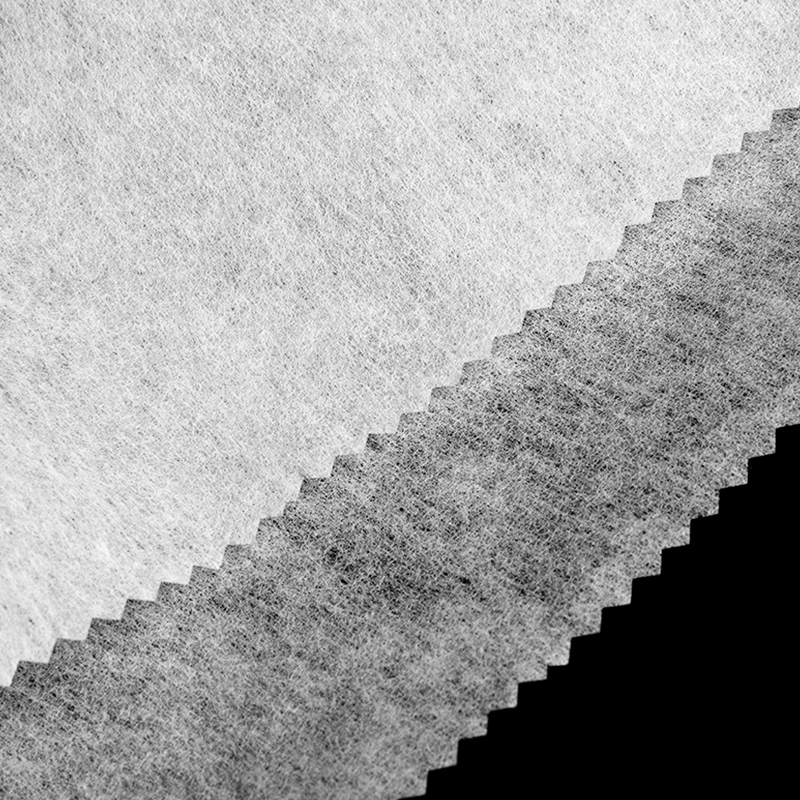
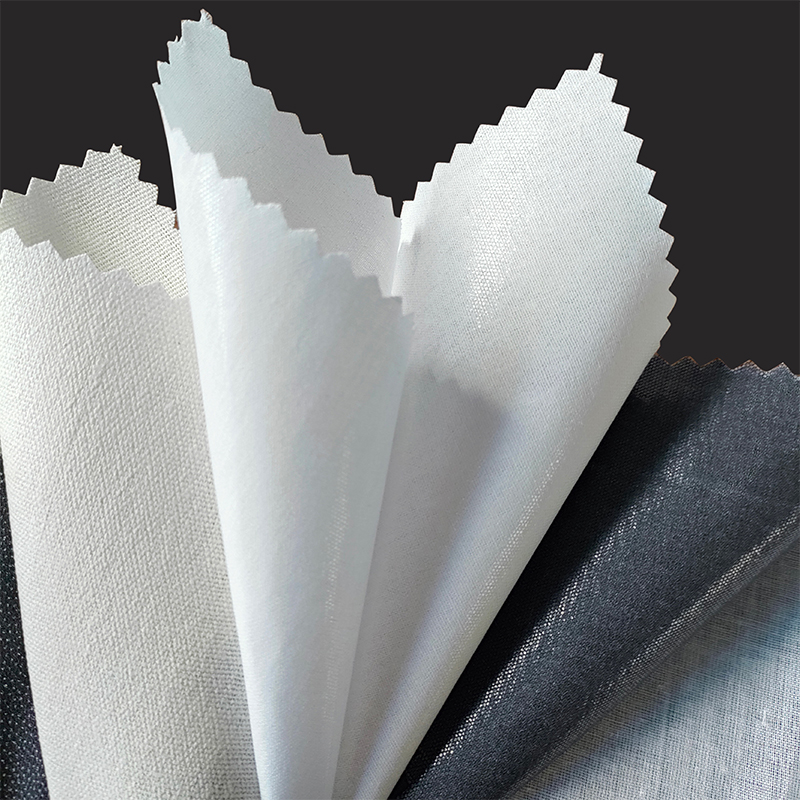 Shirt InterliningUse pure cotton, pure polyester and polyester-cotton blended fabrics as the base fabric, and use high-quality resin to make it resistant to washing and dry cleaning. T...View Product →
Cotton-blend canvas and hair canvas
Tailored jackets use a much heavier class of interlining, typically 180 to 260 g/m2, built from cotton, wool and often horsehair or camel hair in the blend. These are almost always sewn in rather than fused, because the chest piece needs to move, roll and recover rather than be locked flat against the shell. The cotton content contributes body quality and moisture stability, while the animal fibre contributes the springy recovery that gives a jacket its shape over a long day.
Cotton-rich nonwoven and stitch-bonded interlining
Below 100 g/m2, nonwoven constructions become attractive because there is no grain direction to manage, which reduces cutting waste and operator error. Cotton-rich nonwovens, chemically bonded or stitch-bonded, are commonly chosen for waistbands, plackets and casual shirt parts where the garment needs soft reinforcement rather than structure. Be aware that nonwovens are weaker in the cross direction than wovens, so specification should always include both machine direction and cross direction strength values if the part is under tension.
Cotton and recycled cotton embroidery backing
Embroidery backing is a form of interlining, and the cotton versions occupy a specific niche: pieces that will touch the skin, or garments where a stiff polyester backing would feel scratchy or sound noisy. Cotton and recycled cotton backings are usually cut-away or tear-away types in the 35 to 80 g/m2 range, and the recycled cotton option has become a normal request for programmes that track material composition in their environmental reporting.
Fusible film and double-sided adhesive layers
A related product family, usually grouped with interlining in a supplier catalogue, is the double-sided adhesive film and the both-adhesive nonwoven fabric. These do not add stiffness on their own; they bond two materials together. They show up in hem fixing, seam taping, applique work and some technical garment assemblies where a cotton shell has to be joined to another layer without stitching.
Ask for the construction type, the weight in g/m2 and the fibre percentage before you compare two cotton interlining quotations. Two rolls at the same price per metre are frequently 40 g/m2 apart in weight.
Fusible or Sew-In: Which Cotton Interlining Belongs in Your Garment
The adhesive decision is usually made before the fibre decision, and it is driven by the shell fabric, not by the interlining. If the shell can take heat and pressure, fusible is faster and cheaper. If it cannot, sew-in is the only safe route.
Fusible cotton interlining
Fusible versions carry a resin dot coating, most often a double-dot construction: a base paste dot that controls hand feel and prevents strike-through, plus a top powder layer of adhesive that bonds to the shell. The common adhesives are low-density polyethylene for low-temperature fusing, polyamide for a soft bond with good dry cleaning behaviour, and polyester powder for higher wash durability. Dot geometry matters as much as adhesive chemistry. A finer dot pattern at higher density gives a smoother surface and less show-through on light shells; a coarser pattern gives stronger hold and a slightly stiffer hand.
Sew-in cotton interlining
Sew-in cotton interlining has no adhesive at all. It is attached by stitching along the edges or in the seam allowance. It is the standard choice for coated, laminated, waterproof and bonded shells that would be damaged by a press, for delicate fabrics that cannot tolerate heat, and for tailored pieces where the interlining must move independently of the shell. The trade-off is labour. A sew-in operation adds stitching time to every garment piece, and it must be planned into the operation bulletin rather than added after the sample is approved.
A practical decision list for busy product teams:
- Cotton or cotton-blend shell, stable weave, no coating: fusible cotton interlining at 140 to 160 C.
- Polyester or poly-blend shell: fusible interlining, but shift to a lower activation temperature and reduce dwell time.
- Coated, laminated or waterproof shell: sew-in interlining, no exceptions.
- Stretch knit shell: a stretch-capable interlining with elastic recovery, fused at low pressure.
- Sheer or very light shell: choose a fine dot pattern and test for show-through before approving.
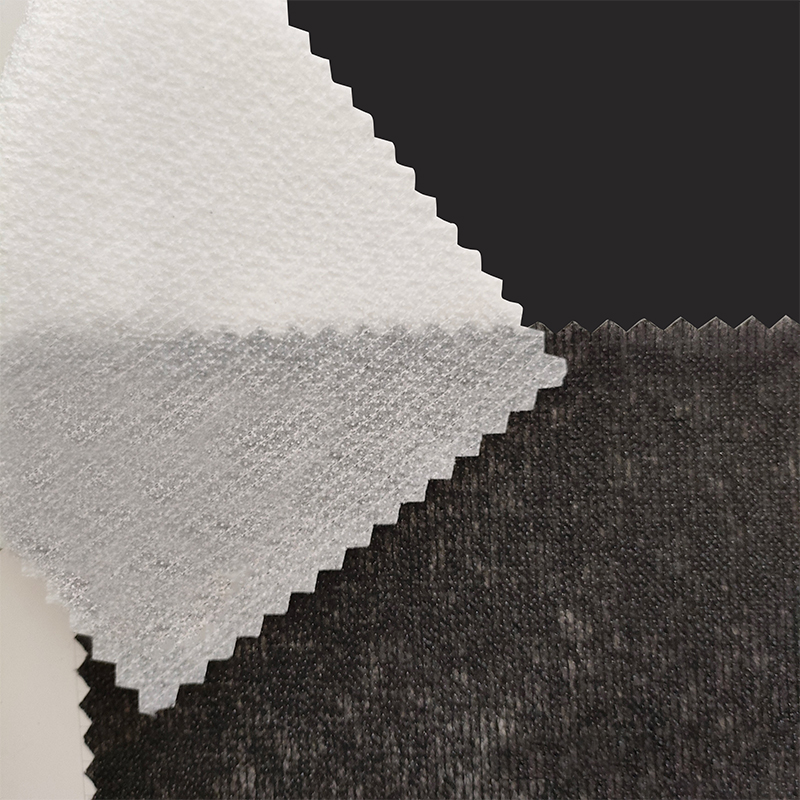
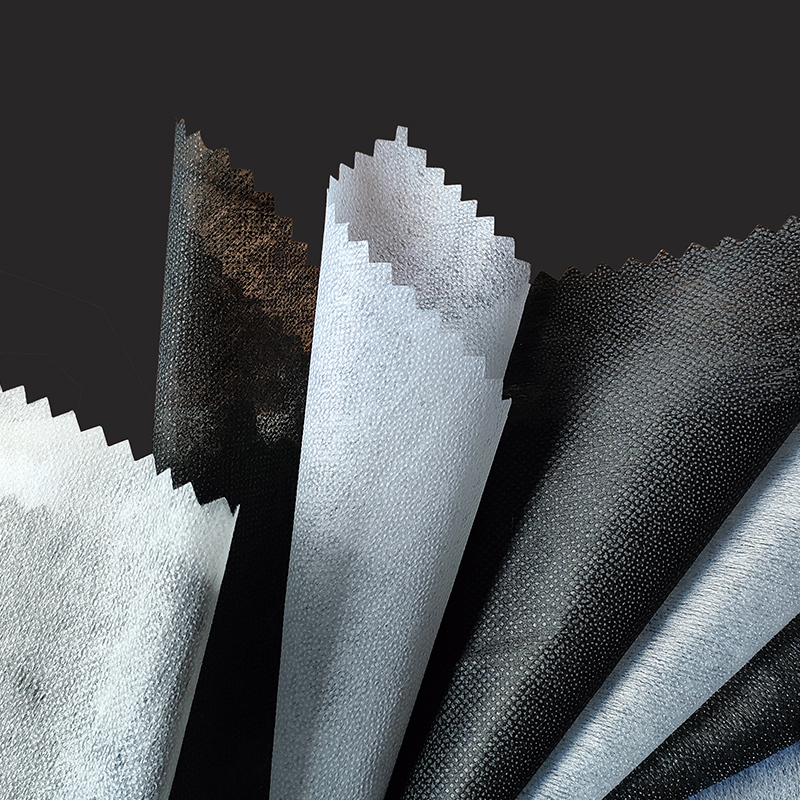 Thermobond Nonwoven InterliningCompared with woven fabrics, it has lower requirements on directionality and is easy to use; after cutting, the cuts will not fall apart; it is cheap and feels soft.View Product →
Thermo-bond nonwoven interlining is worth noting here because it sits between the two worlds: it is produced by bonding fibres with heat rather than chemical binder, which keeps the hand softer and the odour lower, and it is a frequent choice where a cotton shell needs light reinforcement without the density of a woven base.
Writing the Specification: Numbers That Prevent Rework
A cotton interlining purchase order that survives a full season without a claim usually contains the following fields. If a supplier cannot provide each one, ask yourself whether the risk is acceptable before you sign.
- Fibre content stated as a percentage, for example 100 percent cotton or 55 percent cotton, 45 percent polyester.
- Construction, for example plain weave, twill, chemically bonded nonwoven, stitch-bonded nonwoven, or knitted.
- Weight in g/m2 with a tolerance, commonly plus or minus 5 percent. Note that 1 oz/yd2 equals roughly 33.9 g/m2, so weight conversions must be agreed in one unit only.
- Width and roll length, for example 112 cm by 50 m, and the maximum number of joins per roll.
- Shrinkage tolerance after a defined wash, for example maximum 2 percent warp and 2 percent weft after three cycles at 40 C with tumble dry low.
- Adhesive type and dot pattern, for example polyamide double dot, or paste dot CP 17 with polyester powder top dot.
- Recommended fusing parameters: temperature range, pressure range and dwell time.
- Colour and appearance: white, off-white, natural, black, and whether optical brighteners are present, which matters for light shells under strong retail lighting.
- Packaging: roll core diameter, inner poly bag, outer woven bag, and roll labelling with batch number for traceability.
Weight bands are the second specification decision after the fibre. The table below shows the ranges that appear most often in apparel programmes, based on standard garment interlining practice in shirt and jacket manufacturing.
| Application | Typical weight | Typical construction | Attachment |
|---|---|---|---|
| Light shirt placket | 60 to 80 g/m2 | Cotton-rich nonwoven | Fusible |
| Collar and cuff, business shirt | 90 to 120 g/m2 | Woven plain weave cotton | Fusible |
| Front placket and facing, formal shirt | 100 to 130 g/m2 | Woven cotton or blend | Fusible |
| Trouser waistband | 80 to 140 g/m2 | Woven or stitch-bonded | Fusible or sew-in |
| Jacket chest canvas | 180 to 260 g/m2 | Cotton and wool canvas | Sew-in |
| Embroidery backing | 35 to 80 g/m2 | Cotton or recycled cotton | Hoop, no bonding |
Keep in mind that these bands overlap. A soft collar roll may call for 80 g/m2 while a stiff one of the same size calls for 120 g/m2 in the same weave. Weight sets the general level of body; the weave and finish set the character.
Where Cotton Interlining Goes in a Garment
The position in the garment determines the demands placed on the interlining more than any other factor. A short tour of the main positions makes the specification choices easier to justify.
Collar and cuff
These are the most visible interlining positions in the world. A collar point that curls, a cuff that bubbles after washing, or a collar band that loses its line will be noticed by the end consumer within seconds of opening the package. The requirements are a clean fusing bond, a consistent weight between rolls, and shrinkage that matches the shell within roughly 1 percent.
Placket and front facing
The placket is a long, narrow fuse, and it is where the difference between the interlining and the shell shows up first. Because the strip is narrow, any shrinkage difference produces visible waviness rather than a slight dimensional error. This is a position where a pre-shrunk cotton interlining with a controlled warp and weft shrinkage value pays for itself.
Waistband
Waistbands take more mechanical load than any other interlining position. They are pulled, stretched over the hip and subjected to repeated abrasion from belts and pockets. Woven interlinings with good recovery are generally preferred, and the specification should include recovery after stretch, not only tensile strength.
Chest canvas in tailored jackets
The chest piece has to give a jacket shape that survives a full day of wear and still returns to its original line. In this position the interlining is almost always sewn in, and the quality of the canvas determines whether the jacket rolls naturally or looks like a board.
Embroidered panels and logos
Backing stabilises the fabric while the embroidery machine runs thousands of stitches. Without adequate backing, the design puckers, the fabric distorts and small details disappear. Cotton and recycled cotton backings are chosen when the embroidered area sits against the skin, when the garment will be washed frequently, or when the programme tracks the recycled content of its components. Cut-away versions remain in the garment and give lasting support, while tear-away versions are removed after stitching and leave a softer finish.
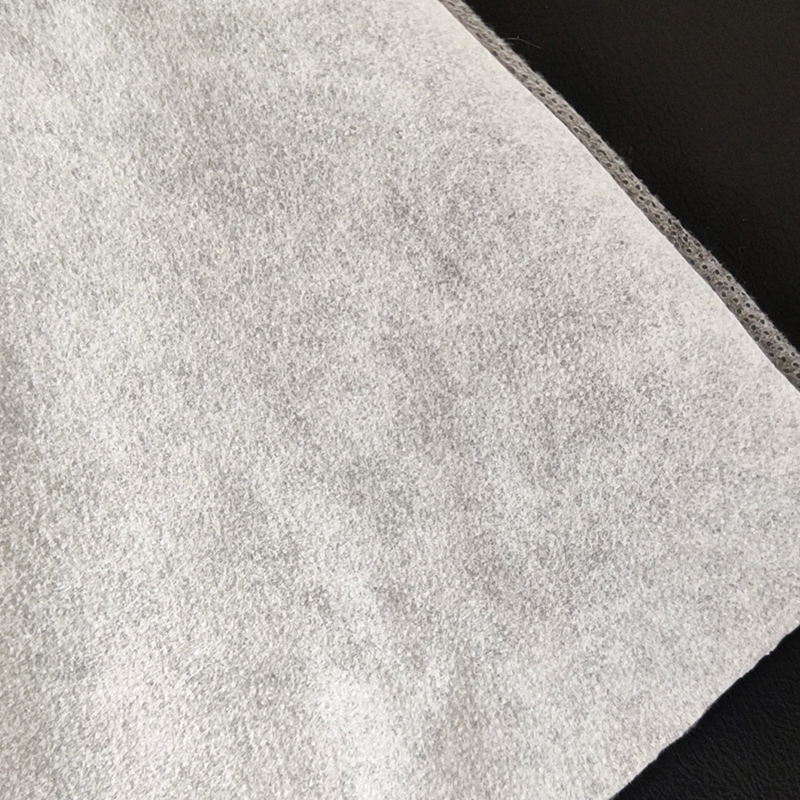
 Recycled Cotton Embroidery BackingRecycled cotton embroidery backing is a highly practical and environmentally friendly material. It is easy to use, just tear off the excess after embroidery, featuring...View Product →
Map every interlining position in the garment before you choose a single roll. One cotton interlining rarely serves collar, placket and waistband at the same time.
Six Failures That Show Up in Bulk, and Their Causes
Almost every complaint about cotton interlining falls into one of six patterns. Knowing the pattern shortens the investigation considerably, because each one has a small number of likely causes.
| Defect | What the operator sees | Usual cause |
|---|---|---|
| Bubbling | Ripples along the fused strip after washing | Shrinkage mismatch between shell and interlining, or uneven moisture before fusing |
| Strike-through | Small dots of adhesive visible on the face fabric | Excess temperature or pressure, or a dot pattern too coarse for a light shell |
| Delamination | Interlining lifts at the edges after five to ten washes | Under-activated adhesive, wrong adhesive chemistry for the shell blend, or insufficient dwell time |
| Edge curling | Cut edges roll up before or after fusing | Cut off grain, excessive tension during spreading, or a base fabric with high internal stress |
| Shine on dark shells | A glossy patch along the fused area | Temperature above the shell tolerance, often from re-pressing a corrected piece |
| Stiff, boardy hand | Collar or cuff feels rigid and plastic-like | Weight too high for the position, or full-surface adhesive coverage instead of a dot pattern |
Note that bubbling and delamination are frequently confused. Bubbling is a dimensional problem and appears as a wave in the shell. Delamination is an adhesion problem and appears as a lifted edge. The first is solved by changing the interlining specification; the second is solved by changing the fusing parameters or the adhesive chemistry. Treating one as the other wastes a production week.
Testing Cotton Interlining Before You Place a Bulk Order
A two-hour test on a sample roll prevents most of the failures listed above. The sequence below is the one used in garment factories that run high-volume shirt and trouser lines, and it needs no specialist equipment beyond the press and a domestic washing machine.
- Condition the roll in the cutting room for 24 hours so the interlining reaches the ambient humidity of your factory.
- Cut test strips in both warp and weft direction, mark 200 mm gauge lengths, and record the measurements.
- Fuse the interlining to the actual shell fabric at the supplier recommendation, then fuse a second set at the upper temperature limit.
- Wash the fused panels three times at 40 C with a normal detergent dose, using the same drying method the finished garment will receive.
- Measure the gauge lengths again and calculate residual shrinkage for shell and interlining separately.
- Inspect the fused surface under a strong light at a low angle for bubbles, strike-through and shine.
- Try to lift the interlining edge with a fingernail after the third wash to check the bond.
- Measure the fused panel weight and compare it with the stated g/m2, in one unit system only.
- Repeat the test on rolls from at least two different production batches, not two rolls from the same batch.
A useful tolerance to write into the approval sheet: the difference in residual shrinkage between shell and interlining should stay within 1 percent in each direction. Where it cannot, the interlining should be slightly weaker in shrinkage than the shell rather than stronger, because the shell will pull the interlining in rather than the other way around.
Another point worth recording: keep test panels from the approved lot with the batch number attached. If a complaint arrives six months later, comparing the complaint sample against the retained panel tells you within minutes whether the interlining changed or the fusing process did.
Roll Widths, Lead Times and Ordering Practicalities
Once the technical specification is settled, the commercial details decide whether the order actually runs smoothly. Three of them cause most of the friction between garment factories and interlining suppliers.
Roll width and cutting efficiency
Cotton interlining is normally supplied in widths of 90 cm, 112 cm and 150 cm, with 112 cm being the common default for shirt work. Choosing the wrong width costs money in two ways: a width too narrow for your marker forces extra joins in the lay, and a width far wider than your pieces generates off-cut waste. If your cutting room runs an automatic cutter, confirm the maximum spread height the interlining can tolerate, because a soft cotton base compresses differently from a resin-coated nonwoven.
Batch consistency
Shade and hand feel must be consistent between batches, and this matters most for white and optical-brightened qualities under retail lighting. Ask for batch numbers on every roll label and keep a retained sample of each batch. Where a programme runs over several months, requesting the entire quantity from one production batch is often possible if the order is placed early.
Lead time and shipping
Standard production runs for cotton interlining typically take two to four weeks after specification approval, with longer lead times for special colours or custom widths. Ocean freight from Jiangsu or Zhejiang to European and North American ports adds transit time, so the interlining order should be released before or together with the shell fabric order, not after it. When a wash-behaviour question comes up late in the calendar, reviewing how a comparable product behaves over many home laundry cycles is often more useful than running a rushed test in the sample room. A practical reference on that point is this discussion of how a shirt interlining holds its shape and crispness after repeated wash cycles: shirt interlining shape retention after repeated washing.
For buyers assembling a full component package across woven interlining, nonwoven interlining, nonwoven fabric and embroidery backing, working with one supplier reduces the number of colour and weight approvals in the critical path. A supplier that already produces the woven and nonwoven families side by side, such as a full-range garment interlining and nonwoven supplier, can often confirm fibre content, weight tolerance and fusing parameters for every position in the garment within one enquiry cycle.
Match your interlining order release date to your shell fabric order release date. Late interlining orders are the most common cause of missed shipping windows in shirt programmes.
Frequently Asked Questions About Cotton Interlining
Is cotton interlining the same as cotton lining?
No. A lining is a full inner layer that covers the inside of the garment, while an interlining is a support layer used only at specific positions to hold shape or add reinforcement. A jacket usually has both, but they are different products with different fibre content, weight and purpose.
Which weight of cotton interlining should I use for a shirt collar?
For business shirting, most programmes sit between 90 and 120 g/m2 in a woven plain weave cotton base. A softer collar roll for a casual shirt may drop to 70 to 90 g/m2, while a very formal collar with a firm point may reach 130 g/m2. Always fuse a sample and check the roll of the collar point by hand before approving the weight.
Does cotton interlining shrink in the wash?
Untreated woven cotton can shrink several percent, but pre-shrunk and sanforized cotton interlining supplied for garment use is normally controlled to around 1 to 2 percent residual shrinkage after a defined wash cycle. The figure is only meaningful when the wash method, temperature and drying method are specified alongside it.
Can cotton interlining be fused to a polyester shell?
It can, but the fusing window narrows. You need a temperature low enough to protect the polyester shell and an adhesive that activates within that range. A polyamide adhesive with a lower activation point is often the better pairing, and the press settings should be confirmed on both fabrics together rather than on the interlining alone.
Is fusible or sew-in cotton interlining better for shirts?
Fusible dominates shirt production because it is faster and gives a consistent result when the parameters are controlled. Sew-in is used for shells that cannot take heat, for very delicate fabrics and for tailored pieces where the interlining has to move independently. The choice follows the shell fabric, not the interlining.
Why does my cotton interlining bubble after fusing?
Bubbling is nearly always a shrinkage mismatch between shell and interlining, sometimes combined with uneven moisture in the interlining before pressing. Check the residual shrinkage of both materials after the same wash, and condition the interlining roll in the cutting room for 24 hours before use.
Can cotton interlining be used as embroidery backing?
Yes. Cotton and recycled cotton backings in the 35 to 80 g/m2 range are used for embroidery, particularly where the embroidered area touches the skin or where the programme tracks recycled content. They are available in cut-away, tear-away and water-soluble variants depending on how the backing should be removed after stitching.
What width and roll length should I order?
Width depends on your marker. For shirt programmes, 112 cm is the common default, with 90 cm used for narrow parts and 150 cm for wide lays. Roll length is typically 50 m or 100 m, and the purchase order should state the maximum number of joins per roll, because joins interrupt automatic spreading and slow the cutting room.
Is cotton interlining more expensive than polyester interlining?
Generally yes, and the gap widens when the cotton quality is pre-shrunk and the adhesive is a double-dot construction. The comparison only makes sense at the same weight, width and adhesive specification, because a low-cost polyester interlining at 60 g/m2 and a pre-shrunk cotton interlining at 110 g/m2 are not competing products.
How many washes should I test before approving a cotton interlining?
Three wash cycles at the temperature your care label will state, using the same detergent type and drying method as the end consumer, will reveal bubbling, delamination and excessive shrinkage. Where the garment is expected to survive many more cycles, extend the test to ten washes before final approval of a new supplier.
Cotton interlining rewards a little preparation. Decide the fibre by matching the shell, decide the construction by the garment position, and decide the weight by testing fused panels rather than by copying last season's sheet. Then write the numbers down: fibre percentage, construction, g/m2 with tolerance, residual shrinkage after a defined wash, adhesive type and dot pattern, fusing window, width and roll length.
Do that, and the complications that reach the production line as bubbling plackets, shiny dark shells or lifted edges simply stop appearing. The interlining becomes what it should be: an invisible component that lets the garment hold its shape for the life of the product.
Test two batches, not two rolls. Consistent batches are what keeps a cotton interlining programme running quietly for a full season.