 English
 Español
 Türk
TürkContent
In garment making, interfacing, lining, and interlining are like three unsung heroes working behind the scenes. Each plays a distinct role in transforming limp fabric into a structured, warm, and comfortable finished garment.
Although they are all hidden inside the garment, their functions are completely different. Here are their differences:
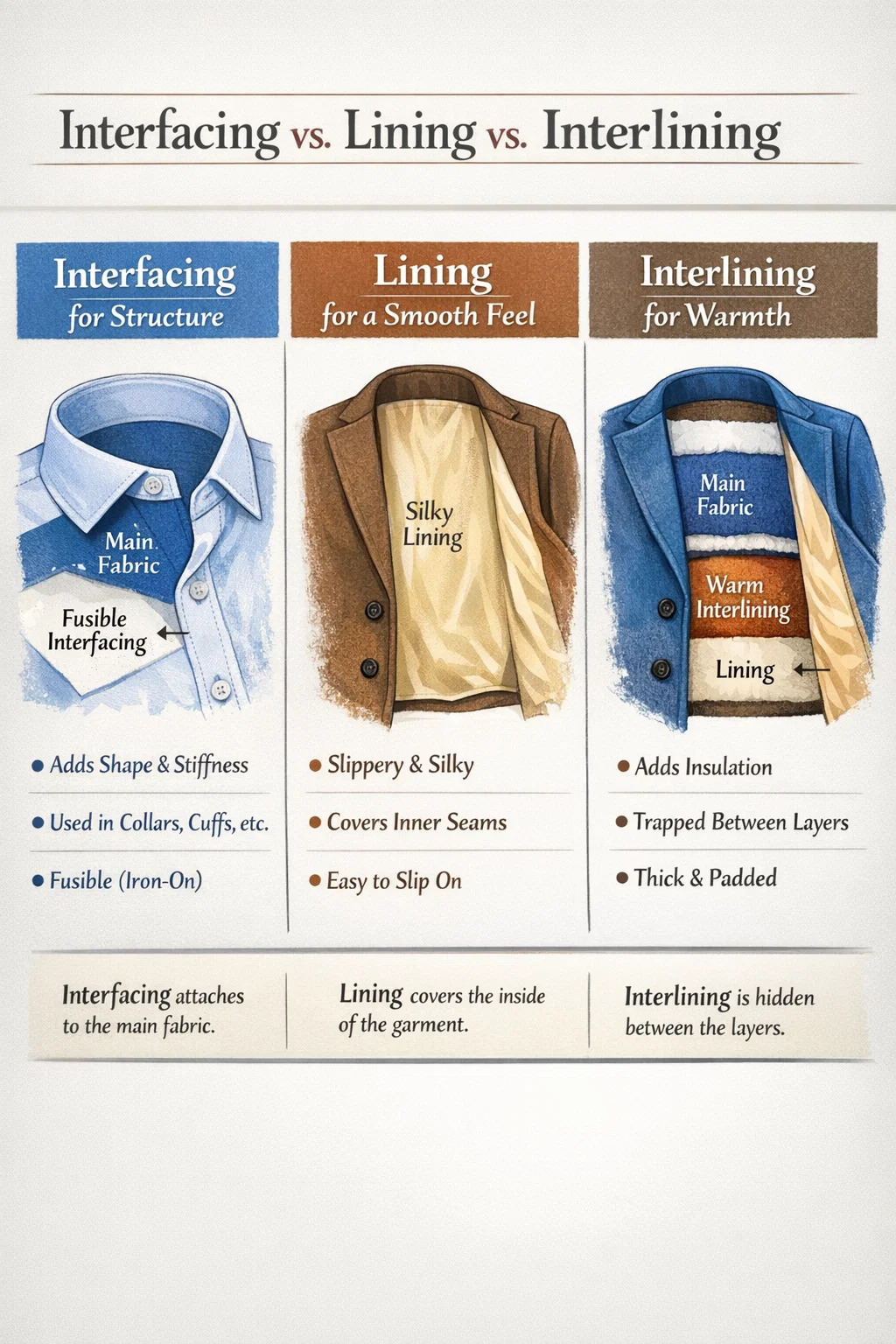
1. Interfacing – Responsible for "providing structure"
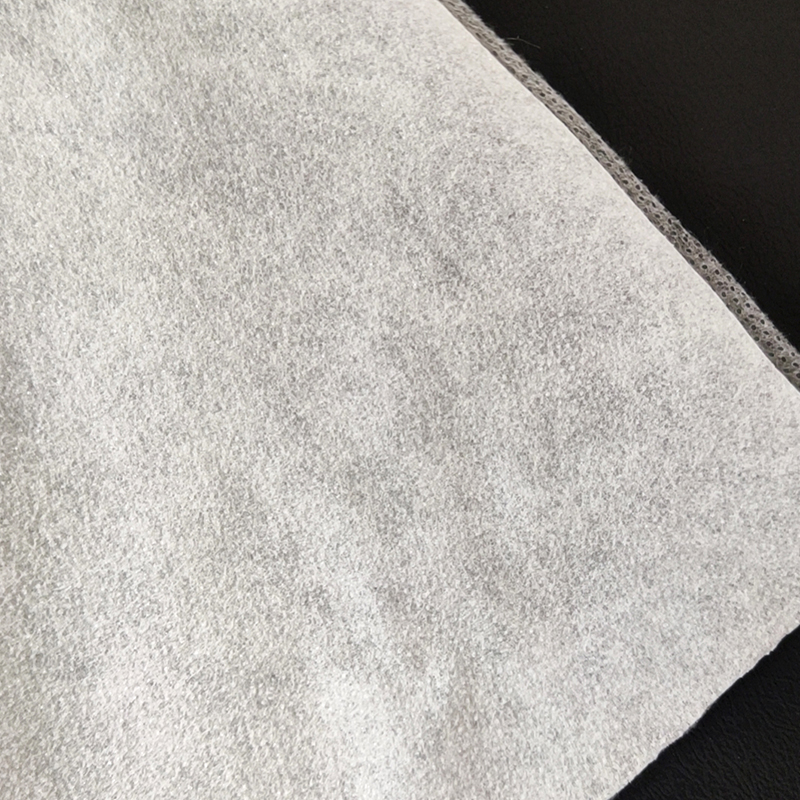
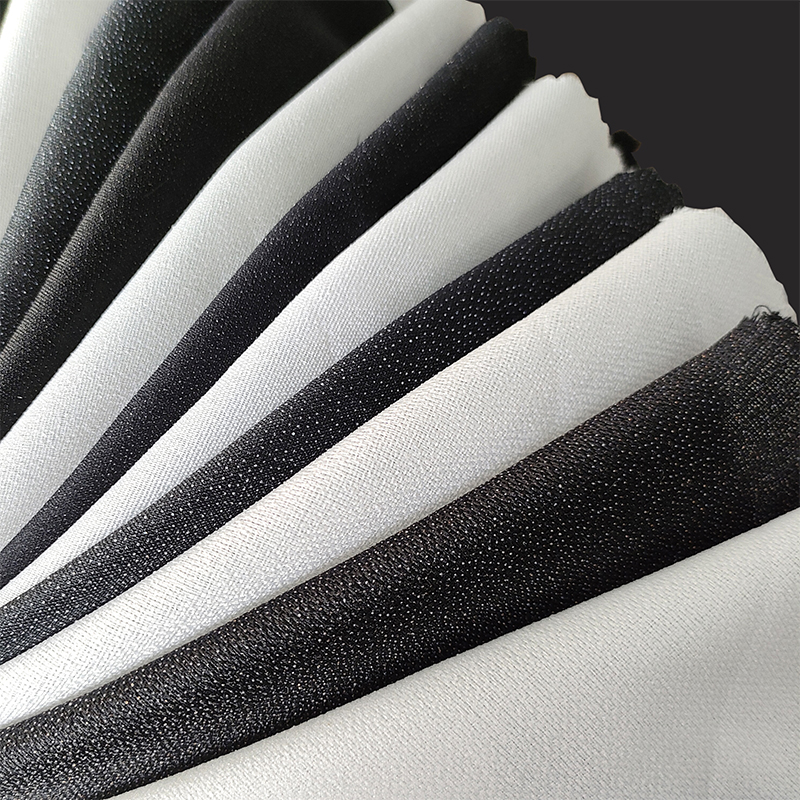
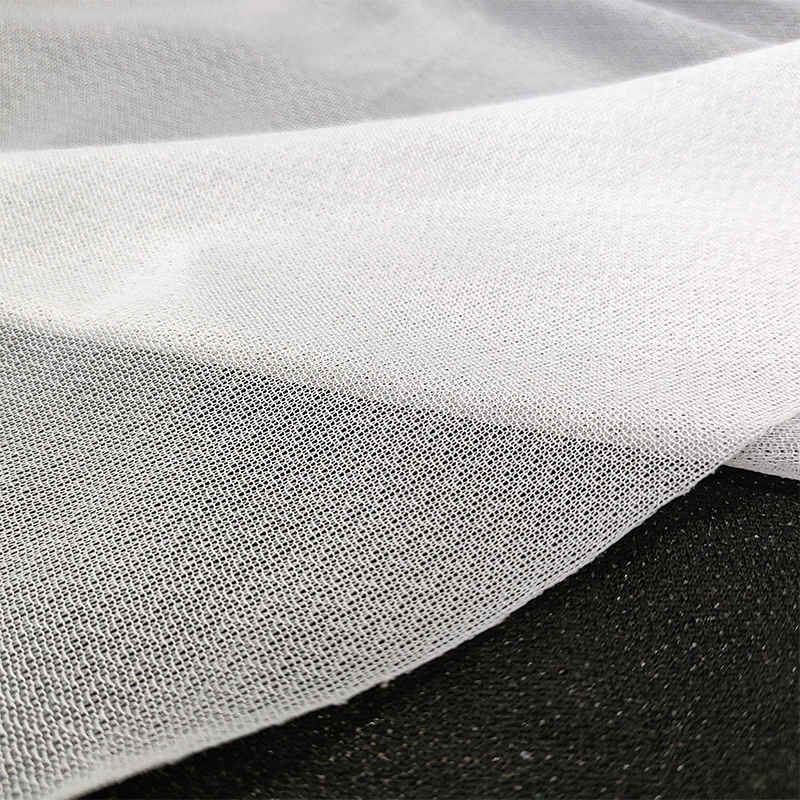
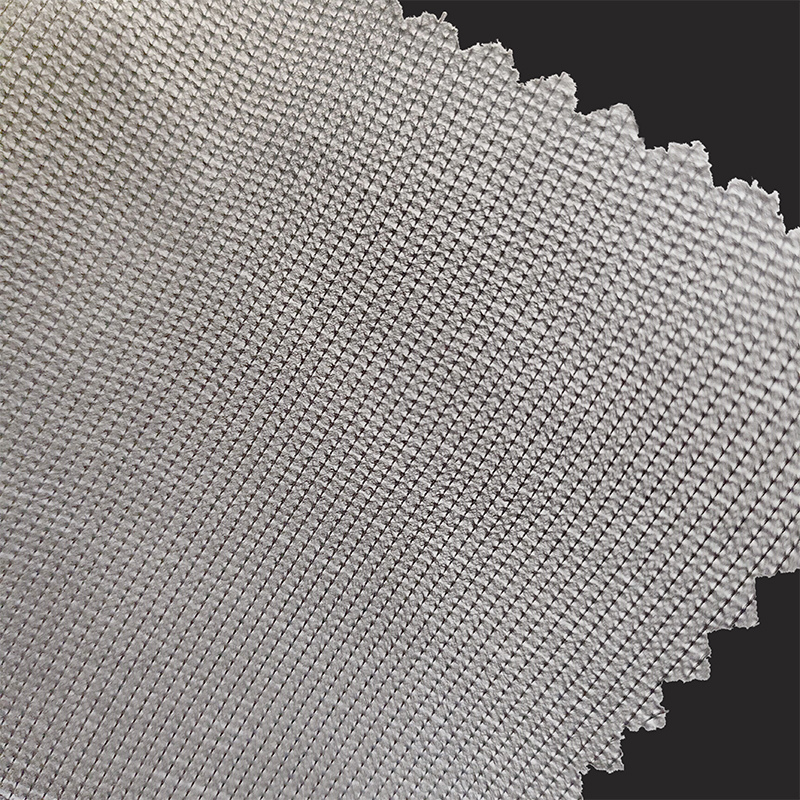
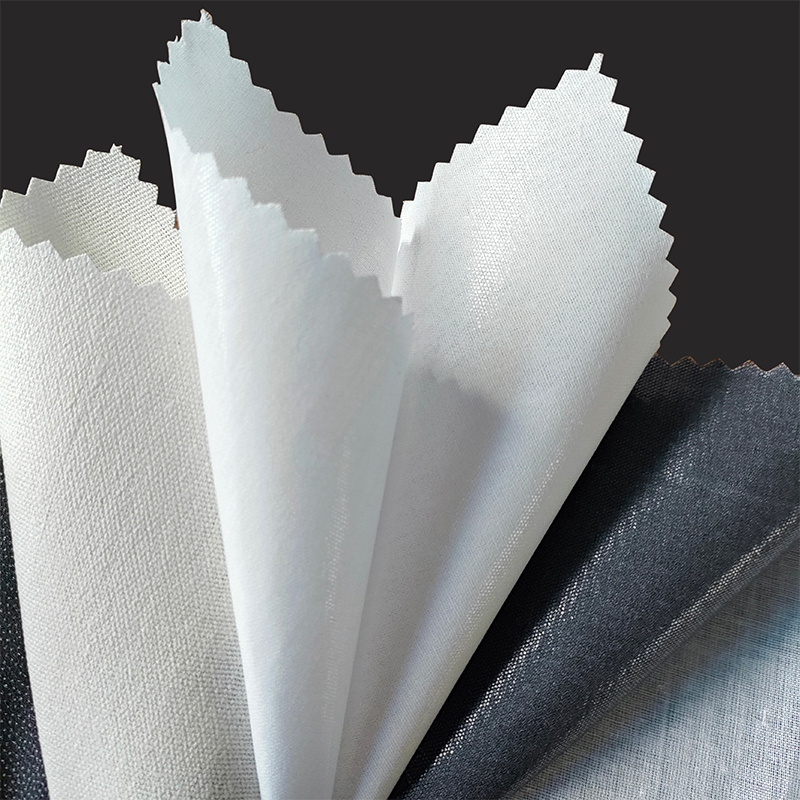
Interfacing is usually the thinnest and stiffest of the three. Its task is to provide localized reinforcement and shaping.
Its location: It is usually glued or sewn directly to the back of the main fabric, mainly used in the collar, cuffs, buttonhole areas, or the shoulders of a suit jacket.
Its function: It prevents these areas from losing their shape or becoming limp. For example, the stiff collar of a shirt is achieved with the help of interfacing.
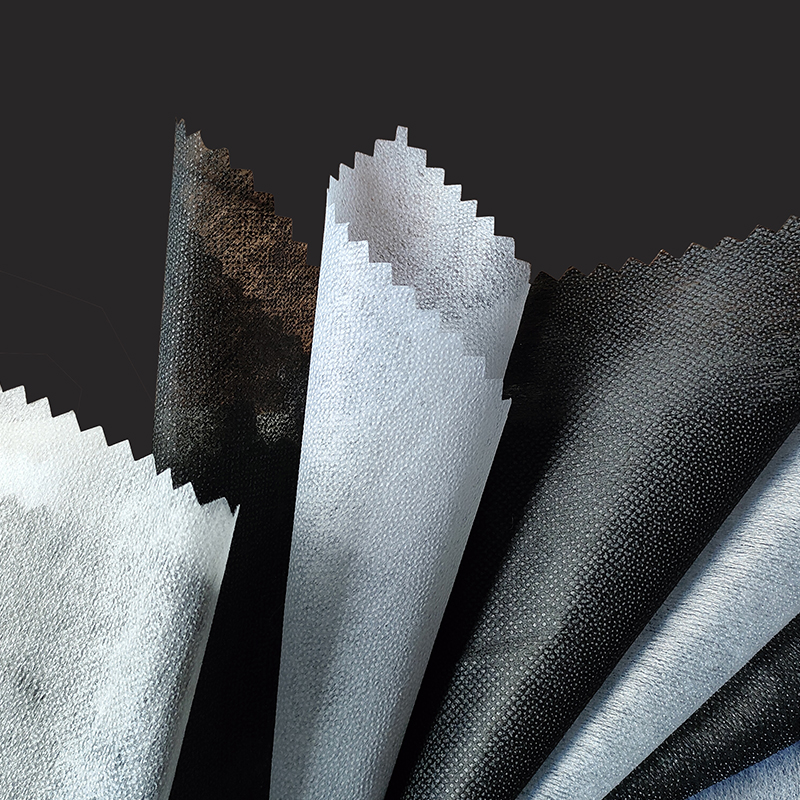
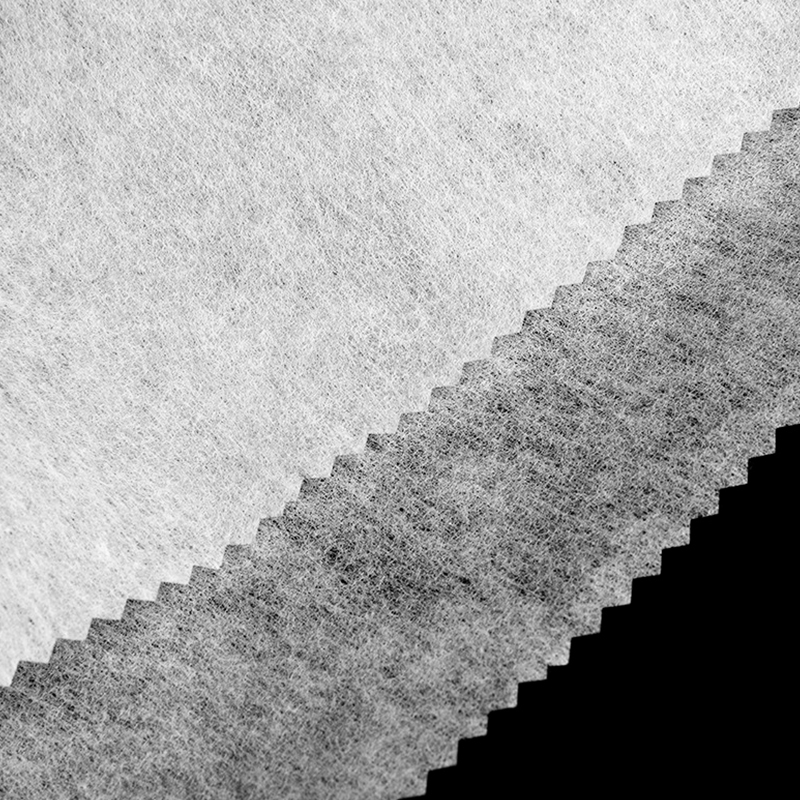
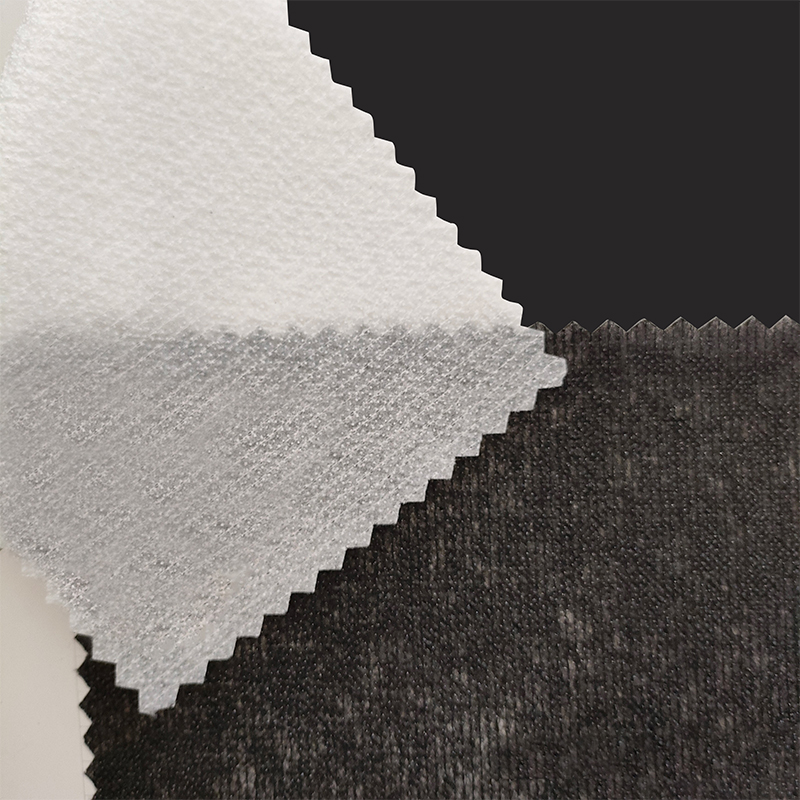
Characteristics: Most modern interfacing fabrics are fusible (with adhesive), and can be attached with an iron.
2. Lining – Responsible for "a silky smooth feel"
The lining is the innermost layer of fabric in a garment, the layer that touches your skin or sweater.
Its location: It is the innermost layer of the garment, completely covering the inside of the main fabric. The smooth, silky fabric you see when you turn a coat inside out is the lining.
Its function: Easy to put on and take off: It's slippery, allowing you to easily slip into the garment without getting caught on your sweater.
Hides details: It covers all the threads, raw edges, and the interfacing mentioned earlier, making the inside of the garment neat and tidy.
Reduces friction: Prevents the rough outer fabric from rubbing against your skin.
3. Interlining – Responsible for "adding thickness and warmth"
Interlining is like a "sandwich layer," a third layer sandwiched between the main fabric and the lining.
Its location: It is "locked" between the outer fabric and the lining, invisible from both the outside and the inside.
Its function: Warmth: This is its most important function. For example, the down filling in a down jacket, or the thin layer of wool added to a coat, are both examples of this type of material.
Increased texture: If the outer fabric is too thin, adding an interlining can make the garment feel thicker and more luxurious.
Features: It is usually thicker than the other two types, and the material may be flannel, cotton batting, or a specialized insulating material.