 English
 Español
 Türk
TürkContent
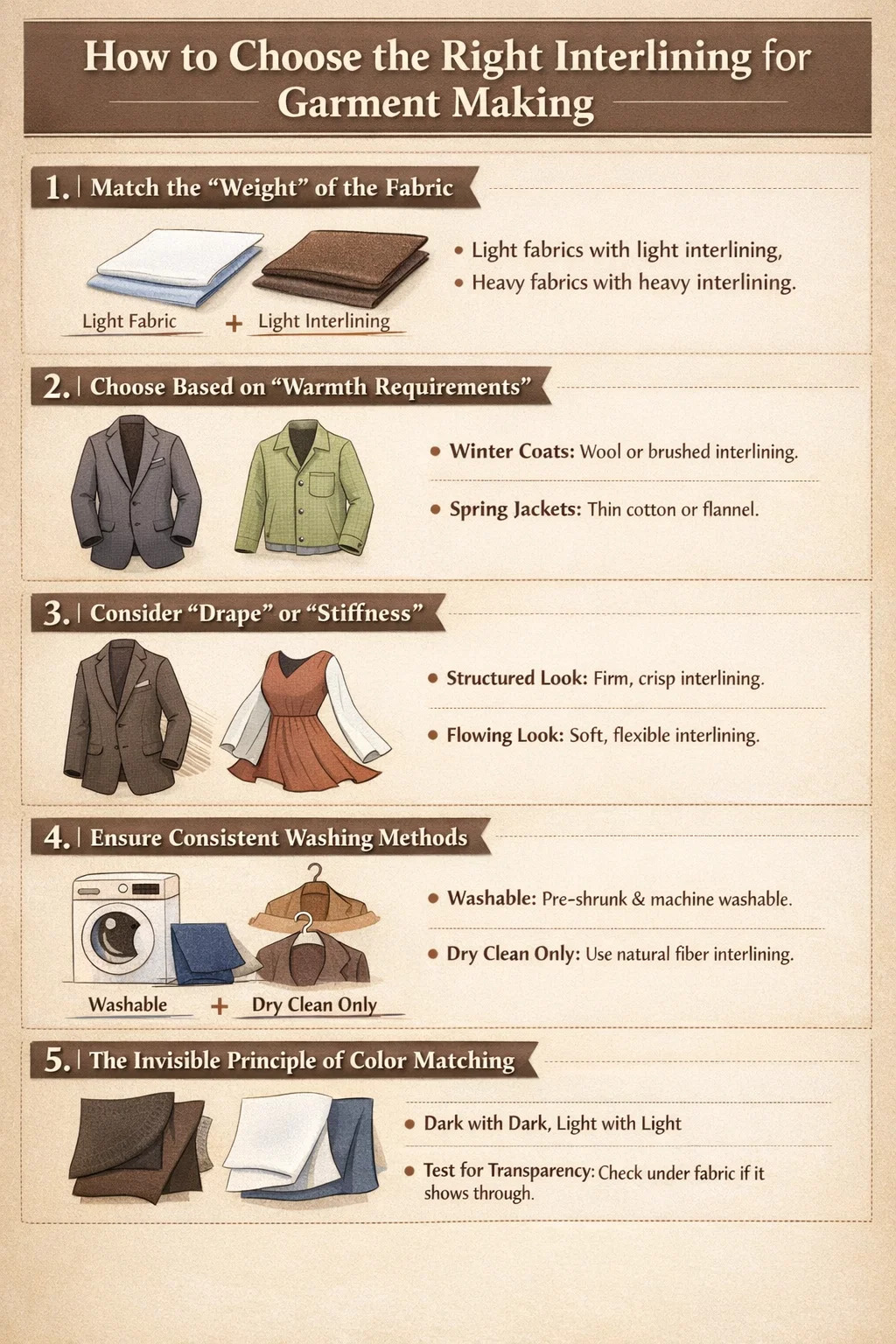
In garment making, choosing the right interlining is a crucial step in determining the texture and lifespan of the finished garment. When selecting interlining, you can refer to the following simple and practical principles:
1. Match the "weight" of the fabric
This is the most basic principle: light fabrics with light interlining, and heavy fabrics with heavy interlining.
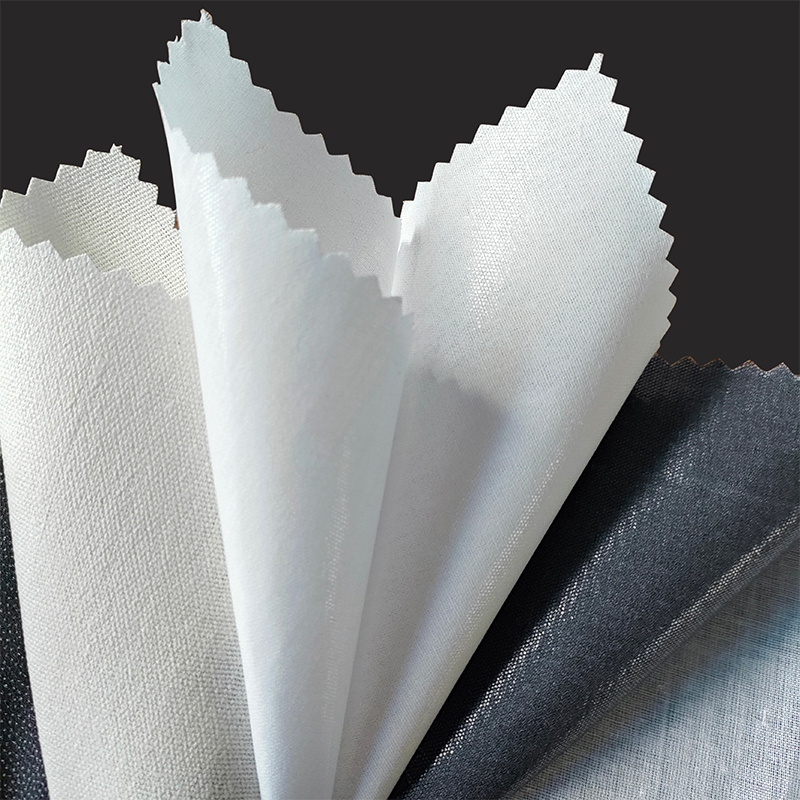
Lightweight fabrics: If your outer fabric is very thin (such as silk or lightweight cotton), you should choose a light and soft interlining; otherwise, the garment will appear stiff and lose its flowing quality.
Heavyweight fabrics: For heavy fabrics such as coats or thick cashmere, a heavier, more substantial interlining is needed to provide support.
2. Choose the material based on "warmth requirements"
Interlining often plays a role in temperature control:
Winter coats: It is recommended to choose interlining made of wool blends or brushed fabrics, which can trap air and provide excellent warmth.
Spring and autumn jackets: You can choose thin cotton or flannel, which adds thickness to the garment without making it feel stuffy.
3. Consider "drape" or "stiffness"
What kind of visual effect do you want the garment to have?
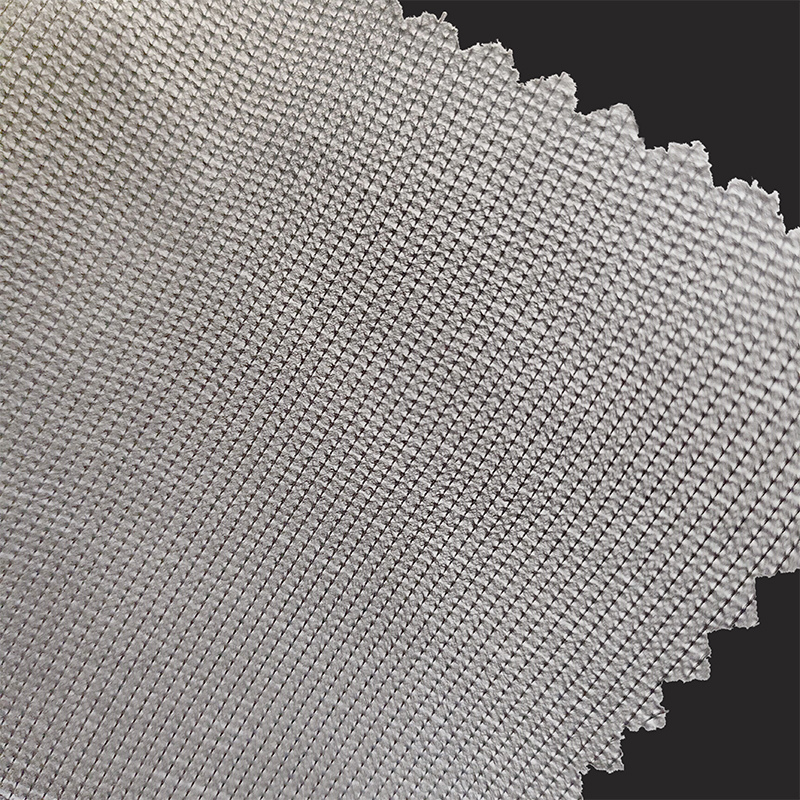
For a structured look: If you want the chest of a suit to be flat and the collar to be crisp, choose a tightly woven, low-stretch interlining.
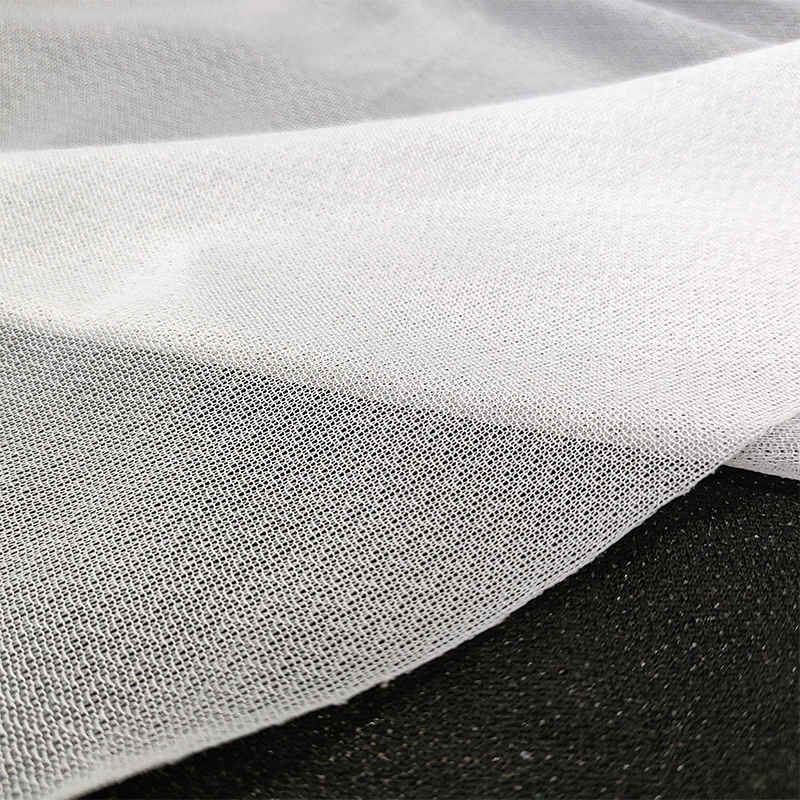
For a flowing look: If you want the skirt or trench coat to drape naturally, choose a loosely woven, smooth interlining that will follow the movement of the outer fabric.
4. Ensure consistent washing methods
This is an easily overlooked detail:
Washable: If your garment is intended for frequent washing, ensure that the interlining is also pre-shrunk and washable to prevent shrinkage after washing, which can cause the outer fabric to wrinkle.
Dry clean only: For high-end suits or coats, interlining made of natural fibers (such as linen or wool) is usually used, and these typically need to be dry-cleaned along with the outer garment.
5. The invisible principle of color matching
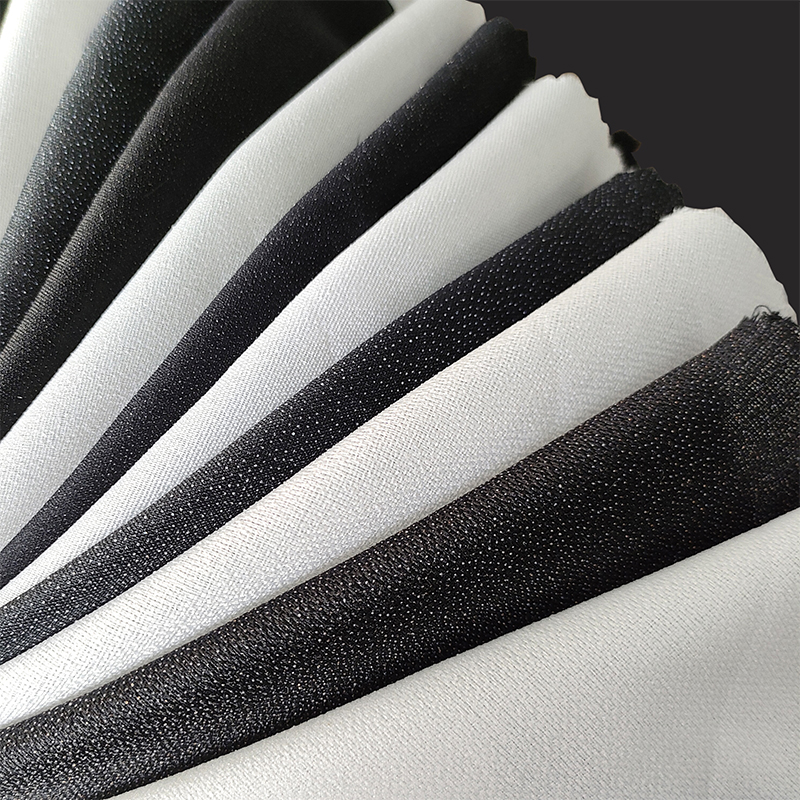
Although the interlining is sandwiched in the middle, if the outer fabric is thin or light in color, the color of the interlining may "show through." Dark with dark, light with light: Try to choose a lining that is close in color to the fabric.
Test for transparency: Before purchasing, you can place the lining under the fabric and hold it up to the light to ensure it doesn't alter the color of the outer fabric.